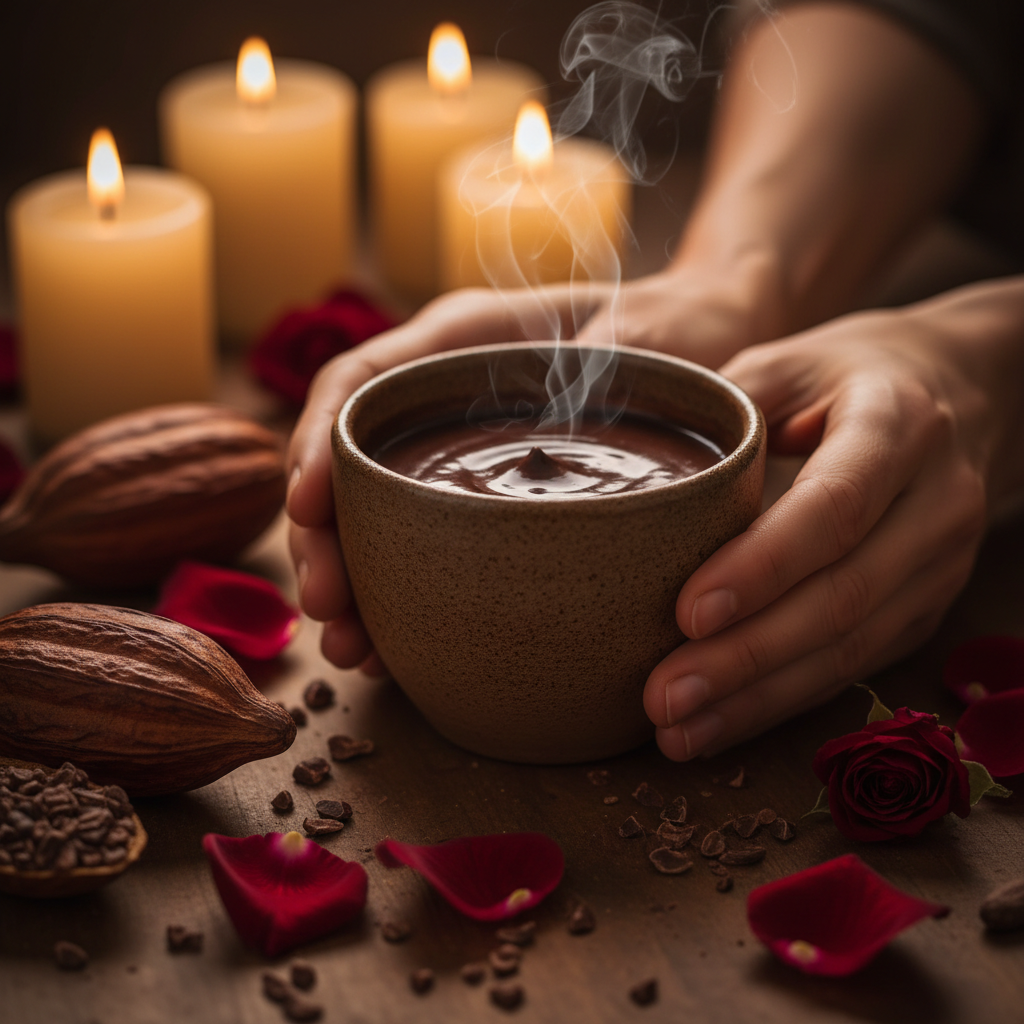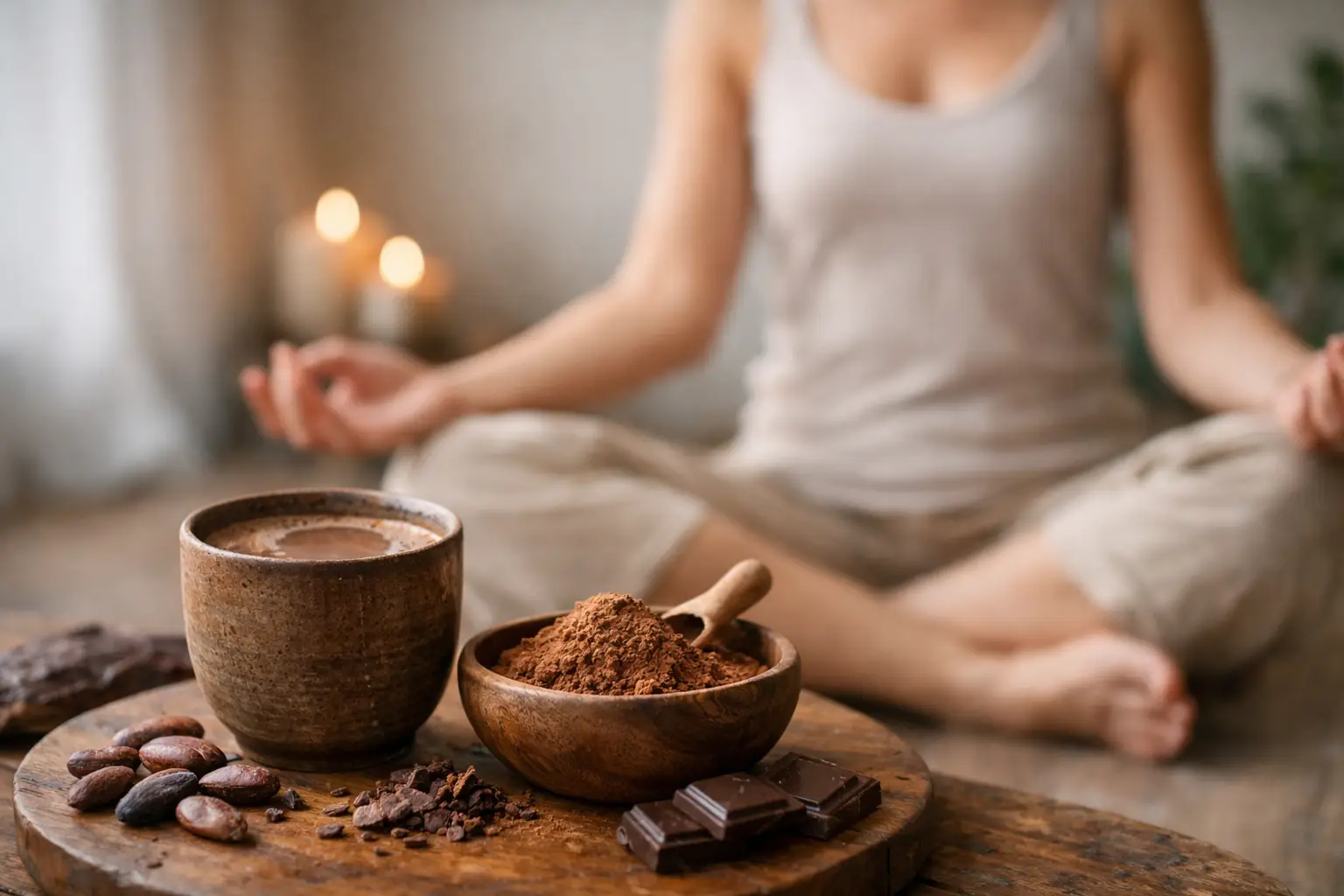
A warm cup held between both hands can become a small but meaningful threshold. Before the first sip, there is a pause. Before the mind begins to solve, organise or anticipate, there is an invitation to feel. The benefits of cacao mindfulness practice often begin here: not with a dramatic breakthrough, but with a deliberate return to your own inner landscape.
For people carrying full calendars, caring responsibilities or the quiet pressure of always being available, mindfulness can sometimes feel like another task to complete. Cacao offers a more sensory way in. Its aroma, warmth and slightly bitter depth give the practice a physical anchor, while a simple ritual creates permission to slow down. When approached with care, cacao mindfulness is less about escaping daily life and more about meeting it with greater presence.
What makes cacao mindfulness different?
Mindfulness asks us to notice what is here without immediately trying to change it. Ceremonial cacao can support that intention by engaging the senses from the outset. Preparing the drink, noticing its texture and drinking slowly can help draw attention away from the constant commentary of the mind and towards the body.
Cacao contains naturally occurring compounds including theobromine, which some people experience as gently enlivening. It is not the same as a guaranteed mood shift, nor is it a replacement for clinical mental health support. Its value within a mindful setting is often found in the container around it: a considered moment, an unhurried breath, music or silence, and an honest willingness to be with yourself.
The experience is personal. One person may feel emotionally open and creatively stirred; another may simply notice a little more steadiness. Neither response is more spiritual, successful or valid than the other.
7 benefits of cacao mindfulness practice
1. It creates a clear transition into presence
Many of us move directly from a screen, a commute or a difficult conversation into the next demand. A cacao ritual marks a different kind of beginning. The simple act of making a drink with intention tells the nervous system that this moment has a new rhythm.
That transition matters. Rather than expecting yourself to become calm on command, you create a gradual arrival. You might sit somewhere quiet, place your feet on the floor and take three unforced breaths as the cup cools. These small signals can make presence feel more accessible, especially on days when stillness feels far away.
2. It brings awareness back into the body
Stress often pulls attention upwards, into planning, worry and mental rehearsal. Cacao mindfulness offers sensory details to come home to: warmth in the palms, scent at the edge of awareness, the movement of swallowing, the weight of the body in the chair.
This is not about forcing relaxation. It is about practising contact with what is already true. You may notice tightness in the jaw, a fluttering in the chest or a surprising ease across the shoulders. Naming these sensations gently can build a more compassionate relationship with your body, rather than treating it as something to override.
3. It can support more spacious emotional reflection
Emotions do not always need an immediate solution. Sometimes they need a little room. In a quiet cacao practice, feelings that have been pushed aside by busyness may become easier to recognise: grief, irritation, tenderness, relief, longing or joy.
The benefit is not that cacao removes difficult feelings. A grounded ritual can make it safer to sit beside them without becoming consumed by them. Journalling after your practice may help. Instead of asking, “How do I fix this?”, try, “What is asking to be acknowledged?” That shift can soften the urge to judge your inner experience.
4. It offers a gentle focus for meditation
For anyone who finds silent meditation intimidating, the cup itself can become an object of attention. Notice the steam. Notice the taste changing as you sip. When thoughts carry you away, return to one physical detail without criticism.
This gives the mind somewhere kind to land. You do not need to empty your thoughts or achieve a particular state. Each return is the practice. Over time, that repeated act of returning may help you recognise that thoughts can be present without directing every action you take.
5. It can deepen intention without becoming rigid
Ritual is often misunderstood as something elaborate. In reality, an intention can be as simple as, “May I meet this day with honesty,” or, “May I listen before I react.” Cacao can give that intention a memorable shape, especially when you revisit it in a consistent setting.
The key is to hold intention lightly. An intention is not a demand that the practice must produce a particular answer, healing moment or emotional release. It is an orientation. On some days, you may feel a profound sense of connection. On others, you may drink your cacao and feel tired. Both are part of an honest practice.
6. It can nourish creative and intuitive listening
Creatives, carers and thoughtful professionals often spend much of their time responding to what is needed outside themselves. A few minutes of intentional quiet can restore contact with subtler inner signals: an idea that has been waiting, a boundary that needs attention, a desire for rest.
This is not mystical certainty, and it should not replace practical discernment. It is a chance to hear yourself before the noise of the day becomes too loud. You may find it helpful to keep a journal nearby, writing freely for five minutes after meditation without editing or interpreting every word.
7. It makes self-care feel relational rather than transactional
A wellbeing routine can easily become another performance: more steps, more goals, more evidence that you are doing healing correctly. Cacao mindfulness invites a different relationship. It asks how you might tend to yourself with the same patience you would offer a beloved friend.
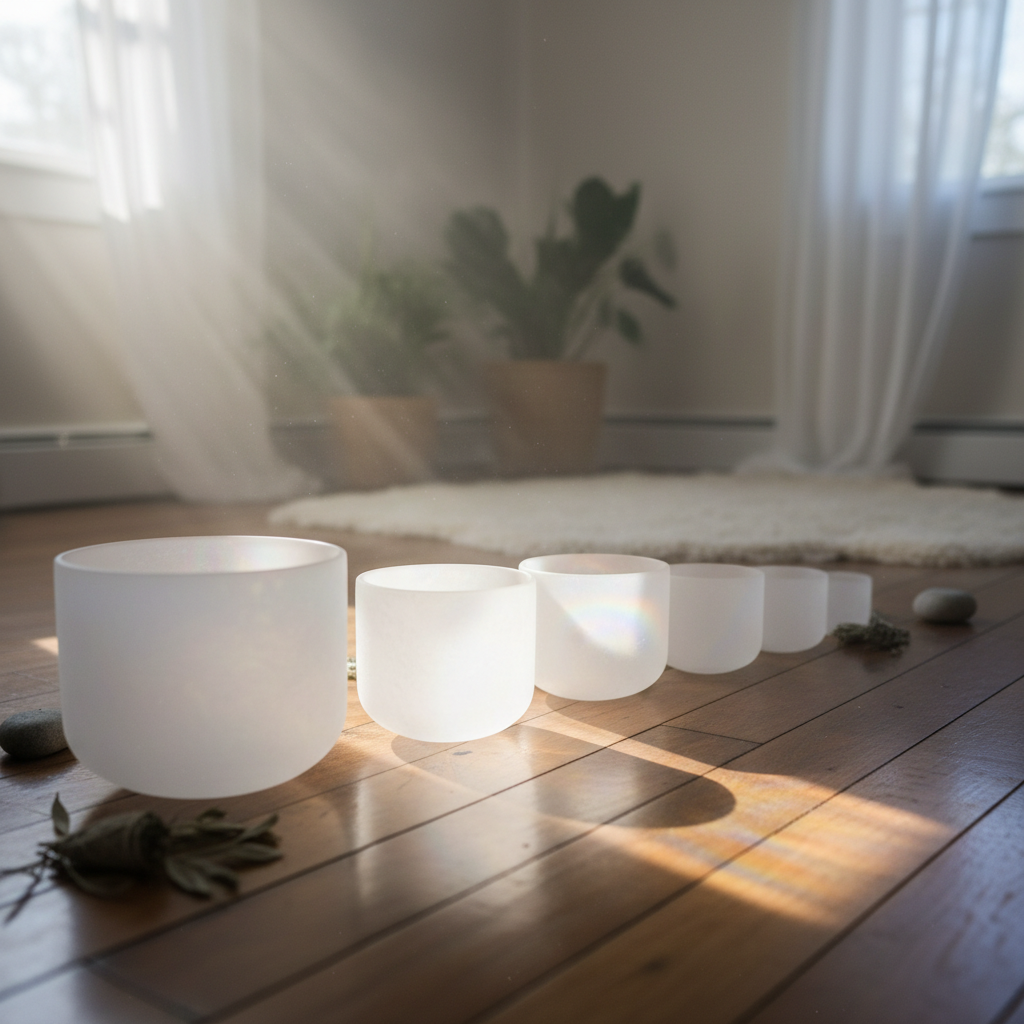
That sense of care may be especially valuable when practised in community. A guided online ceremony or sound bath can offer gentle structure while preserving the intimacy of your own home. Within a thoughtfully held digital sanctuary, shared ritual can lessen the feeling that you must carry everything alone.
A simple way to begin
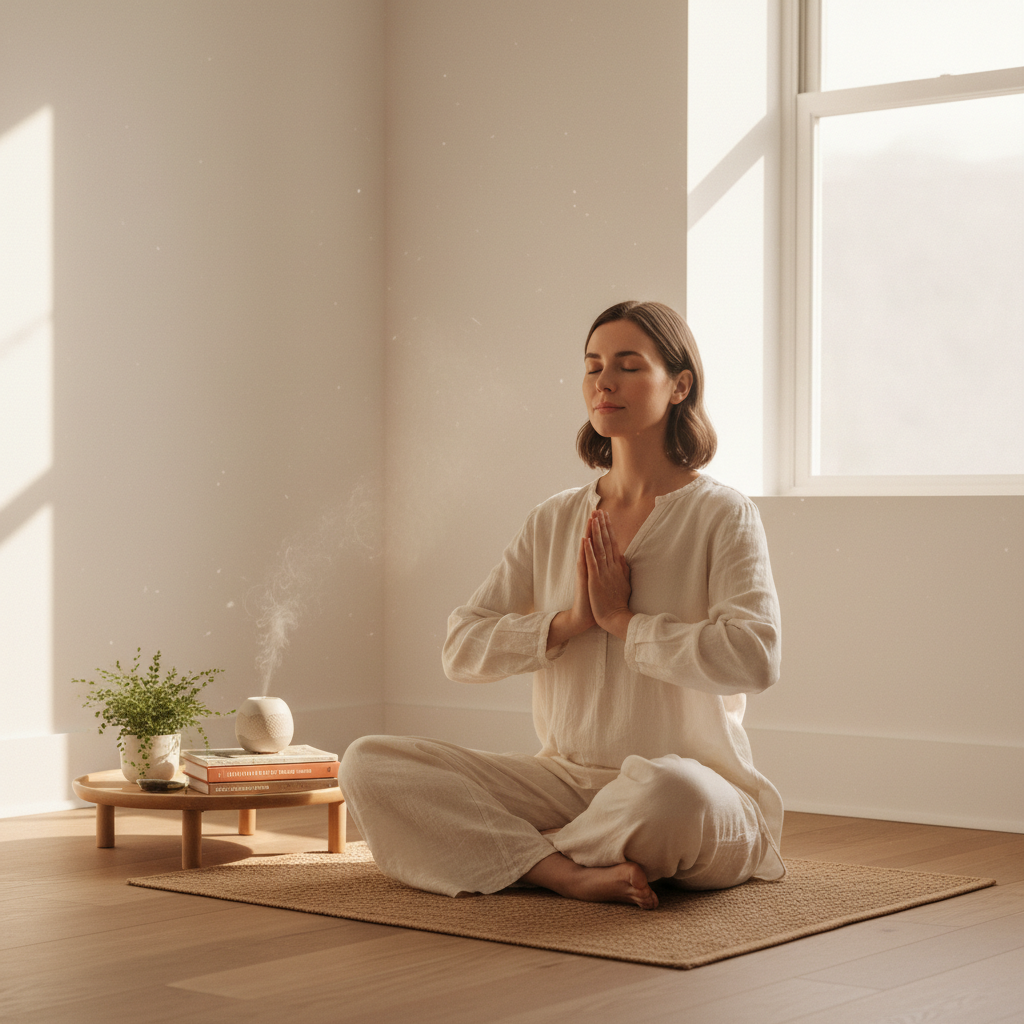
Choose a time when you do not need to rush away. Prepare cacao according to the serving guidance, then sit somewhere comfortable with water nearby. Before drinking, take a moment to notice how you are arriving. There is no need to make the moment beautiful or profound.
Sip slowly for a few minutes. Let your attention rest on the sensations of drinking, then allow it to widen to include breath, sound and the contact points beneath you. If it feels supportive, ask one gentle question: “What do I need to know or honour today?” Stay with whatever comes, including uncertainty.
Ten minutes is enough. Consistency tends to matter more than duration, and a small practice you can actually return to is more valuable than an idealised ritual that creates pressure.
A few considerations for a grounded practice
Cacao is not suitable for everybody or every circumstance. Its stimulating qualities may not feel right if you are sensitive to caffeine-like compounds, are pregnant or breastfeeding, have a heart condition, or take medication that could interact with it. If you have a health condition, take prescribed medication, or are unsure, speak with a qualified healthcare professional before making cacao part of your routine.
It also helps to be realistic about what the practice can hold. Cacao mindfulness may complement therapy, rest, medical care and supportive relationships, but it is not a substitute for them. If strong emotions arise and feel unmanageable, pause the practice, orient yourself to your surroundings and seek appropriate support.
There is no correct way to receive a moment of ritual. Let the cup be a companion rather than a catalyst you have to chase. With time, cacao mindfulness can become a quiet place to return to: a reminder that beneath the pace of life, your own presence is still here.