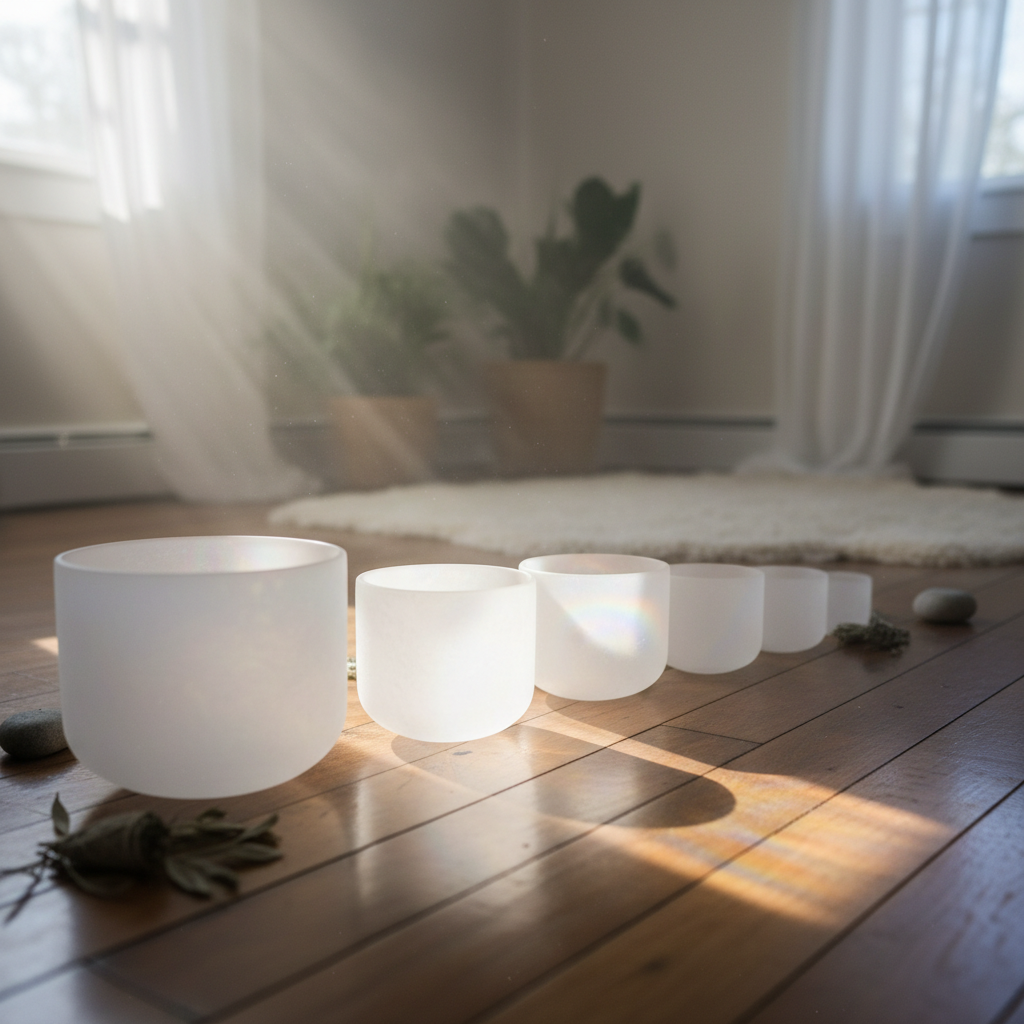
The final note of a sound bath can leave the room feeling spacious, yet the moment afterwards is often when life rushes back in. A mobile phone lights up. A task waits. The mind tries to explain what the body has only just begun to feel. To build a post-ritual routine is to create a gentle threshold between a meaningful practice and the rest of your day, so that you do not have to leave yourself behind when the ceremony ends.
A ritual may open something tender, clear or deeply restorative. Integration gives that opening somewhere safe to settle. It need not be elaborate. In fact, the most supportive rituals after a cacao ceremony, meditation or sound bath are often quiet, repeatable and shaped around what your nervous system genuinely needs.
Why a post-ritual routine matters
Ritual can soften the usual pace of thought and invite you back into sensation, memory, emotion or inner knowing. That is part of its value. But spaciousness can also feel unfamiliar when you are used to moving quickly, caring for others or meeting a long list of demands.
A post-ritual routine offers psychological grounding. It signals to your body that the experience has an ending, that you are safe in the return, and that there is time to listen before acting. Rather than treating a powerful feeling as something to decode immediately, you make room for it to be felt and witnessed.
This is not about preserving a perfect sense of calm. Some practices bring peace; others bring grief, fatigue, creativity, irritation or no obvious feeling at all. Each response is valid. The purpose is not to make every ceremony transformational in a dramatic way. It is to meet what is present with steadiness and care.
How to build a post-ritual routine
Begin by choosing a routine that feels possible on an ordinary weekday, not only on a slow Sunday. Five intentional minutes you can return to are more sustaining than a complicated sequence that becomes another expectation. Think of this as a soft landing rather than a performance.
Leave a little space around the ending
If you can, avoid scheduling an immediate call, school run or demanding piece of work after a guided session. Even ten to fifteen minutes of unclaimed time can change how fully you receive the practice. Put your mobile phone on silent before the ritual begins, make a warm drink in advance, and let anyone you live with know that you may need a few quiet moments afterwards.
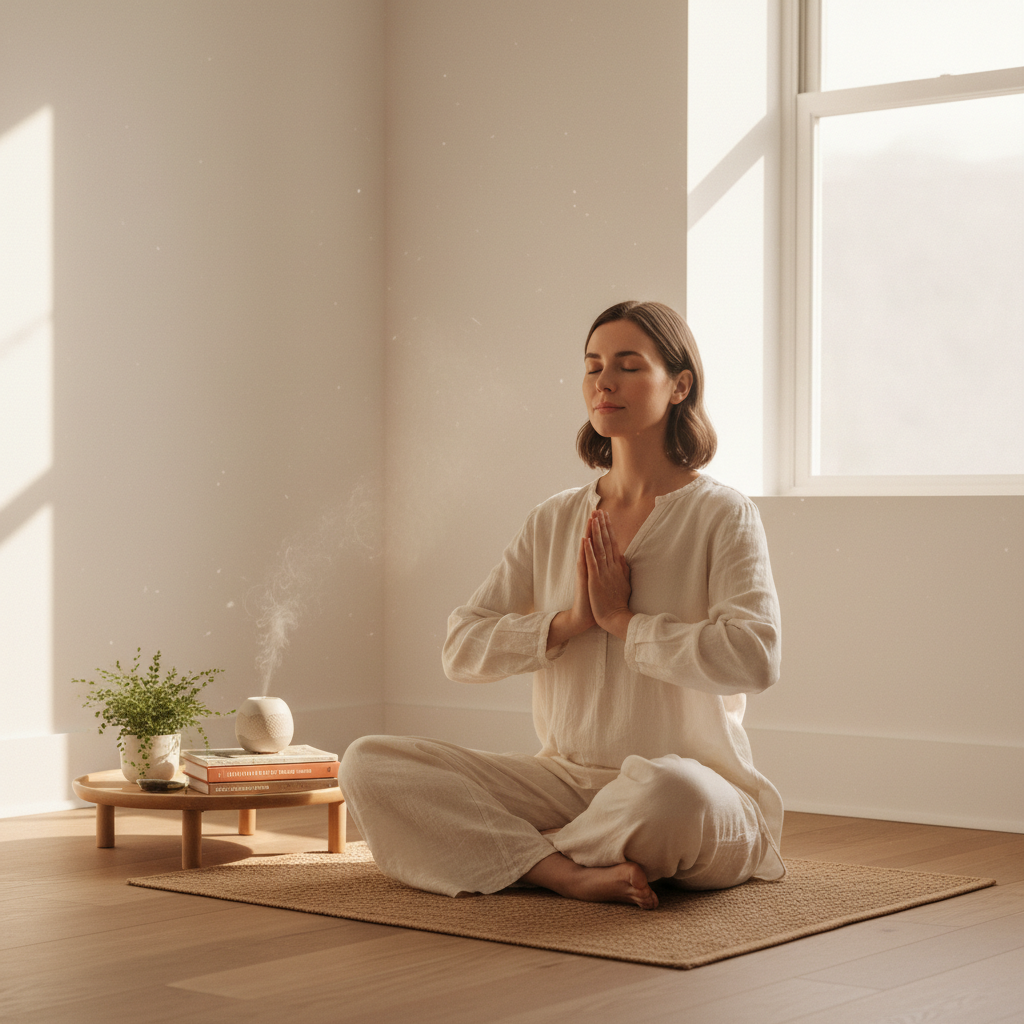
For online ceremonies, this boundary matters especially. Closing your laptop can be abrupt when your own space is still full of dishes, emails and unfinished tasks. Let the screen go dark, then remain seated or lying down for a few breaths. Notice the texture beneath you, the temperature of the room and the weight of your body. These simple cues help the experience move from the symbolic into the physical.
Return through the senses
Grounding does not have to mean forcing yourself out of a spiritual state. It can be a way of bringing spiritual expansion into relationship with your everyday body. Drink water slowly. Eat something nourishing if you need it. Step outside for a few minutes, feel your feet in your slippers or shoes, and look at something living or ordinary: a tree, a cloud, the steam from a mug.
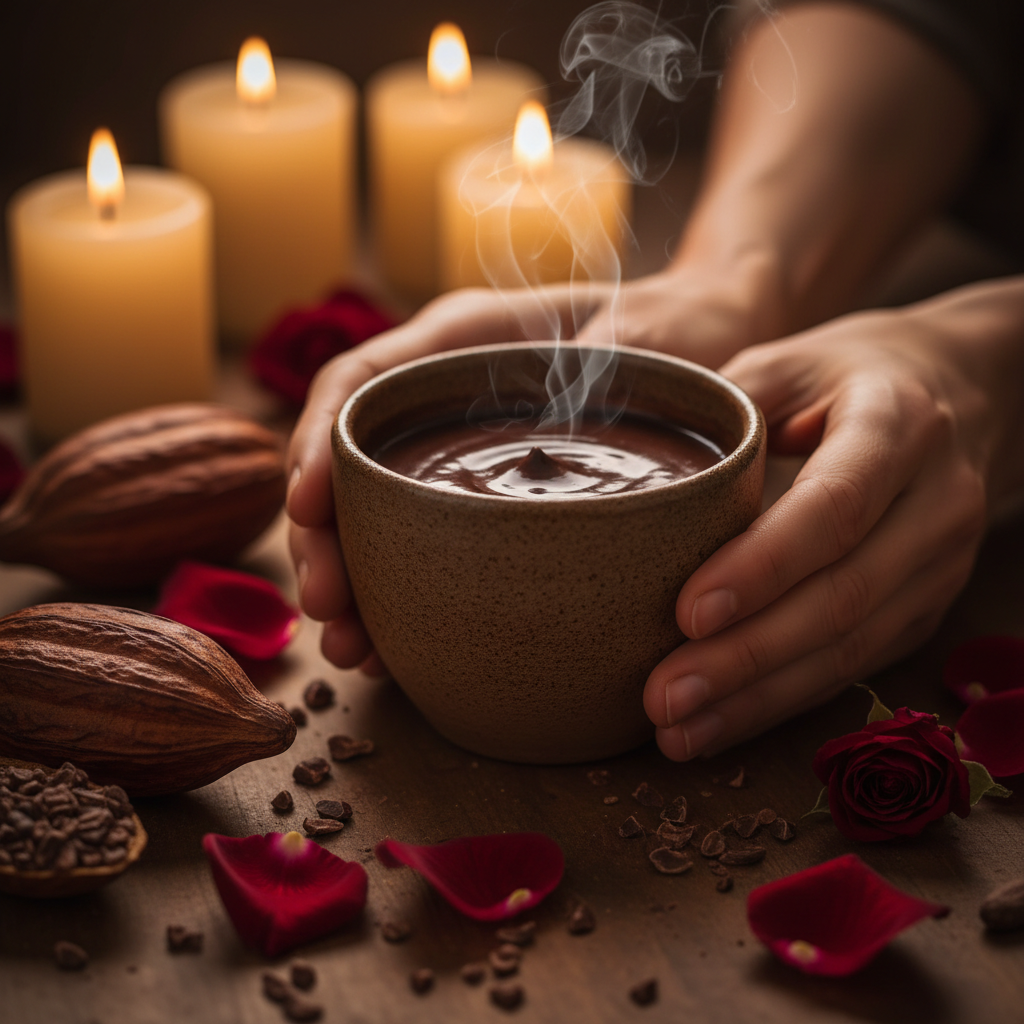
If cacao has been part of your ritual, notice how you feel in the hours that follow. Some people experience a gentle warmth and focus, while others may feel more sensitive or energised. Your needs may change from one ceremony to the next. Rest when rest is needed, and choose a quieter evening if your system is asking for less stimulation.
Give insight a small container
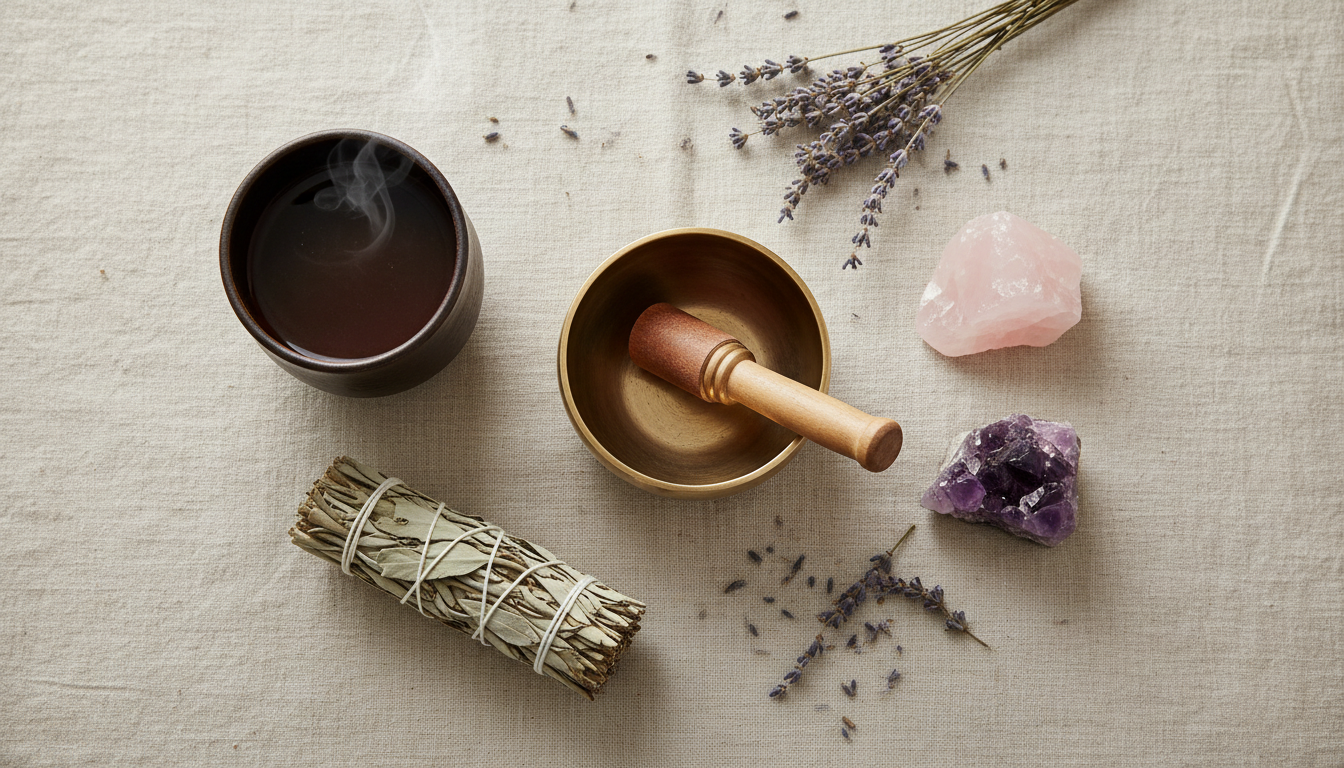
You do not need to write pages to honour what arose. A single sentence can be enough: “I feel softer around this.” “I need to slow down.” “I remembered that I am not alone.” Keeping a dedicated notebook beside your practice space makes reflection easier, particularly when words arrive before you have had time to make sense of them.
Try recording sensation before interpretation. You might write that your chest felt open, your jaw softened, or an image stayed with you during the sound. This approach leaves room for the meaning to unfold over time. The pressure to find a lesson immediately can pull you out of the very presence you are trying to cultivate.
Choose one kind, practical action
Insight becomes more trustworthy when it is met with a grounded response. If your ritual highlighted exhaustion, the next step may be an earlier night rather than a sweeping promise to change your life. If it revealed a difficult conversation, perhaps your action is simply to draft a few honest words and wait until you feel regulated before sending them.
Keep the action proportionate. A ceremony may clarify a deep longing, but it does not require an instant decision. Let the clarity accompany you for a few days. Notice what remains true after sleep, meals, movement and contact with the realities of your life.
Protect the afterglow without clinging to it
There is a difference between honouring a peaceful state and trying to hold on to it. The latter can make ordinary life feel like a failure. Your post-ritual routine can include a conscious return to daily responsibilities: wash your cup, open a window, reply to one necessary message, or prepare a simple meal.
These humble actions are not separate from the ritual. They are part of integration. When you move through them with a little more awareness, the calm does not disappear so much as change form.
Let the routine reflect your real life
A parent with a narrow window between bedtime and sleep may need a three-minute practice. A creative person working from home may benefit from a short walk before returning to their desk. Someone processing grief may need more quiet, fewer social plans and a trusted person to check in with. There is no single ideal rhythm.
It also depends on the intensity of the ritual. After a light morning meditation, a glass of water and one note in your journal may be plenty. After a longer cacao and sound experience that has stirred strong emotion, you may want to protect the evening, avoid alcohol and give yourself a slower morning if possible.
Consistency matters more than length. You might choose the same closing gesture each time: placing a hand over your heart, lighting a candle for a few minutes, or writing down one word you wish to carry forward. Repetition helps create familiarity, and familiarity can help the nervous system feel held.
When more support is needed
Ritual can be a beautiful companion to emotional wellbeing, but it is not a substitute for clinical or crisis support. If a practice brings up persistent distress, traumatic memories, panic, or feelings that make daily life difficult, reach out to a qualified mental health professional or an appropriate support service. You deserve care that is responsive to the fullness of what you are carrying.
For many people, the gentlest support is also relational. Share a little of your experience with someone who can listen without trying to fix it. You do not have to explain every symbol or feeling. A simple “I had a tender practice and I am taking things slowly today” can be enough.
At Luminous Resonance, the space after a guided experience is part of the practice itself. The ceremony may offer a doorway, but your return to water, breath, rest and honest reflection is where its resonance becomes lived.
Let your routine be small enough to keep, spacious enough to breathe within, and kind enough to meet you exactly where you are. The sacred is not only in the sound, the cacao or the stillness. It is also in the way you carry yourself back into your own life.