There is a particular kind of tiredness that sleep alone does not touch. You may still meet your responsibilities, reply to messages and keep moving, yet feel strangely absent from your own life. A burnout recovery ritual is not another task to complete perfectly. It is a gentle, repeatable way of telling your body and mind that the pressure can soften, even for a few minutes.
Burnout is often described as exhaustion, but it can also feel like numbness, irritability, scattered thinking or a loss of connection to the things that usually matter. Recovery asks for more than a weekend off. It asks for small experiences of safety, choice and rest, practised consistently enough that your system begins to trust them.
Why ritual can support burnout recovery
A routine is something we do to get through the day. A ritual is something we do with attention. The difference is subtle, but meaningful when you have been living in survival mode.
When every hour has been shaped by demands, a simple ritual can create a boundary between what is required of you and what restores you. Lighting a candle, preparing cacao slowly, sitting beneath a blanket or listening to a sound bath becomes a signal: this time is not for solving, performing or producing. It is for returning.
This does not mean ritual is a cure for workplace stress, caring responsibilities, financial pressure or unresolved grief. Burnout may also require practical changes, firmer boundaries, medical support or a conversation with a qualified mental health professional. Yet a grounded personal practice can offer a place to meet yourself more kindly while larger changes take shape.
Create a burnout recovery ritual with less effort
The most nourishing practice is rarely the most elaborate one. If you are depleted, aim for a ritual you can return to on an ordinary Tuesday evening, not only when the house is quiet and you have an hour to spare.
Choose a window of ten to twenty minutes and protect it as gently as you can. For some, this will be before the day begins. For others, it may be the moment after work, before you move into family life, or just before bed. Regularity can be helpful, but do not turn timing into another rule. The purpose is support, not self-discipline.
Begin by reducing stimulation
Burnout often leaves the nervous system alert long after the immediate demand has passed. Before asking yourself to reflect, meditate or feel grateful, make the surroundings a little less intense.
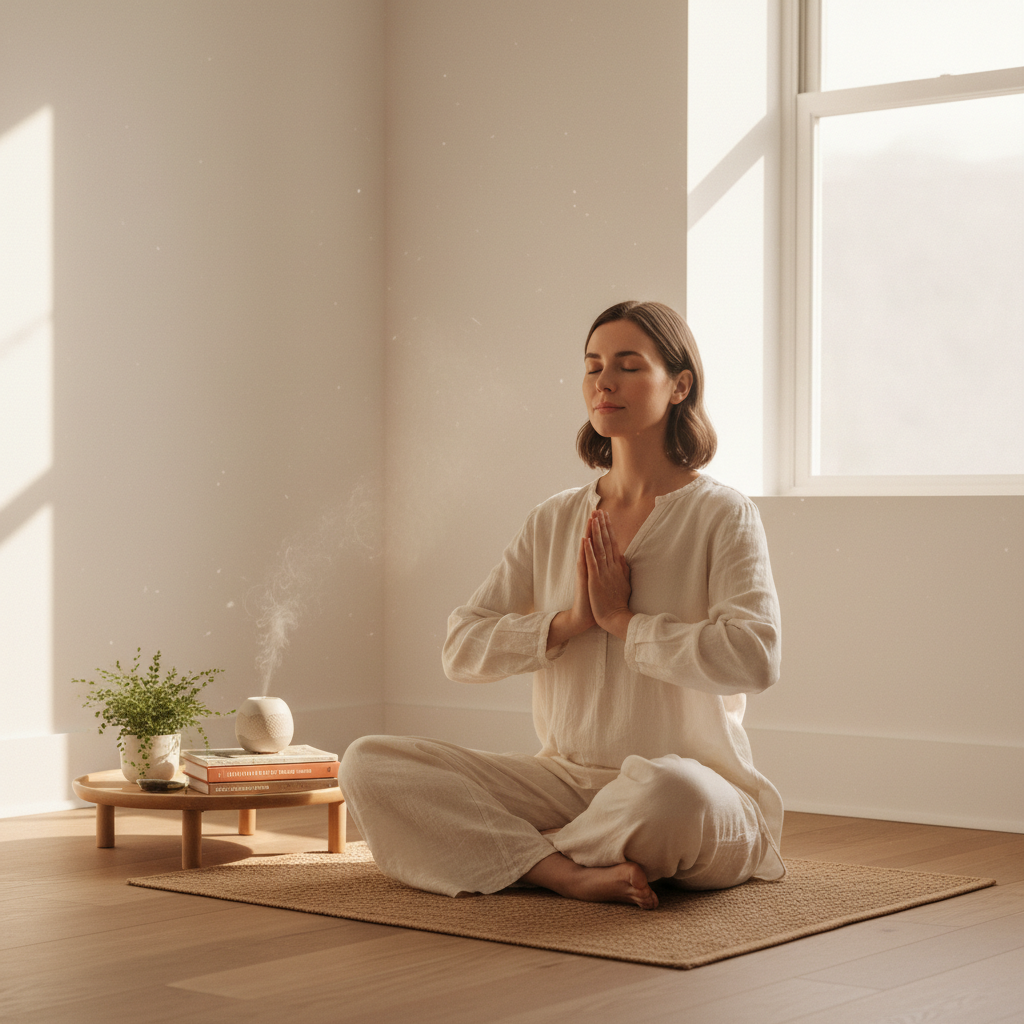
Place your mobile phone in another room or turn off notifications. Lower the lights. Sit somewhere your body can be supported, perhaps with your back against a cushion and both feet on the floor. You are not trying to create a perfect sanctuary. You are simply making it easier to notice that, in this moment, you do not have to brace.
Take a few unhurried breaths. Rather than forcing a deep inhale, let the exhale lengthen naturally. Feel the contact points beneath you: feet, hips, hands, back. This physical orientation can be especially useful when your thoughts are racing or you feel detached from your body.
Offer yourself a sensory anchor
A sensory experience gives the mind somewhere softer to rest. Warm cacao can be a beautiful anchor when approached with intention. Notice the warmth of the cup in your hands, its aroma and the pause involved in preparing it. If cacao is not right for you, choose herbal tea, warm water, a favourite scent or the weight of a soft shawl.
The point is not the object itself. It is the message held within the gesture: I am allowed to receive care before I have earned it.
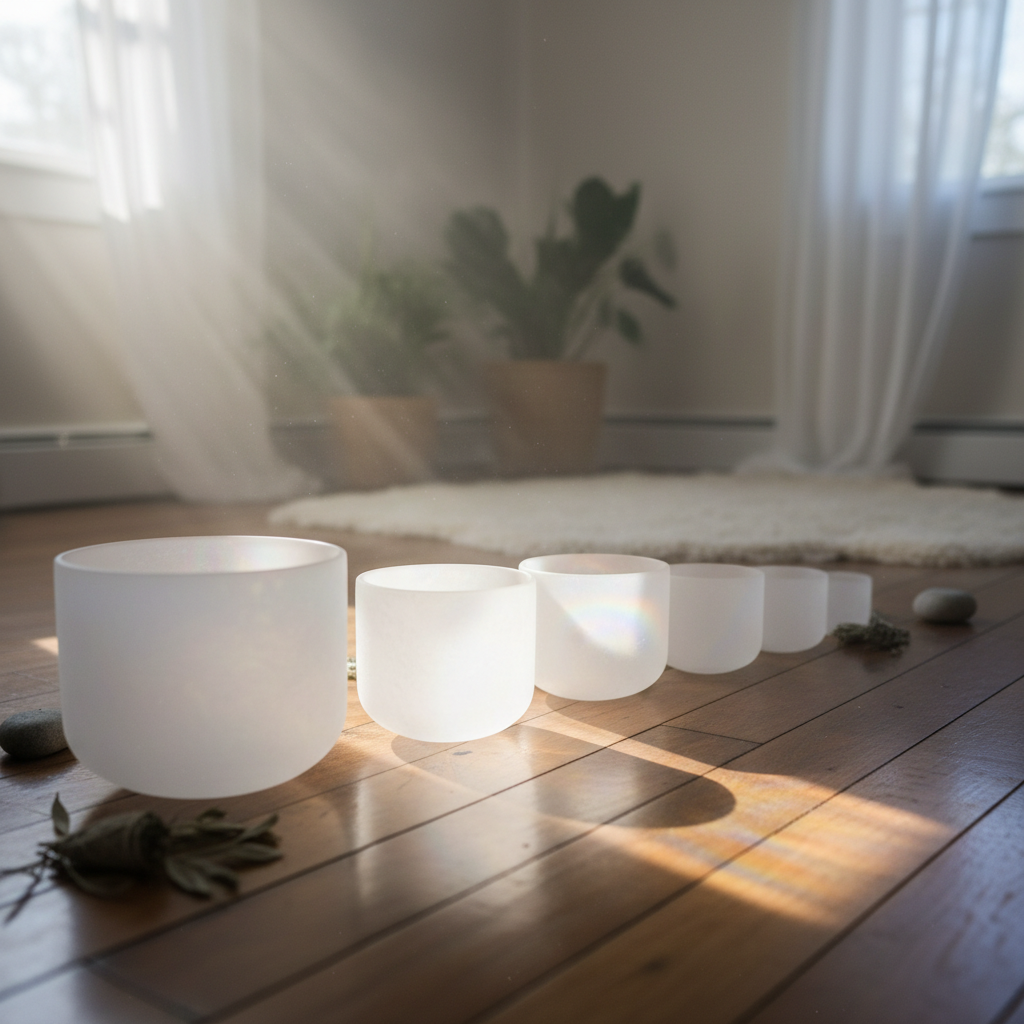
Sound can deepen this settling process. A few minutes of calming instrumental music, a singing bowl recording or a guided sound bath may help redirect attention away from mental noise and towards vibration, tone and breath. If sound feels overstimulating, choose quiet instead. Recovery is personal, and the body is the most honest guide.
Ask one honest question
Once you are a little more settled, resist the urge to analyse your whole life. Burnout can make every unanswered question feel urgent. Keep the enquiry small enough to hold.
You might ask, “What has felt heaviest today?” or “What do I need less of this evening?” At times, the answer may be practical: fewer decisions, a proper meal, an earlier night or help with a task. At other times, it may be emotional: permission to disappoint someone, space to cry, or the reassurance that you do not need to be inspiring right now.
Write a few words in a journal if that feels supportive. There is no need to produce insight. A sentence such as “I am tired of holding everything together” can be enough. Naming an experience often reduces the loneliness around it.
A simple 15-minute evening practice
If you would like a structure, try this gentle rhythm. Let it be adaptable rather than fixed.
For the first three minutes, step away from screens and settle your body with both feet on the ground. For the next five, prepare a warm drink or hold something comforting while you listen to a calming soundscape. Spend four minutes writing freely in response to one honest question. Use the final three minutes to choose one act of care for tomorrow, such as taking your lunch away from your desk, declining a non-essential commitment or going outside between meetings.
This last part matters because burnout recovery is not only inward. The ritual can help you hear what needs to change in the outer shape of your days. One small adjustment, repeated, may be more restorative than making a sweeping promise you cannot sustain.
Let rest be more than collapse
Many people reach rest only when they are completely spent. They scroll, sleep heavily, cancel plans or go silent because there is nothing left to offer. This kind of collapse may be understandable, but it is different from restorative rest.
Restorative rest includes moments when you are still connected to yourself. It may be lying down with a hand over your heart, walking slowly without a podcast, taking a bath, tending to a plant, or sitting with a sound bath that asks nothing of you. These experiences do not need to be productive to be worthwhile.
If stillness feels uncomfortable, begin with gentle movement. Stretch your shoulders, shake out your hands, or walk around the room while breathing steadily. For some nervous systems, rest becomes accessible through motion first. There is no failure in that. It is simply information about what support feels safe today.
Protect the ritual from perfectionism
Burnout can turn even healing practices into performance. You may wonder whether you meditated correctly, journalled deeply enough or stayed present for long enough. Notice this with compassion. The part of you seeking to get it right may have learned that worthiness depends on effort.
Let the ritual be imperfect. Some days it may be twenty minutes of cacao, reflection and sound. Other days it may be one hand on your chest while the kettle boils. Both count. What matters is the repeated movement away from abandonment and towards care.
At Luminous Resonance, this is the heart of a digital sanctuary: creating room for ritual-led rest that honours both psychological grounding and spiritual expansion. Not as an escape from life, but as a way to meet life with more presence and less self-erasure.
Your recovery may not arrive as a dramatic turning point. It may arrive quietly: a fuller breath before you answer, a clearer no, a moment of warmth in your own company. Let those small returns be sacred. They are often where you begin to find your way back.