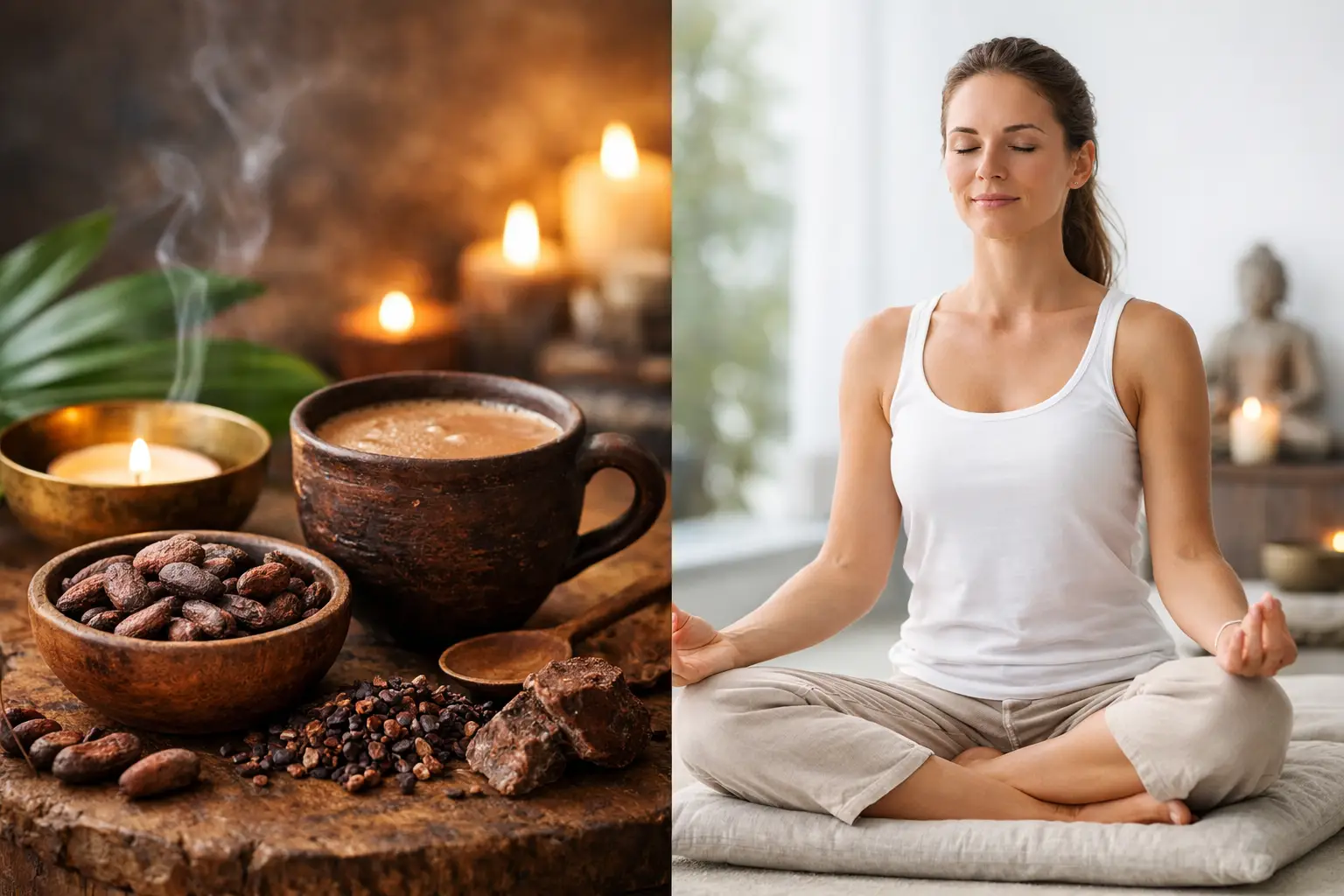
There are days when sitting quietly with your thoughts feels like the clearest path home. On other days, stillness can feel just out of reach. The question of cacao ceremony vs meditation is not really about which practice is better. It is about recognising what your body, heart and inner world are asking for in this moment.
Meditation offers a spacious meeting with the mind. A cacao ceremony creates a more sensory, intentional container for that meeting, often supported by music, reflection, breath and gentle ritual. Both can nurture presence. Yet they arrive there by different routes.
Cacao ceremony vs meditation: the central difference
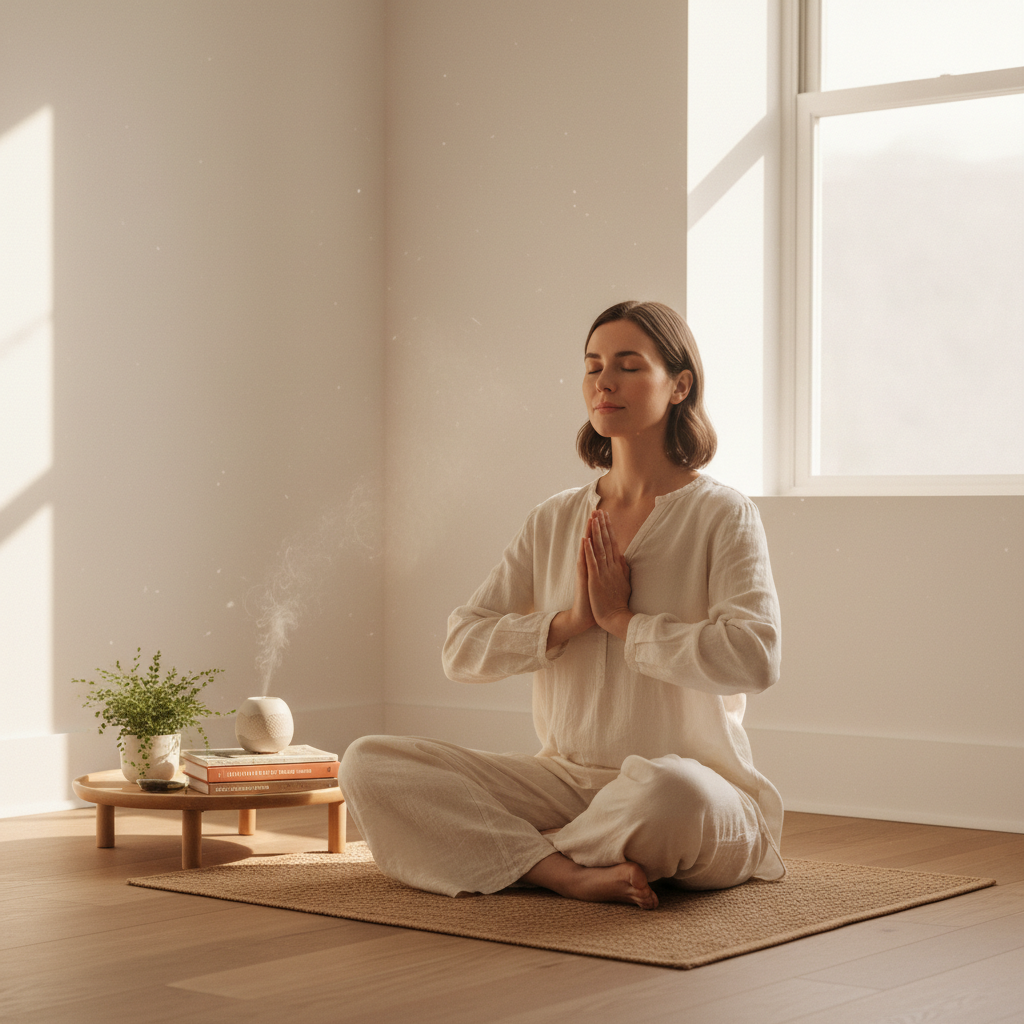
Meditation is a practice of attention. You may follow the breath, notice sounds, repeat a phrase, observe thoughts, or rest in awareness itself. Its simplicity is part of its power: there is very little to do, fix or achieve. Over time, meditation can help you become less entangled with mental noise and more able to meet experience as it is.
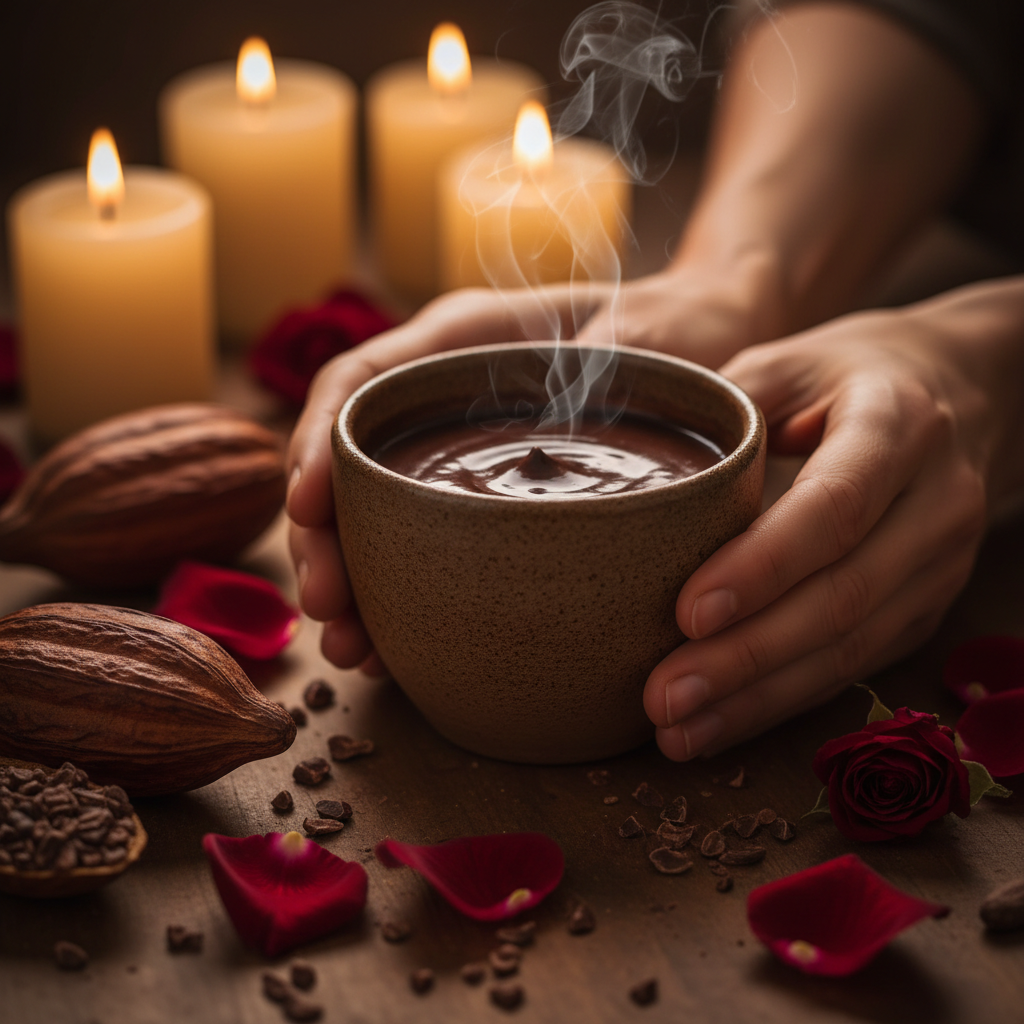
A cacao ceremony is an intentional ritual centred around drinking ceremonial-grade cacao. It is commonly held with a clear beginning and closing, an invitation or intention, and supportive practices such as guided meditation, journalling, breathwork, movement or sound. The cacao is not a shortcut to transformation. Rather, it can become a tactile, heart-led anchor that helps mark the transition from daily demands into a dedicated inner space.
For many people, this distinction matters. Meditation may ask you to bring your attention inward without much external structure. Ceremony offers structure first, then invites the inward turn. If your working day has been full of messages, meetings and care for others, the sensory rhythm of preparing cacao, settling with a warm cup and hearing a guide's voice can make it easier to arrive.
What meditation can offer
Meditation is wonderfully adaptable. Five minutes before a difficult conversation can be meaningful. So can a longer morning practice that becomes part of the architecture of your week. It is available without special equipment, a particular atmosphere or a set emotional state.
Its greatest gift is often familiarity with your own mind. During meditation, you may notice planning, worry, restlessness, tenderness or fatigue. The practice is not to stop these experiences appearing. It is to meet them with a little more steadiness and kindness. This can support emotional regulation, clearer choices and a less reactive relationship with stress.
Meditation also leaves room for different temperaments. A focused practice may suit someone who feels scattered. A body scan may feel more supportive for someone who lives mainly in thought. Loving-kindness meditation can soften harsh self-talk, while walking meditation may help when seated stillness feels constricting.
There is, however, a common misconception that meditation should always feel peaceful. Sometimes quiet reveals what busyness has kept at a distance. If difficult feelings arise, that does not mean you are failing. It may mean you need a gentler practice, shorter sessions, grounding through the senses, or support from a qualified mental health professional.
What a cacao ceremony can offer
Cacao ceremony brings intention into the body. The aroma, warmth and slight bitterness of cacao create a sensory threshold: a signal that this time is set apart. In a well-held ceremony, there is no pressure to have a revelation or feel a particular kind of openness. The invitation is simply to listen more closely.
Cacao naturally contains compounds including theobromine, which some people experience as gently energising or mood-lifting. Experiences vary greatly. For one person, it may support alert presence; for another, it may feel too stimulating later in the day. Its value in ceremony is as much relational and symbolic as it is physical. You make the drink, set an intention and choose to be in dialogue with yourself.
This can be especially supportive for people who find conventional meditation austere or difficult to enter. Ritual gives the mind something reassuring to follow. The ceremony's pacing can also make space for emotion without asking you to analyse it immediately. A journal prompt, a piece of music or a sound bath may allow something wordless to surface and settle.
At Luminous Resonance, this is the purpose of holding cacao alongside therapeutic sound and guided reflection: to create a digital sanctuary where spiritual expansion remains connected to psychological grounding. The experience is not about escaping ordinary life. It is about returning to it with a more honest relationship to what is present.
The role of guidance and atmosphere
The setting is one of the most meaningful differences between cacao ceremony and a personal meditation practice. Meditation can be deeply nourishing alone, but it can also feel difficult when motivation is low or your nervous system is activated. A guided practice offers companionship without demanding performance.
Cacao ceremonies often make intentional use of atmosphere. Soft lighting, music, silence, sound and shared timing can help the body understand that it is safe to slow down. For people carrying emotional overload, this is not merely decorative. A carefully paced container can make reflection feel more possible.
That said, ceremony is not inherently deeper because it is more elaborate. A quiet meditation on the edge of your bed may be precisely what you need. Equally, a beautiful ritual can become another thing to do perfectly if it is approached with pressure. Depth is less about the number of elements involved and more about the quality of your attention.
Which practice suits your needs today?
Choose meditation when you want simplicity, consistency or a direct way to work with attention. It can be a steady companion during busy seasons, particularly when you have only a small pocket of time. You might sit for ten minutes, feel your feet on the floor and let that be enough.
Choose a cacao ceremony when you are craving reconnection, emotional spaciousness or a clearer sense of transition. It may be particularly meaningful after a demanding period, at the beginning of a new chapter, or when your usual practice feels dry and you long for a more embodied doorway inward.
The answer can also be both. A cacao ceremony may begin with a cup of cacao and settle into meditation. Your regular meditation can give you the familiarity to notice what a ceremony opens, while ceremony can renew your relationship with stillness. Think of meditation as a language you gradually learn to speak, and ceremony as an occasion that invites you to speak it with more intention.
A gentle note on safety and expectations
Cacao is a food, but ceremonial servings can be stronger than the hot chocolate you might make at home. If you are pregnant, sensitive to stimulants, managing a heart condition, or taking medication, including antidepressants or blood pressure medication, seek personalised guidance from a qualified healthcare professional before taking part. It is also wise to begin with a smaller amount and notice how your body responds.
Emotional safety matters too. Neither meditation nor ceremony replaces mental health care. If you are moving through trauma, acute grief, severe anxiety or a period of instability, choose practices that feel resourcing rather than overwhelming. This may mean keeping sessions brief, staying connected to physical sensations, and working with a trusted therapist alongside spiritual practice.
A meaningful practice does not need to be intense. Sometimes the most restorative choice is to drink a warm cup slowly, place one hand over your heart, and name one thing that is true. Sometimes it is to sit without ceremony and feel the breath arrive on its own.
Let the practice meet the moment
Rather than asking which path will change you most quickly, try asking a quieter question: what would help me feel more present, more held and more honest today? The answer may be silence. It may be ritual. It may be a little of each.
Give yourself permission to let your practice change with the season you are in. What matters is not whether your inner work looks formal or profound from the outside, but whether it helps you return to yourself with greater care.