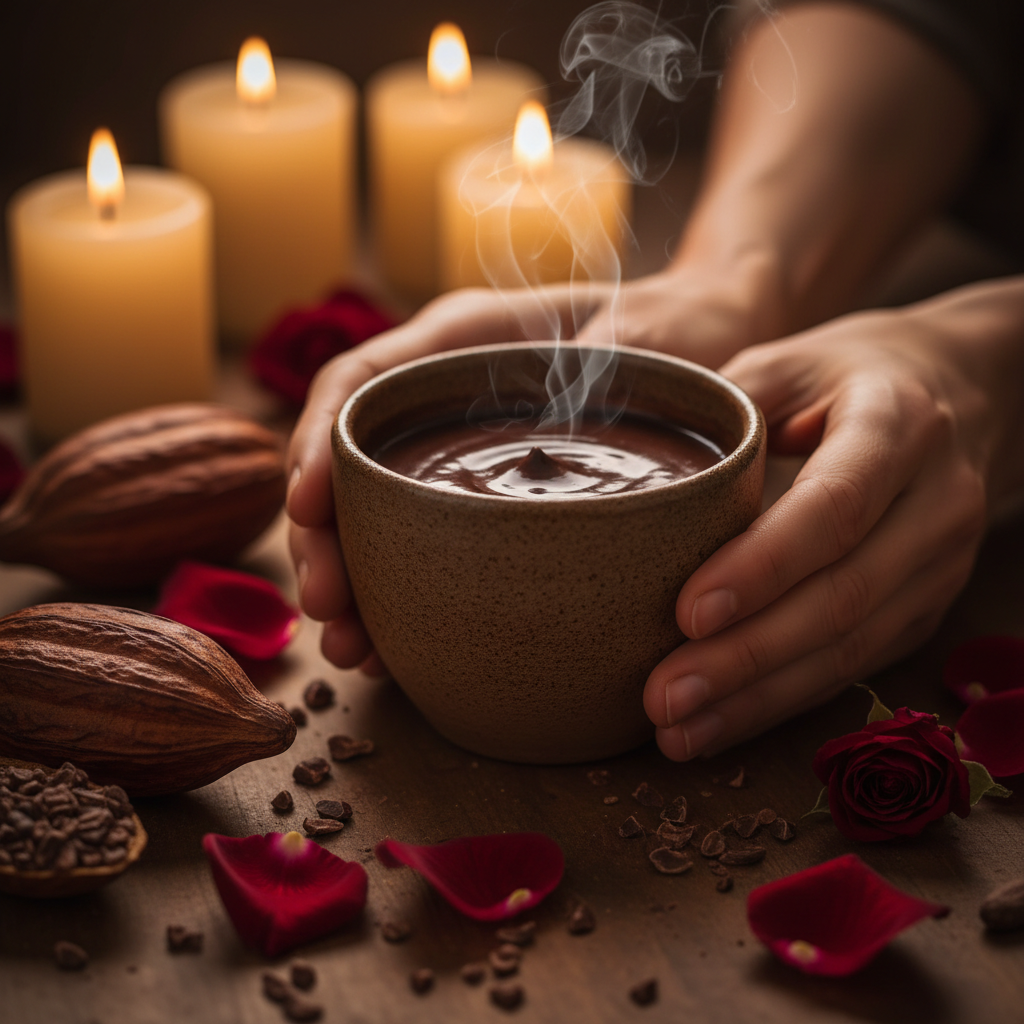
A cacao ritual is intended to create more presence, warmth and connection with the self. Yet for someone who lives with migraine, the question of cacao migraine triggers deserves a gentle and honest answer. Cacao may feel deeply supportive for one person and contribute to an attack for another. The most compassionate approach is neither fear nor force. It is attentive self-knowledge.
Migraine is a neurological condition, not simply a severe headache. Its thresholds can shift with stress, sleep, hormones, hydration, food, light and emotional load. This means cacao is rarely the whole story. It may be one thread in a much larger pattern, or it may be entirely neutral for you.
Cacao migraine triggers and what the evidence suggests
Chocolate is often named as a possible migraine trigger, but the relationship is more complex than it first appears. Research has not confirmed chocolate as a universal trigger, and some people crave chocolate during the early stages of a migraine attack. In those cases, the craving may be part of the attack beginning, rather than the chocolate causing it.
Ceremonial cacao is different from a small square of chocolate after dinner. It is generally less processed, often taken in a larger serving, and contains naturally occurring stimulating compounds including theobromine and a smaller amount of caffeine. It can also contain compounds such as tyramine and phenylethylamine. For a sensitive nervous system, particularly when the migraine threshold is already low, this fuller dose may matter.
That does not mean cacao is inherently unsafe or that you must remove it from your rituals. It means that ritual wellbeing includes listening to the body as closely as we listen to the heart. A practice that supports expansion should also leave room for choice, pacing and rest.
Why your response may change from one ceremony to the next
A food or drink may only become a trigger when several other factors are present. You might drink cacao many times without difficulty, then notice an attack after a demanding week, a poor night’s sleep or a long stretch without enough water. This is often described as the migraine threshold: when enough pressures accumulate, the nervous system becomes more vulnerable.
Cacao can feel more activating when taken on an empty stomach, alongside coffee, or late in the day when sleep may be disrupted. A rich preparation with added sugar can also create a different experience from simple cacao blended with water or plant milk. The setting matters, too. Strong fragrance, bright screens, heat, loud sound or emotional intensity may be relevant co-factors for some people.
Hormonal shifts are another consideration. If your migraines cluster around menstruation, perimenopause or other hormonal changes, you may find that a cacao dose that usually feels comfortable is less so at certain points in the month. This is not a failure of your practice. It is valuable information about your changing internal landscape.
A gentler way to explore cacao in ritual
If you are curious about cacao but unsure of your sensitivity, begin below the usual ceremonial serving. A small amount allows you to meet the experience without asking your body to process too much stimulation at once. Have it earlier in the day, after eating something nourishing, and avoid pairing it with coffee, energy drinks or alcohol.
Choose a day when your system feels relatively settled. This is not the moment to test cacao after little sleep, during a busy travel day or while recovering from an intense period of stress. Give yourself a calm window afterwards rather than moving immediately into demanding work, driving or a packed social evening.
A brief journal note can be more useful than trying to remember how you felt weeks later. Record the amount of cacao, the time you took it, food and caffeine that day, sleep quality, menstrual cycle phase if relevant, and any symptoms over the following 24 hours. Notice subtleties too: neck tension, nausea, light sensitivity, restlessness or a change in mood can sometimes appear before head pain.
One experience is not always a pattern. If you feel unwell after cacao, pause rather than testing again the next day. Once you have fully recovered, you may decide to try a lower amount in quieter conditions. If the same response returns more than once, it is wise to trust that information and choose another form of ritual support.
At Luminous Resonance, we hold ritual as an invitation, never an obligation. You can enter a reflective or sound-based practice with herbal tea, warm water, or no drink at all. The intention of the ceremony does not live in the dose. It lives in the quality of your attention.
When it is best to skip cacao
There are times when choosing rest over cacao is a clear act of self-care. Skip it if you are in the early signs of a migraine, have had an attack within the past day and still feel tender, or know you are approaching a reliably sensitive point in your cycle. It may also be sensible to avoid it when you are dehydrated, sleep-deprived, unwell or already feeling overstimulated.
Speak with your GP, neurologist or pharmacist before using ceremonial cacao if you take medication for migraine or mood, particularly medicines that affect serotonin, blood pressure or stimulation. This is especially relevant if you take monoamine oxidase inhibitors, have heart or blood pressure concerns, are pregnant or breastfeeding, or have been advised to limit caffeine. Individual circumstances and medicines matter more than broad wellness advice.
Seek urgent medical support for a sudden, severe headache unlike anything you have experienced before, headache after a head injury, or migraine symptoms alongside weakness, confusion, fainting, fever, seizure, speech changes or a new visual disturbance. A ritual space can be soothing, but it is not a substitute for medical assessment.
If a headache begins after cacao
If you notice early migraine symptoms after drinking cacao, move towards softness rather than trying to push through the ceremony. Stop drinking the cacao, sip water, eat something simple if you have not eaten, and reduce sensory input. Dim the room, step away from screens and choose silence or very gentle sound.
Follow the treatment plan you have agreed with your clinician, including any prescribed acute migraine medicine. Some people find a cool cloth, a dark room and slow breathing supportive while medication takes effect. Avoid treating the experience as proof that you have done something wrong. Your body is communicating a need, not issuing a judgement.
Making ritual fit your nervous system
The most sustainable spiritual practices are responsive rather than rigid. Cacao may be a beautiful companion when used in the right amount, at the right time, within the right conditions. For others, its stimulating qualities will not be a fit, and that is equally valid.
Let your ritual be shaped by what helps you feel more resourced afterwards: clearer, calmer, more connected and able to return to daily life with care. The sacredness is not diminished when you choose less cacao, different nourishment, or a quiet evening of rest. Sometimes the deepest act of ceremony is simply believing your body the first time it speaks.