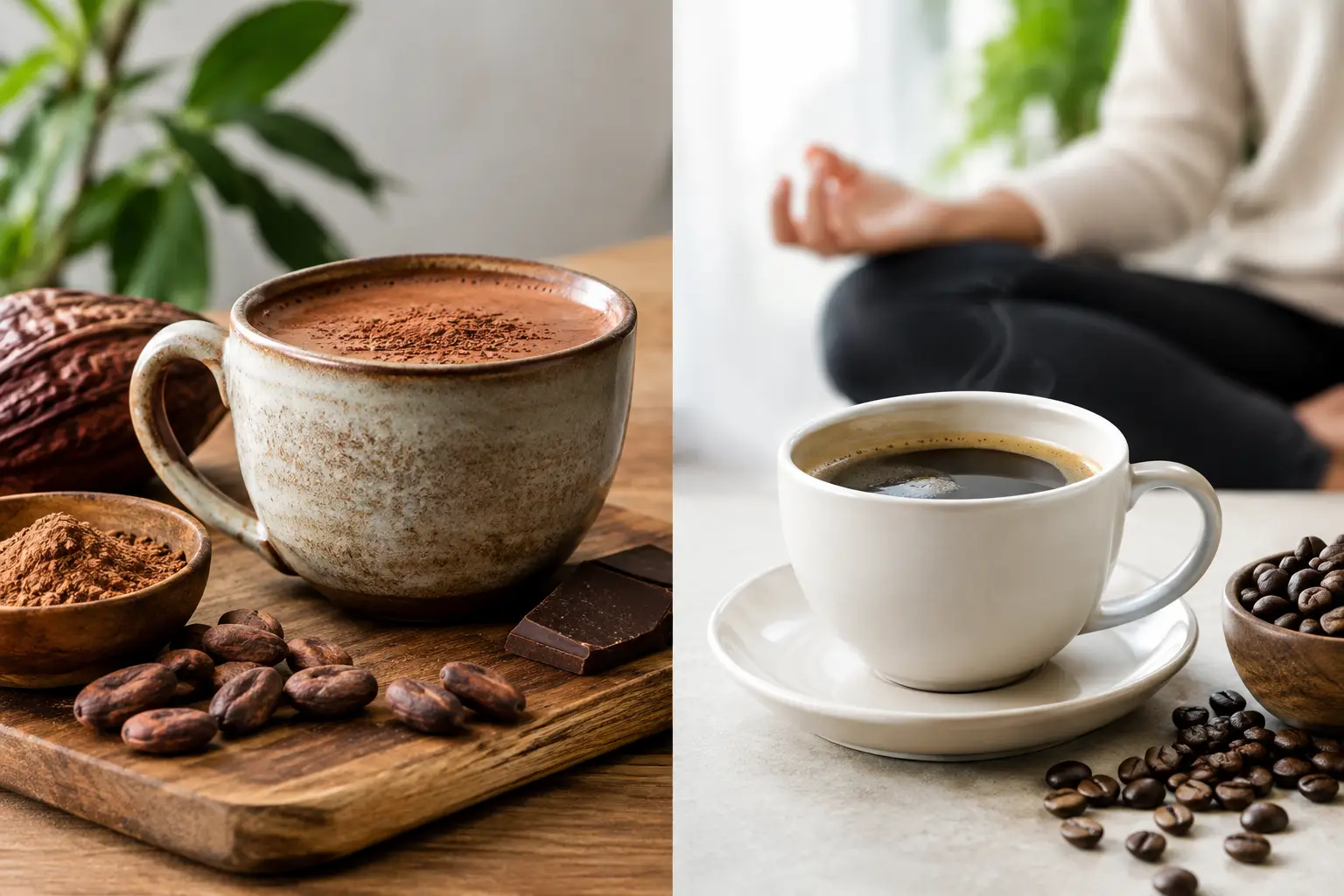
The question of cacao versus coffee mindfulness is not really about choosing the ‘better’ drink. It is about noticing what you are asking your body to do. On a hurried morning, coffee may offer a familiar lift into action. Before meditation, journalling or a sound bath, ceremonial cacao may invite a slower arrival - one that makes room for sensation, emotion and intention.
Both can belong in a mindful life. The difference lies in their chemistry, their rhythm and the relationship you create with the cup in your hands.
Cacao versus coffee mindfulness: two kinds of energy
Coffee is often chosen for alertness. Its caffeine works primarily by blocking adenosine receptors, which can reduce the sense of tiredness and make concentration feel more available. For many people, that effect is useful, pleasurable and woven into the social fabric of the day. A coffee before work, a walk with a friend, a quiet flat white at the kitchen table - these can all be genuine moments of presence.
Yet caffeine can also amplify what is already there. If you are rested and settled, it may support clear focus. If you are depleted, rushed or carrying anxiety, the same cup can sometimes sharpen the edges: a racing mind, shallow breath, digestive discomfort or an energy dip later in the day. This does not make coffee inherently unmindful. It simply asks for honest self-observation.
Cacao contains a little caffeine too, though usually far less than coffee when prepared as a ceremonial-style drink. Its distinctive compound is theobromine, a gentler stimulant that many people experience as more gradual and sustained. Cacao also contains naturally occurring compounds associated with mood and pleasure, alongside minerals and plant nutrients. In a ritual setting, however, its significance reaches beyond ingredients.
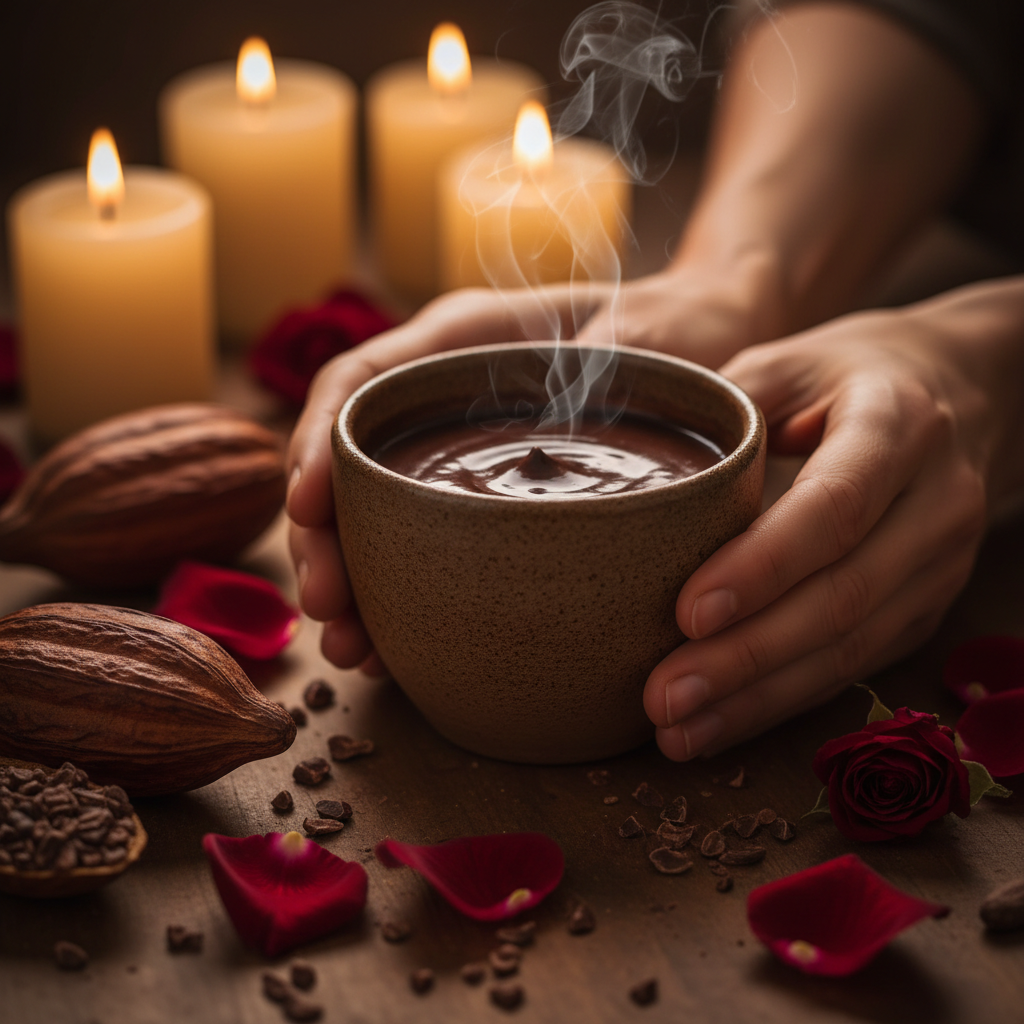
Warm cacao is often prepared slowly, received with an intention and shared within a held practice. That context matters. When the preparation itself becomes a threshold between daily demands and inner listening, the drink is no longer only a source of energy. It becomes a cue for the nervous system: we are allowed to pause now.
Mindfulness is in the manner, not only the mug
It is easy to turn wellness into another performance: the perfect morning routine, the most elevated ritual, the right choice of beverage. Mindfulness asks for something more human. It asks you to meet the reality of this moment without immediately trying to improve it.
A mindful coffee ritual might mean drinking it after food rather than using it to override exhaustion. It might mean leaving the phone in another room for ten minutes, feeling the warmth of the cup and noticing whether each sip brings spaciousness or urgency. Coffee does not have to be hurried simply because the day ahead is full.
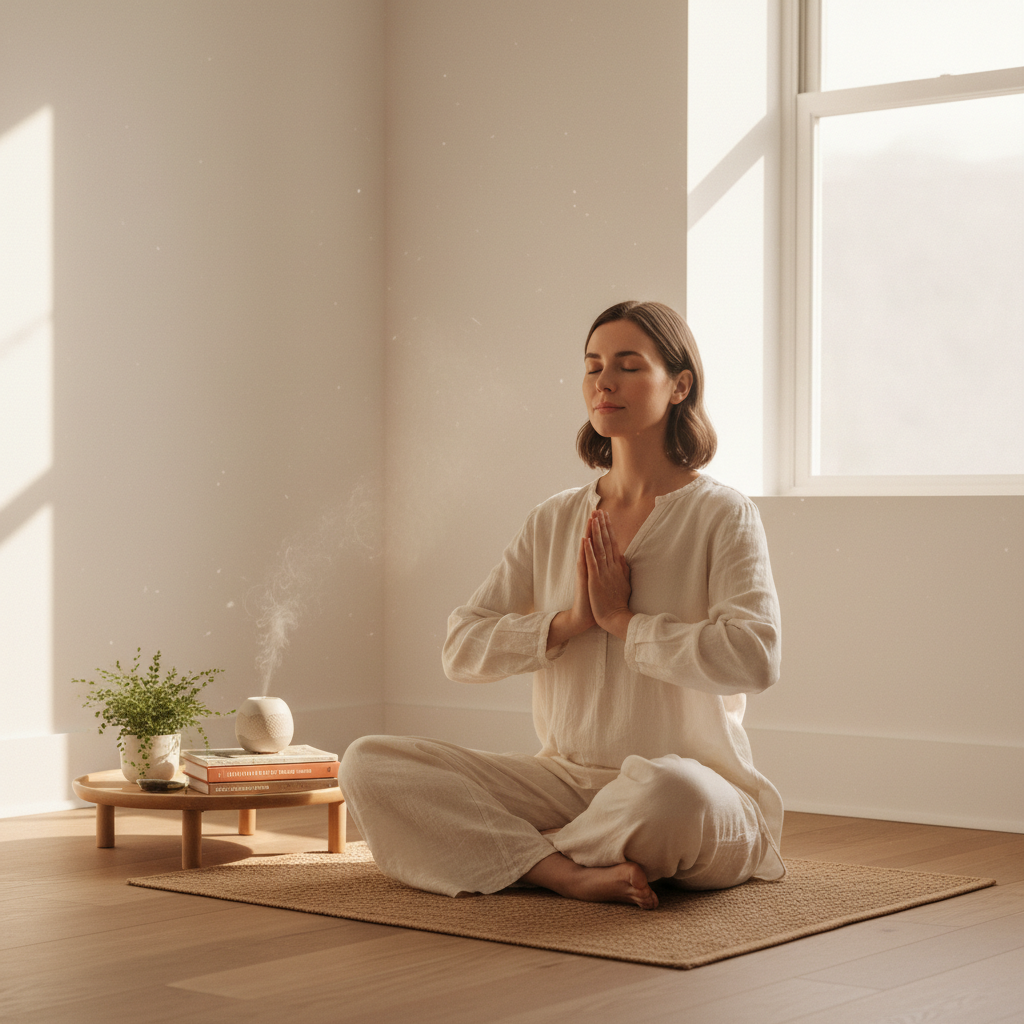
A mindful cacao ritual may offer a different doorway. The earthiness of the drink, the deliberate stirring, the hand resting over the heart before a guided meditation - these small gestures can help the mind follow the body into the present. For people who find silent meditation difficult at first, a sensory ritual can provide a gentle anchor.
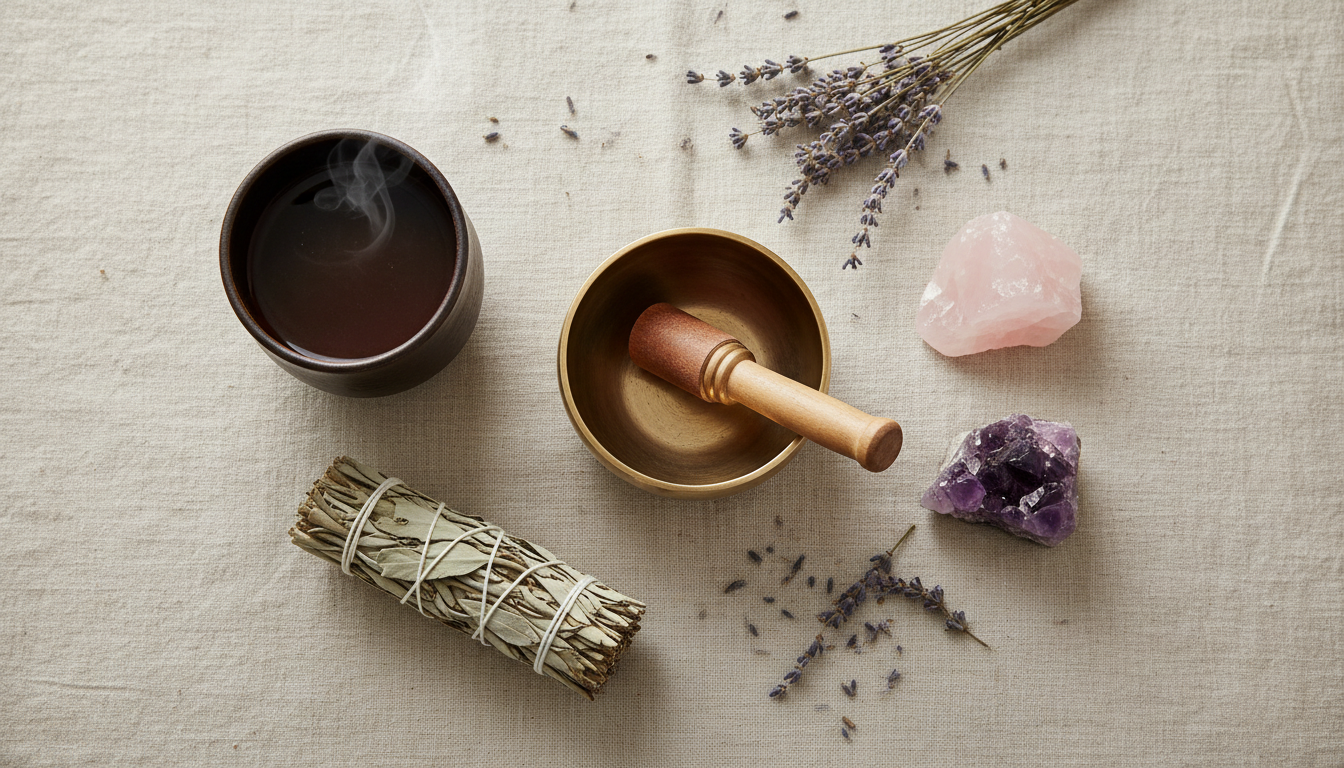
Neither approach needs to be elaborate. A ritual is not defined by candles, music or a lengthy ceremony, though these can be beautiful supports. It is defined by attention and consent: choosing a practice that genuinely serves your capacity rather than asking you to become someone else.
When coffee supports your practice
Coffee can suit a morning when you need to write, study, travel or meet a demanding task with alertness. If it leaves you feeling clear and steady, and you enjoy it without relying on it to silence persistent fatigue, it can be part of an intentional rhythm.
Try placing your coffee before the busiest part of the day, especially if late caffeine disturbs your sleep. The quality of your rest will shape tomorrow’s mindfulness far more deeply than an extra afternoon espresso. You might also pair it with a brief check-in: What is my energy like before this? What am I hoping this drink will change?
Those questions can reveal whether you are choosing pleasure and focus, or trying to push beyond a limit that deserves care.
When cacao may be the kinder invitation
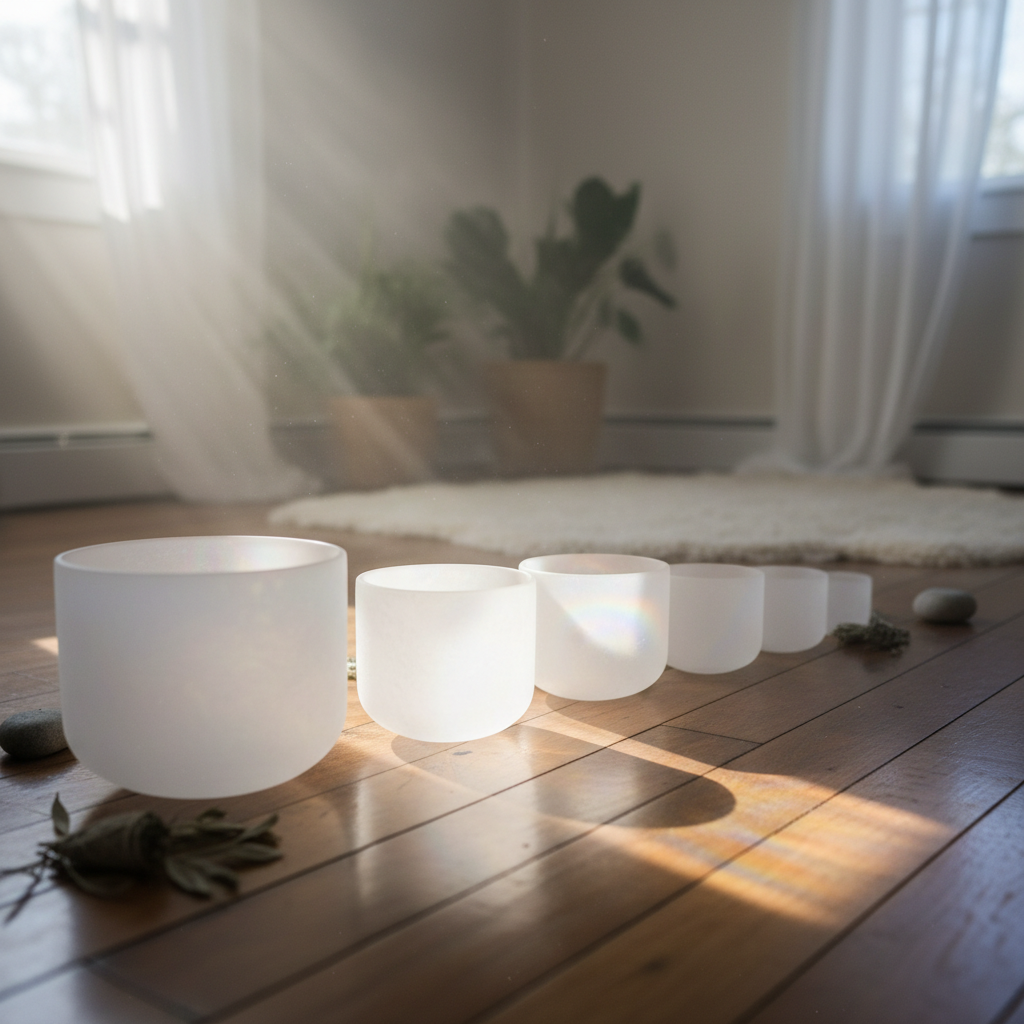
Cacao can feel particularly supportive before reflective practices: journalling, breathwork, gentle movement, meditation or a therapeutic sound bath. Its slower ritual quality may be welcome when your inner world feels crowded and you do not want more intensity.
Rather than expecting cacao to create a particular emotional breakthrough, approach it as an invitation. Let the warmth settle your attention. Notice what arises without forcing a story around it. Some days that may be tenderness or creative clarity. On others, it may simply be the recognition that you are tired, and that is meaningful information too.
At Luminous Resonance, cacao is held as part of a wider digital sanctuary: a sensory companion to psychological grounding, guided reflection and spiritual expansion. The practice is not about escaping ordinary life. It is about returning to it with a little more contact with yourself.
The nervous system question
For people living with stress, the practical distinction between cacao and coffee often comes down to activation. A little activation is not a problem. We need energy to work, care for others, create and participate in life. The question is whether the stimulation feels resourcing or depleting.
Coffee can be a good fit when your system is underpowered and you tolerate caffeine well. Cacao may be preferable when you want to remain awake while preserving a sense of softness and embodiment. But individual responses vary considerably. One person feels grounded with cacao; another finds any stimulant uncomfortable. One person drinks coffee peacefully every morning; another notices even a modest amount heightens anxiety.
Your body is the most relevant source of feedback. Pay attention not only to the first twenty minutes, but also to your breath, mood, digestion, sleep and energy later in the day. A mindful choice is one made with your whole pattern in view.
If you are pregnant or breastfeeding, have a heart condition, experience panic symptoms, are sensitive to stimulants, or take medication that may interact with cacao or caffeine, seek advice from a qualified healthcare professional. Cacao is a plant-based ritual drink, not a substitute for therapeutic or medical care. Emotional material can arise during any contemplative practice, and it is wise to choose support that feels safe and appropriate.
Creating a ritual that fits real life
You do not need to choose one drink forever. Your needs may change across the week, through your menstrual cycle, with the seasons or during demanding periods at work. What matters is moving from autopilot to choice.
On a focused workday, coffee may be your companion. Drink it seated if you can, with breakfast or a nourishing snack, and give yourself a few unhurried breaths before opening the next task. On a slower morning, cacao may help you transition into a journal page or a guided practice. Let one question accompany the cup: What would feel honest and caring today?
If you are reducing coffee, avoid treating cacao as a simple replacement that must recreate the same jolt. Its invitation is different. Begin with a modest serving, particularly if you are new to it, and allow your relationship with the ritual to unfold. You may find that what you were seeking was not stronger stimulation, but a more intentional beginning.
There is also room for neither. Water, a nourishing breakfast, a walk outside, a few minutes of stillness or an earlier bedtime may be the practice your system is quietly requesting. Spiritual depth is not measured by what is in the cup. It is measured by the sincerity with which you listen.
The next time you reach for cacao or coffee, pause before the first sip. Let your choice be less about becoming more productive or more enlightened, and more about offering yourself the kind of presence you can actually receive.