A sound bath is often described as deeply calming, so feeling anxious during one can be confusing. Yet the honest answer to the question, can sound baths trigger anxiety, is yes - for some people, in some circumstances. This does not mean you have failed at relaxation, nor that sound-based practice is inherently unsafe. It may simply mean your nervous system needs more choice, preparation, or a different pace.
Sound can be a beautiful doorway into stillness. It can also make inner sensations, thoughts, and emotions feel more noticeable. Meeting that response with gentleness is part of the practice.
Can sound baths trigger anxiety?
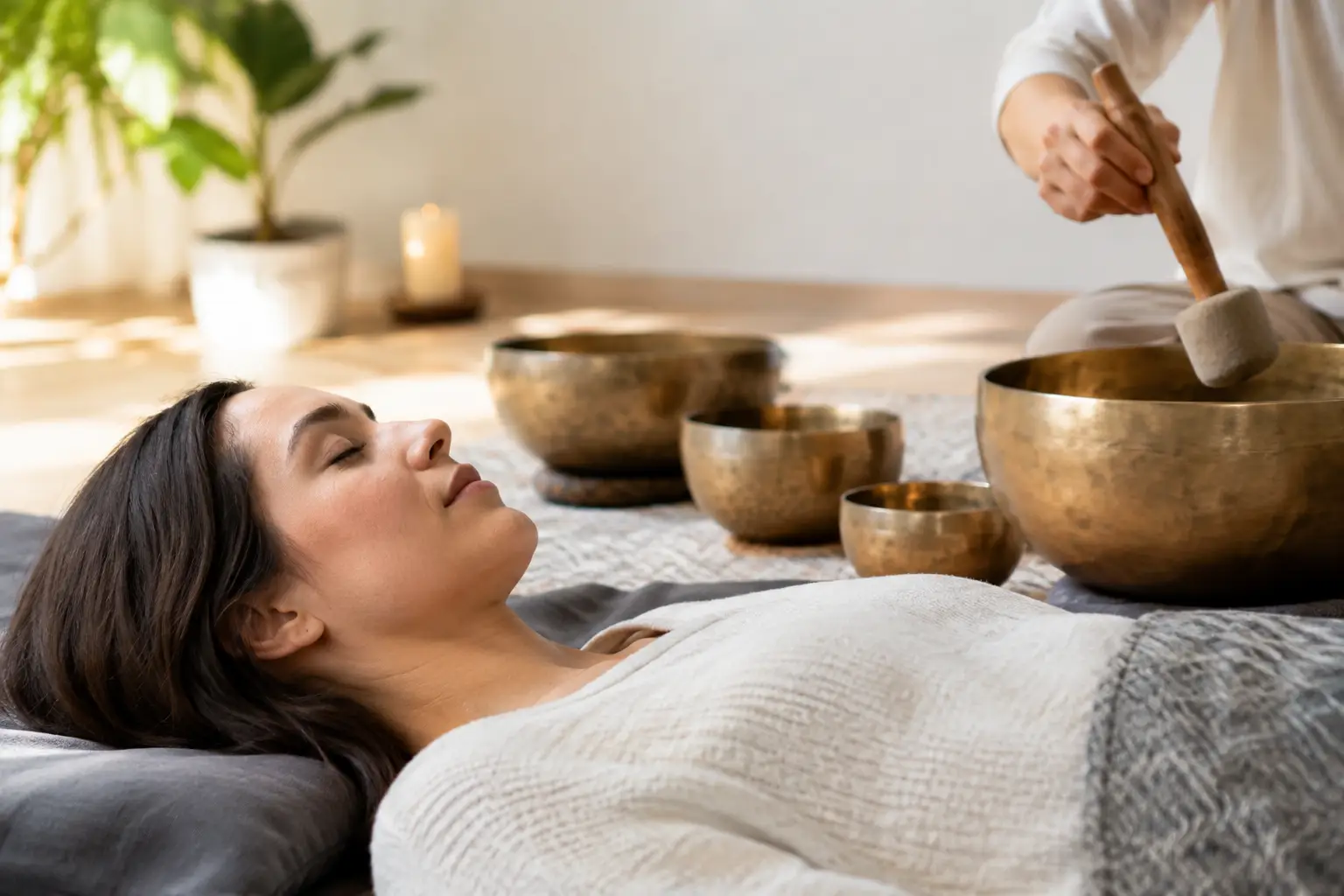
A sound bath can trigger or heighten anxiety when its volume, vibration, intensity, setting, or emotional atmosphere feels overwhelming to the person receiving it. Sustained tones from crystal bowls, gongs, chimes, drums, or vocal sound may be soothing for one nervous system and activating for another.
This can be especially true when someone arrives already stressed, overtired, emotionally raw, or carrying more than they have had space to process. In the quiet that follows the first notes, the mind is no longer occupied by work, conversation, or routine. Unresolved worries may rise to the surface. Bodily sensations can become more vivid. For some, this is a meaningful moment of awareness; for others, it can feel unsettling.
Anxiety during a session does not always look like panic. You may notice a racing heart, restlessness, tightness in the chest, irritation, dizziness, a wish to leave, or a sudden stream of fearful thoughts. You may also feel tearful or unexpectedly emotional. These experiences deserve care, rather than judgement or spiritual interpretation that moves too quickly.
Why sound can feel activating rather than restful
Sound is not neutral. It is felt in the body as well as heard through the ears. Lower frequencies can seem physically powerful, while high or sustained notes may feel sharp or intrusive to a sensitive listener. A sound bath also asks for a degree of surrender: you are lying or sitting still, often with your eyes closed, while the sound changes around you. If your system associates reduced control with danger, even a gentle practice can feel challenging.
Sensory sensitivity matters too. People who are easily overwhelmed by noise, bright light, crowds, or unfamiliar environments may find certain instruments or group settings too much. Those living with tinnitus, migraine, vestibular conditions, auditory sensitivities, or neurodivergence may need particular consideration. The right experience is not defined by how long you can endure it. It is defined by whether you can remain connected to your own sense of safety.
There is also an emotional dimension. Rest can create space for feelings that have been held beneath the surface. Grief, anger, loneliness, and fear can emerge when the body finally slows down. This is not necessarily a sign that something has gone wrong. But a sound bath is not a replacement for mental health care, and intense emotional material may need support beyond a wellness setting.
The role of expectation
Many people enter a sound bath expecting instant peace. When anxiety appears instead, they can become anxious about the anxiety: “Why am I reacting like this when everyone else looks relaxed?” That second layer of self-criticism often makes the first response stronger.
A more compassionate expectation is this: a sound bath may invite relaxation, insight, emotion, or simply a clearer sense of what you need today. There is no ideal experience to achieve. Sometimes the most restorative choice is to sit near the door, keep your eyes open, lower the volume, or leave early.
How to make a sound bath feel safer
The most supportive sound practice begins before the first bowl is played. Choose a facilitator who speaks clearly about consent, volume, breaks, and the freedom to adjust your position or step out. A grounded space will never ask you to push through distress in the name of healing.
If you are attending in person, arrive early enough to choose where you settle. Sitting farther from louder instruments can make a real difference. You might prefer to sit upright rather than lie down, especially if lying flat leaves you feeling exposed or too inwardly focused. Keep a glass of water nearby, wear warm layers, and position yourself so you can leave without drawing attention to yourself if needed.
For an online session, you have even more control. Begin with low volume, use your own speaker rather than headphones if headphones feel immersive or intense, and keep a light on. Let the sound be part of your room, not something that takes it over. You can pause at any time. That is not interrupting the practice; it is practising self-trust.
Before beginning, try naming a simple intention: “I will stay with what feels manageable.” This is different from demanding a particular outcome. It creates an inner agreement that your wellbeing comes first.
What to do if anxiety rises during a session
When anxiety begins to build, orient yourself to the present rather than trying to force yourself deeper into relaxation. Open your eyes and look slowly around the room. Notice a familiar object, the edges of a window, or the steadiness of the floor beneath you. Feel your feet, your hands, or the support of the chair or mat.
It can help to lengthen the exhale gently, without taking exaggerated breaths that leave you light-headed. You might place one hand over your chest and one over your abdomen, or press your palms together. If the sound itself feels like the problem, move away from it, cover your ears lightly, turn down the volume, or step outside for fresh air.
You do not need permission to stop. A session can be complete after ten minutes if ten minutes is what your system can receive with care. Afterwards, return to ordinary sensory anchors: drink water, eat something nourishing, take a short walk, or speak to someone you trust. Avoid making immediate, sweeping conclusions about what the experience “means” while you are still activated.
When to seek further support
If sound regularly brings on panic, dissociation, severe distress, or memories that feel unmanageable, it may be wise to pause sound baths and speak with a qualified healthcare or mental health professional. This is particularly important if anxiety is affecting sleep, work, relationships, or your ability to function day to day.
A trauma-informed therapist can help you understand your responses without pathologising them. For some people, gradual exposure to calming sound in a controlled setting can be useful; for others, a different form of regulation may be more appropriate. Your path does not need to look like anyone else’s.
Choosing a more supportive sound experience
The quality of facilitation matters as much as the instruments. Look for spaces that welcome questions and make room for different bodies, sensory needs, and emotional states. A considerate practitioner will not promise to cure anxiety or imply that discomfort always signals a spiritual breakthrough. They will offer options, clear boundaries, and a calm return to the room at the close of the session.
Shorter sessions are often a wise starting point. You may also find that gentle bowls, soft humming, nature sounds, or a low-volume guided meditation feel more settling than gongs or intense rhythmic percussion. If you are combining sound with cacao or another ritual, take account of how stimulants and altered bodily sensations affect you personally. Cacao can feel heart-opening and nourishing, but some people are sensitive to its naturally occurring stimulants, particularly when anxious, sleep-deprived, or taking certain medication. When in doubt, choose simplicity.
At Luminous Resonance, we hold sound as an invitation rather than a demand: a ritual space where psychological grounding and spiritual expansion can exist together. The practice is not about overriding your signals. It is about learning to listen to them with more tenderness.
Your nervous system is not being difficult when it asks for a quieter room, a softer volume, or a way out. It is communicating. Honour that wisdom, and let your relationship with sound unfold at a pace that leaves you feeling more present in yourself.