A low bowl tone can seem to arrive before thought does. The shoulders soften by a fraction, the breath lengthens, and the room feels less demanding. But can sound frequencies relax us in a meaningful way, or is the sense of calm simply expectation? For many people, sound can become a gentle doorway into rest. Its effect is not automatic, and it is not the same for every nervous system, yet intentional listening can create conditions in which the body and mind are more able to settle.
What sound is really doing in a calming practice
When people speak about healing frequencies, they often mean a particular pitch measured in hertz. Pitch matters, especially because low, sustained sounds can feel physically enveloping, while high or sharp tones may feel energising or uncomfortable. Yet relaxation rarely comes from one number alone.
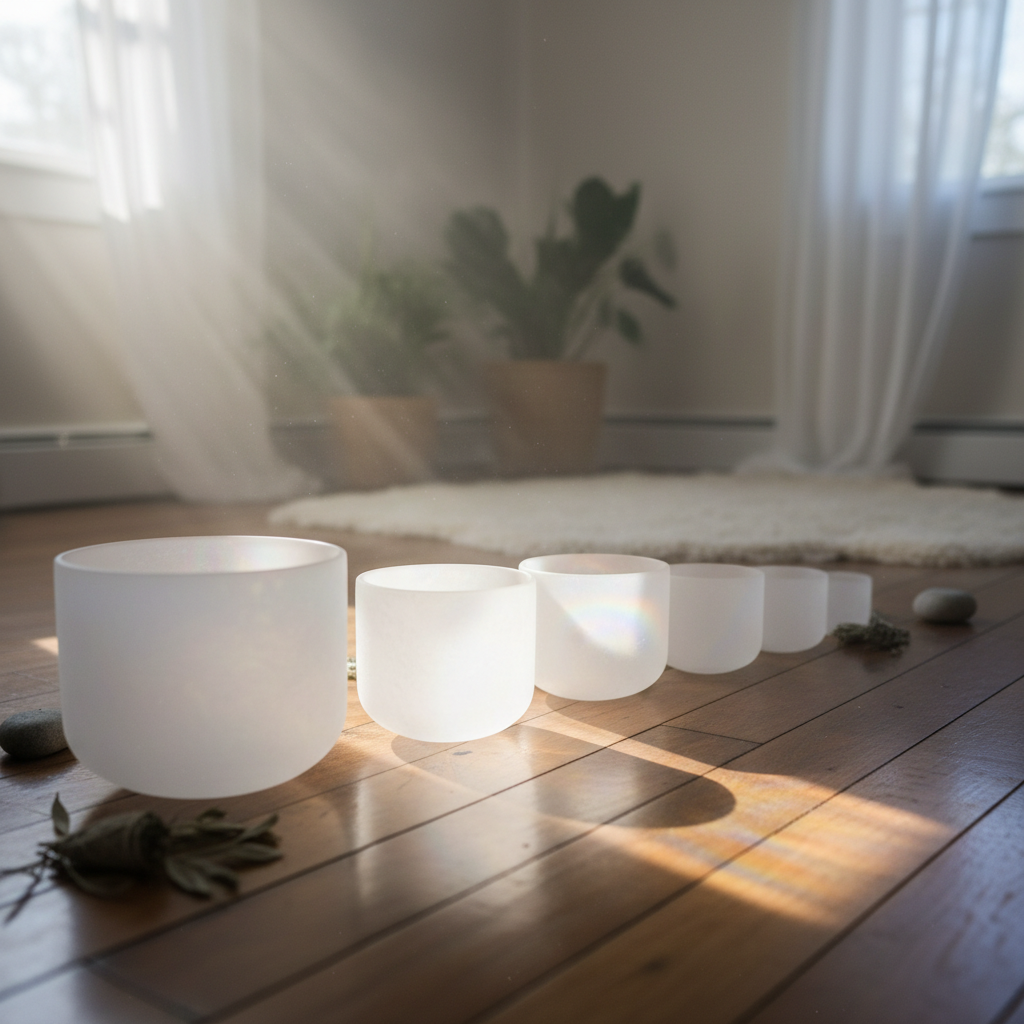
A sound bath is an experience made from many elements: volume, rhythm, repetition, resonance, silence, the acoustic quality of the space and your relationship with the sound itself. A crystal bowl, gong, drum, chime or voice does not need to carry a special frequency to invite a quieter inner state. What often matters more is the way the sounds give attention somewhere safe to rest.
This distinction is reassuring. You do not need to find a supposedly perfect tone or force yourself to respond to a recording that leaves you cold. The practice can be personal, sensory and responsive. One person may settle with a deep, spacious drone; another may feel more held by soft vocal tones or the repeating pulse of a drum.
How sound may support nervous system regulation
Stress narrows attention. The mind scans, predicts and rehearses. In that state, silence can sometimes feel restful, but it can also leave more room for racing thoughts. Gentle sound offers a focal point that is less demanding than a task and less abstract than trying to think yourself calm.
Rhythm gives the mind something steady
Slow, predictable musical patterns may support a sense of safety because they are easy to follow. When the pace is unhurried, some people naturally begin to breathe more slowly or notice their body more clearly. This is not a command for the nervous system to switch off. It is an invitation to move out of constant vigilance, one moment at a time.
Repetition can be particularly supportive after a crowded working day or during a period of emotional overload. The same tone returns, then fades. A familiar rhythm holds its place. In this way, sound can provide a simple form of continuity when your inner experience feels scattered.
Vibration can deepen embodied attention
Lower tones from bowls, gongs and drums may be felt as much as heard, particularly when played in person. This felt quality can bring awareness down from the head into the chest, belly, hands or feet. For someone accustomed to living in thought, that shift can feel profoundly grounding.
The aim is not to chase a dramatic sensation. Sometimes the most nourishing response is subtle: noticing the weight of your body against the floor, becoming aware of an exhale, or realising that a difficult feeling has a little more space around it. Sound does not have to remove emotion in order to help you be with it more kindly.
Can sound frequencies relax everyone?
No. Sound is powerful precisely because it is personal. A frequency that feels spacious to one listener may feel intense, irritating or even unsettling to another. Volume, unexpected changes and prolonged resonance can be difficult for people with sensory sensitivity, tinnitus, migraine, trauma-related hypervigilance or certain hearing conditions.
This does not mean sound-based practice is off limits. It means choice matters. A calming session should leave room for you to adjust the volume, change your position, step away, use ear protection or choose a simpler form of sound. Recorded practices can be especially useful because you remain in control of the environment.
There is also a difference between relaxation and dissociation. If you feel numb, far away from yourself or overwhelmed during a practice, pause and orient to your surroundings. Feel your feet, name a few objects in the room, sip water or return to a familiar grounding activity. Emotional safety is more valuable than staying with a sound until the end.
Choosing sounds that meet you where you are
Begin with your actual state rather than an idea of how relaxed you ought to feel. If you are agitated, very slow and spacious sound may initially make your thoughts louder. A soft rhythmic track, gentle humming or a short practice may be more approachable. If you feel depleted, silence between tones can be restorative rather than empty.
Give yourself permission to be selective. Notice whether your jaw tightens, whether your breathing becomes easier, and whether the sound asks too much of your attention. The best choice is often the one that helps you feel a little more present, not the one that promises the deepest transformation.
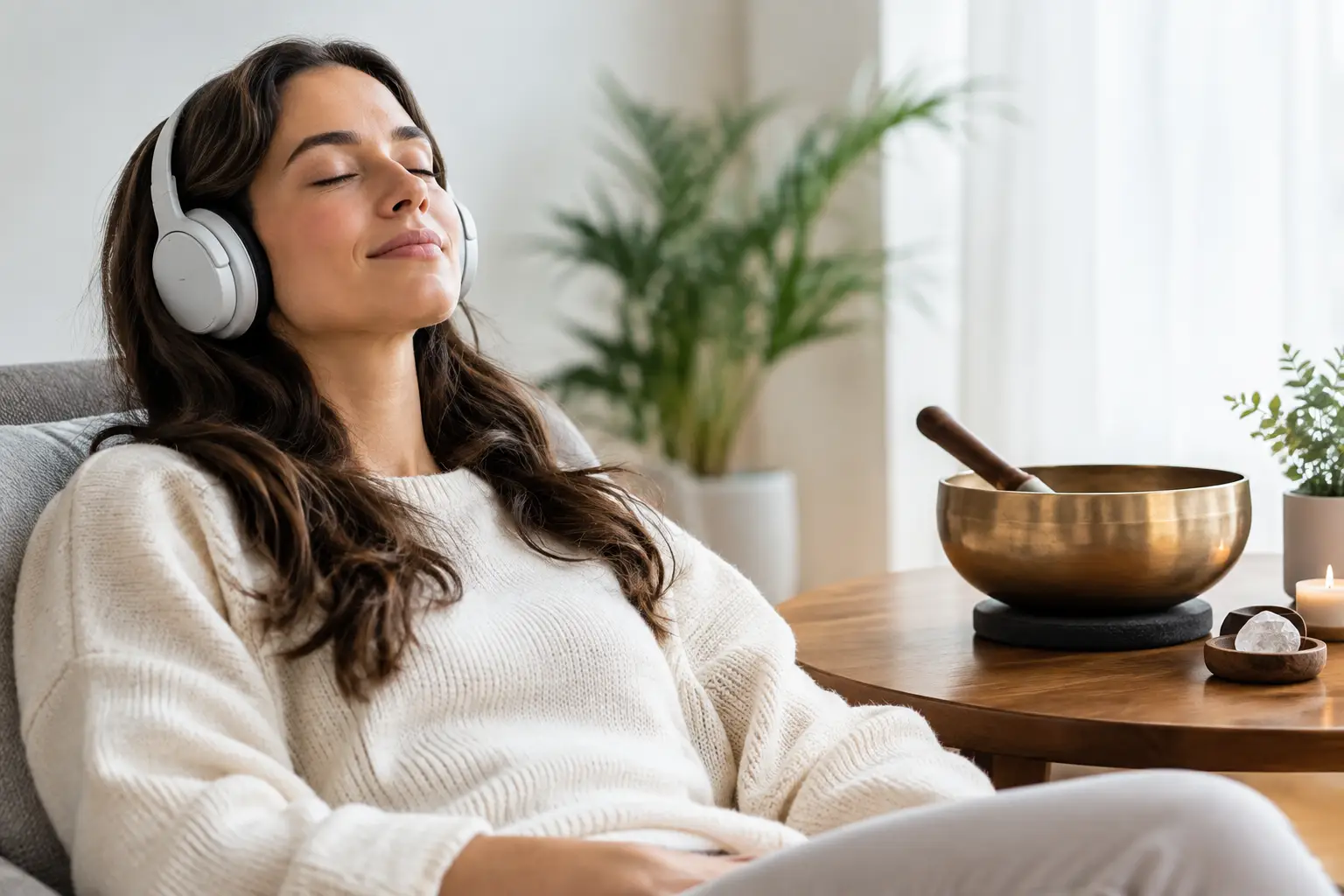
For home listening, create a modest container. Lower the lights, silence notifications and choose a time when you do not need to rush immediately into the next task. Five attentive minutes can be more regulating than an hour played in the background while you answer messages. If you are using headphones, keep the volume gentle. Calm does not need to be loud to be felt.
A simple way to listen with intention
Before you press play, place one hand over your heart or lower abdomen and take a natural breath. There is no need to manipulate it. Let the first minute be about arriving rather than achieving anything.
As the sounds unfold, choose one anchor: the beginning and end of each tone, the pause after a vibration fades, or the point where sound meets silence. When thoughts pull you away, acknowledge them without judgement and return to that anchor. You may notice rest, emotion, boredom, resistance or nothing obvious at all. Each response is information, not a failure.
Afterwards, remain still for a few breaths before reaching for your mobile phone. A brief journal note can help the experience settle into everyday life: What felt supportive? What felt too much? What do I need now? This reflective pause is where a sound practice becomes more than a pleasant atmosphere. It becomes a way of listening to yourself.
Holding sound as ritual, not a quick fix
Sound baths can offer a beautiful threshold between the practical and the sacred. Paired with a grounding ritual, such as preparing ceremonial cacao with care, they can mark a transition from doing to being. The ritual is not there to guarantee a result. It signals that your inner life is worthy of time, attention and tenderness.
At Luminous Resonance, this is the heart of a digital sanctuary: sound is held as a supportive practice for reflection and spiritual expansion, alongside emotional grounding. It is not a replacement for clinical care, and it need not carry impossible promises. Its value may be quieter and more lasting: a regular opportunity to return to your body and meet your experience with compassion.
The most helpful frequency may not be a specific hertz at all. It may be the sound that helps you pause long enough to hear what your own inner world has been asking for.