A cacao ceremony can begin long before the first sip. It begins in the quiet decision to choose ceremonial cacao dosage that respects your body, your season of life, and the intention you are bringing to the practice. More cacao is not necessarily a deeper experience. The most supportive amount is often the one that leaves you present, steady and able to receive what arises.
Ceremonial cacao is richly stimulating in its own gentle way. Its naturally occurring theobromine can create warmth, alertness and a sense of expanded connection, yet sensitivity differs greatly from one person to another. A dose that feels beautifully heart-opening for one person may feel too activating for another. Begin with care, and let your relationship with cacao unfold gradually.
What ceremonial cacao dosage really means
There is no universally regulated ceremonial dose. The cacao itself varies according to its origin, preparation and concentration, while your own response may be shaped by sleep, stress, food, hydration, hormones and other stimulants you have had that day.
As a broad guide, 10 to 15 grams of pure ceremonial cacao is a gentle introductory serving. It can suit a quiet morning ritual, journalling practice or your first experience of cacao. Around 20 to 30 grams is a moderate serving that many people find supportive for meditation, breathwork or a guided sound bath. A fuller ceremonial serving is often around 35 to 40 grams, though this is not the right starting point for everyone.
Think of these figures as a compassionate framework rather than a challenge to meet. The quality of your attention matters far more than reaching a particular number on the scales.
How to choose ceremonial cacao dosage for your intention
Start by asking what you need from the ritual. If you are seeking a soft pause in a demanding week, a smaller cup may offer enough warmth and focus without asking too much of your nervous system. If you are joining a spacious, facilitated practice and already know cacao feels good in your body, a moderate amount may be appropriate.
A fuller serving can be meaningful when held within a longer ceremony, especially one with time for movement, meditation, sound and rest. Yet it also deserves more preparation. You may notice a quicker heartbeat, warmth in the body, emotional tenderness or a more vivid inner landscape. These experiences are not inherently a problem, but they can feel intense when you are depleted, anxious or unfamiliar with cacao.
Your intention is not a reason to override your body. You do not need a large serving to access insight, emotion or spiritual connection. In many rituals, the smallest cup becomes a clear invitation to listen.
Begin lower if cacao is new to you
If this is your first ceremonial cacao experience, 10 to 15 grams is a wise place to begin. Have it earlier in the day where possible, particularly if you are sensitive to caffeine or notice that stimulants affect your sleep. Although cacao contains less caffeine than coffee, theobromine has a longer, steadier stimulating effect and can still feel noticeable into the evening.
Allow a few ceremonies at this level before increasing. This gives you useful information: how your energy shifts, whether your digestion feels comfortable, how your sleep is affected and whether the experience feels emotionally settling or overly activating.
If you feel well after a few occasions, increase slowly by around 5 grams at a time. There is no benefit in rushing. A practice built on self-trust is more nourishing than one built on intensity.
Let your body shape the serving
Cacao is not experienced in isolation. A 25-gram dose after a restorative night, a nourishing meal and a calm morning may land very differently from the same dose during a stressful week or on an empty stomach after little sleep.
Some people prefer cacao before food because the effects feel clearer. Others find that a light meal beforehand creates a more settled experience and reduces nausea, shakiness or a racing feeling. Neither approach is more spiritually valid. If you are unsure, have a small, balanced snack beforehand and drink water alongside your cacao.
Consider lowering your dose on days when you are already highly caffeinated, emotionally raw, unwell, dehydrated or close to bedtime. Menstrual cycle changes can also influence sensitivity. Rather than treating this as an interruption to your practice, let it become part of the practice: a chance to meet the body as it is.
Signs you may have had too much
A serving is likely beyond your current comfort level if you experience pronounced jitters, nausea, headache, anxiety, palpitations or difficulty settling afterwards. These signals do not mean you have failed at ceremony. They simply suggest that a smaller amount, more food, better hydration or a different time of day may serve you better next time.
If the experience feels uncomfortable, pause any activating practices. Sit somewhere calm, sip water, eat something simple if that feels right and allow your breath to lengthen naturally. Avoid adding coffee or other stimulants in an attempt to push through tiredness or discomfort.
When to seek individual medical guidance
Ceremonial cacao can be a beautiful ritual companion, but it is not suitable for every body or every circumstance. Speak with a qualified healthcare professional before using it if you are pregnant or breastfeeding, have a heart condition, high or unstable blood pressure, a history of severe anxiety or panic, or are managing a condition affected by stimulants.
It is also wise to seek advice if you take prescribed medication, especially antidepressants such as MAOIs, stimulant medication, blood pressure medication or other medicines that may interact with cacao's stimulating compounds. Do not stop or adjust prescribed treatment in order to take cacao.
Those prone to migraines, reflux or digestive sensitivity may also find that smaller servings are more comfortable. Cacao contains compounds that can be supportive for some people and triggering for others. This is a place for honesty, not judgement.
Preparing your cacao with steadiness
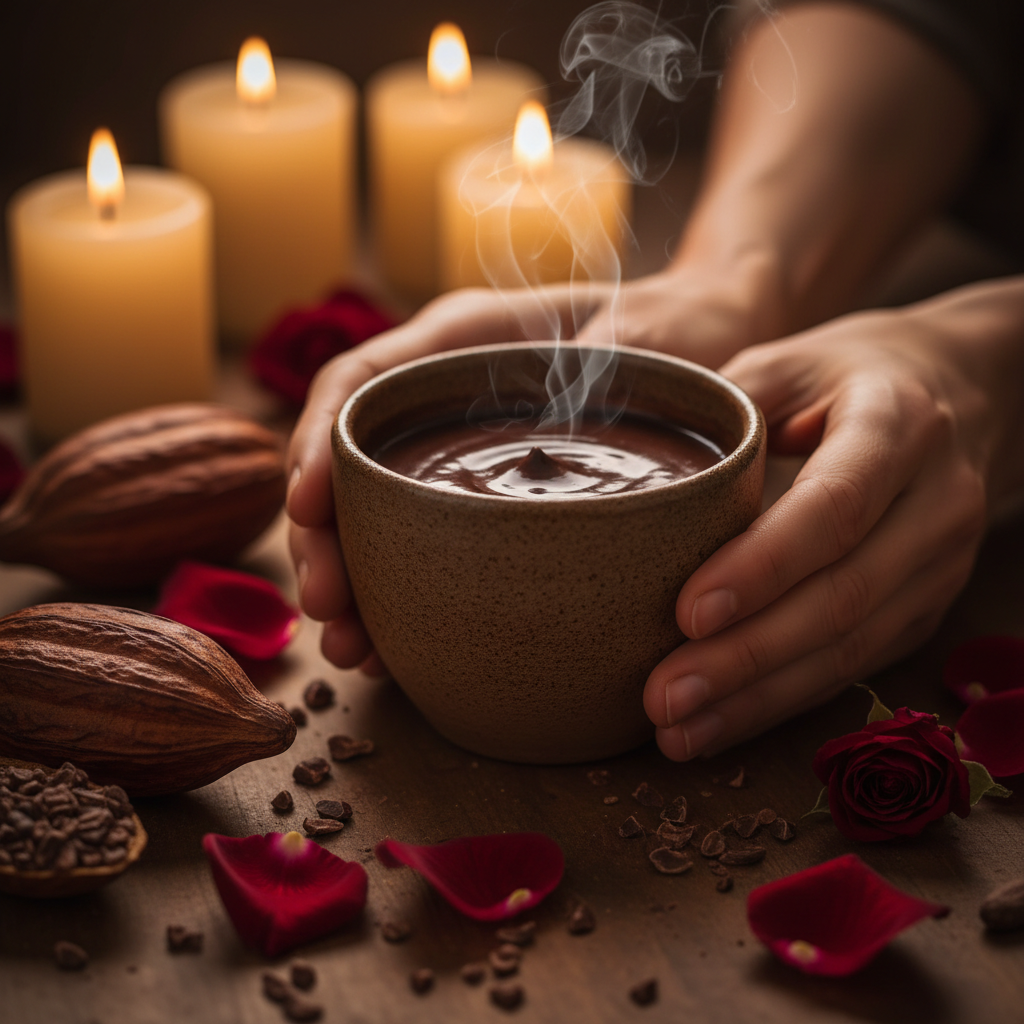
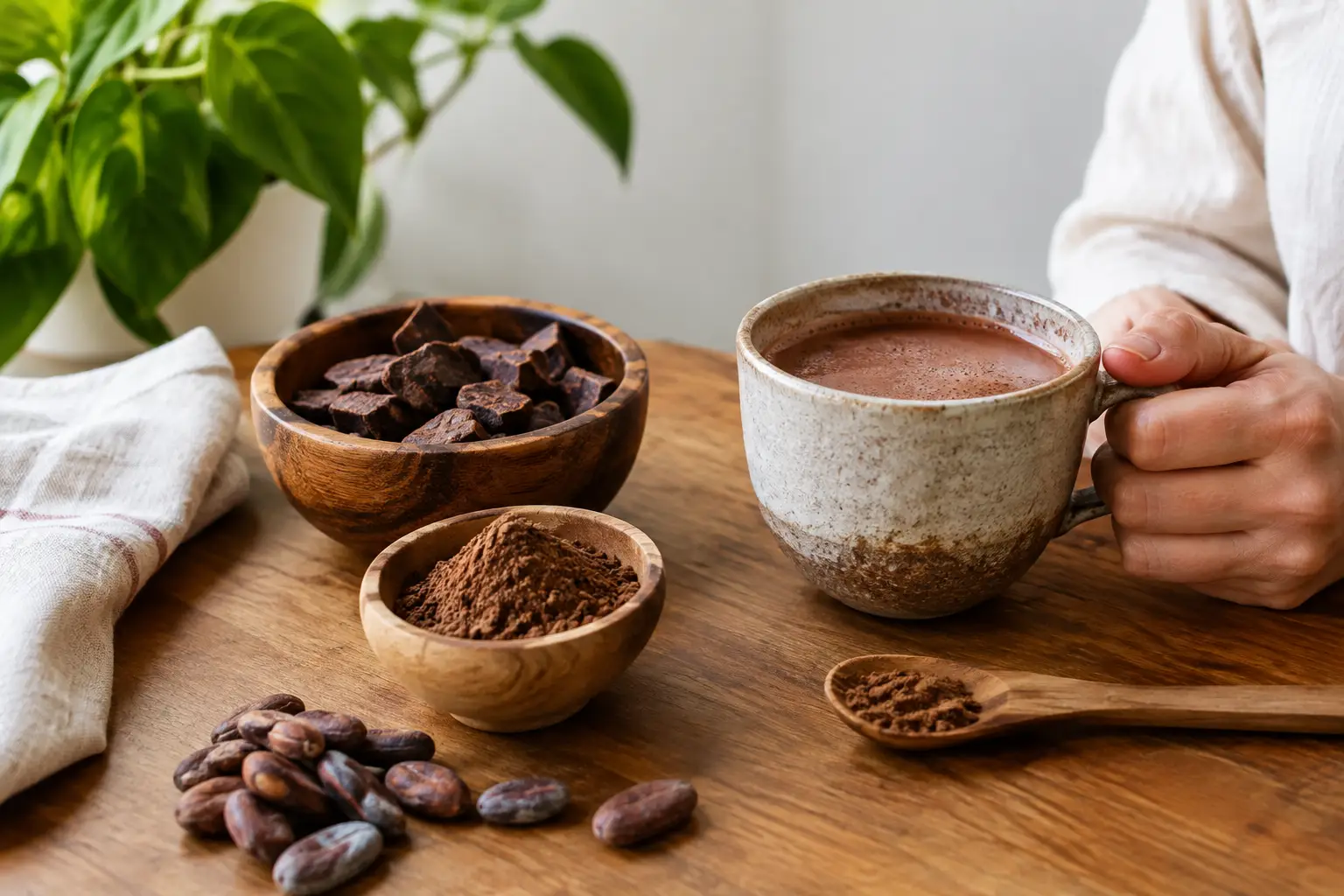
Weigh your cacao rather than estimating by eye, especially while you are learning your preferred dose. Chop or grate it finely, then blend it with warm water or plant milk until smooth. Water that is hot but not boiling helps preserve its flavour and makes a gentler cup.
Keep the recipe simple at first. A little cinnamon, vanilla or a touch of natural sweetness can be lovely, but there is value in understanding how pure cacao meets your system before adding many ingredients. If you use other stimulating additions, such as matcha, guarana or a strong coffee alongside it, the overall effect may become harder to predict.
Create a little space around the cup. Put your phone aside, sit somewhere comfortable and give yourself at least ten quiet minutes after drinking before moving into meditation, sound or reflection. This is particularly helpful when you are learning what your chosen amount feels like.
Dosage is a relationship, not a rule
In guided ritual, it can be tempting to match the serving suggested by a facilitator or chosen by others in the room. Let guidance support you, but retain your own authority. You may use half a recommended amount, drink only part of your cup, or choose no cacao at all while still fully participating in the practice.
At Luminous Resonance, ritual is held as an invitation rather than a performance. The aim is not to produce a particular emotional breakthrough. It is to create conditions in which you can meet yourself with greater presence, psychological grounding and spiritual openness.
Over time, you may find that your ideal dose changes. A smaller serving may become your favourite companion for weekday reflection, while a moderate amount feels right for a longer online ceremony. Let your journal hold the details: grams used, time of day, food and caffeine beforehand, bodily sensations, sleep and anything that surfaced emotionally. Patterns become clearer when they are witnessed gently.
The most meaningful cacao ritual is not measured by how strongly you feel it. It is measured by whether you leave with a little more tenderness towards yourself, and enough steadiness to carry that tenderness into the rest of your day.