The blank page can feel strangely loud. A half-finished proposal, painting, poem or presentation sits waiting, while your thoughts circle without landing. A creative block ritual offers a different response to forcing an idea into being: a small, deliberate threshold between pressure and presence.
Creative block is not always a shortage of ideas. Often, it is a sign that the inner conditions for expression have become crowded by urgency, self-criticism, decision fatigue or emotional residue. Your mind may be asking for a plan, while your nervous system is asking to feel safe enough to play.
This is where ritual can help. Not as a guaranteed route to inspiration, and not as another task to perform perfectly, but as a repeatable way to return to yourself before returning to the work.
Why creative block can feel so personal
Making something visible involves a quiet form of vulnerability. Even work that appears practical or professional can carry identity, hope and the fear of being misunderstood. When the stakes feel high, the body may move into protection: procrastination, distraction, over-editing or a convincing urge to do anything else first.
There is no need to pathologise this response. It is information. A blocked state can reveal that you are depleted, overexposed to other people’s expectations, grieving an outcome, or simply trying to create before you have had a moment to arrive.
The usual advice to “push through” can occasionally be useful, especially when a deadline is real and the task is straightforward. Yet pushing is rarely a sustainable answer when resistance has become a pattern. A ritual creates a gentler question: what would help me meet this work with steadiness rather than force?
A creative block ritual to begin with
Choose a version that takes ten to twenty minutes. The value comes from repetition, not elaboration. If the ritual becomes overly ornate, it can become another way to delay beginning. Keep it simple enough to use on an ordinary Wednesday morning, before a meeting or after a demanding day.
Create a clear boundary
Begin by signalling that this is a short period of protected attention. Put your mobile phone out of reach, close the unnecessary tabs and choose one small creative intention. You are not promising to complete the whole piece. You might simply write three honest sentences, sketch one shape, name the central problem or open the document without judging what comes next.
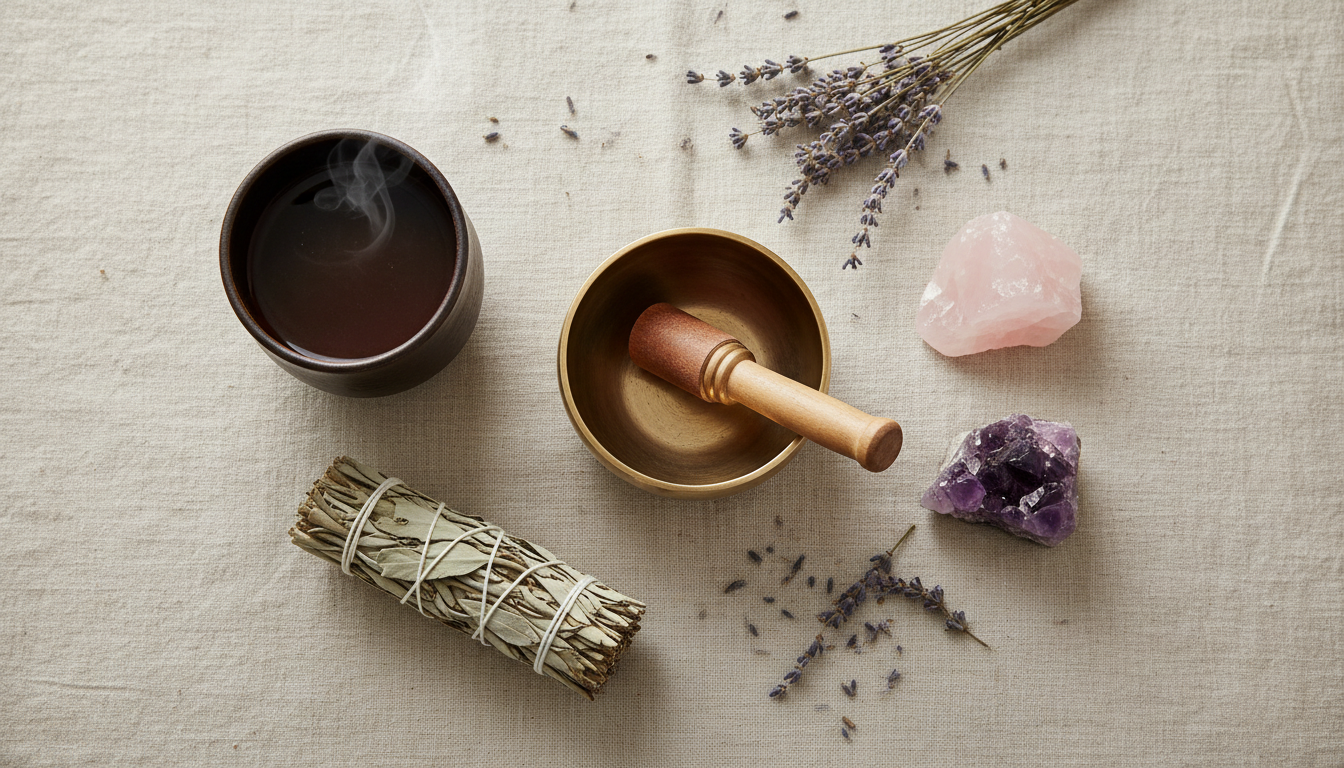
If your environment allows, change one sensory detail. Light a candle, make a warm drink, place your feet on the floor or open a window for a minute. These gestures are not decorative extras. Sensory cues can help the body recognise that it has moved from reactivity into a more intentional space.
Settle before asking for an answer
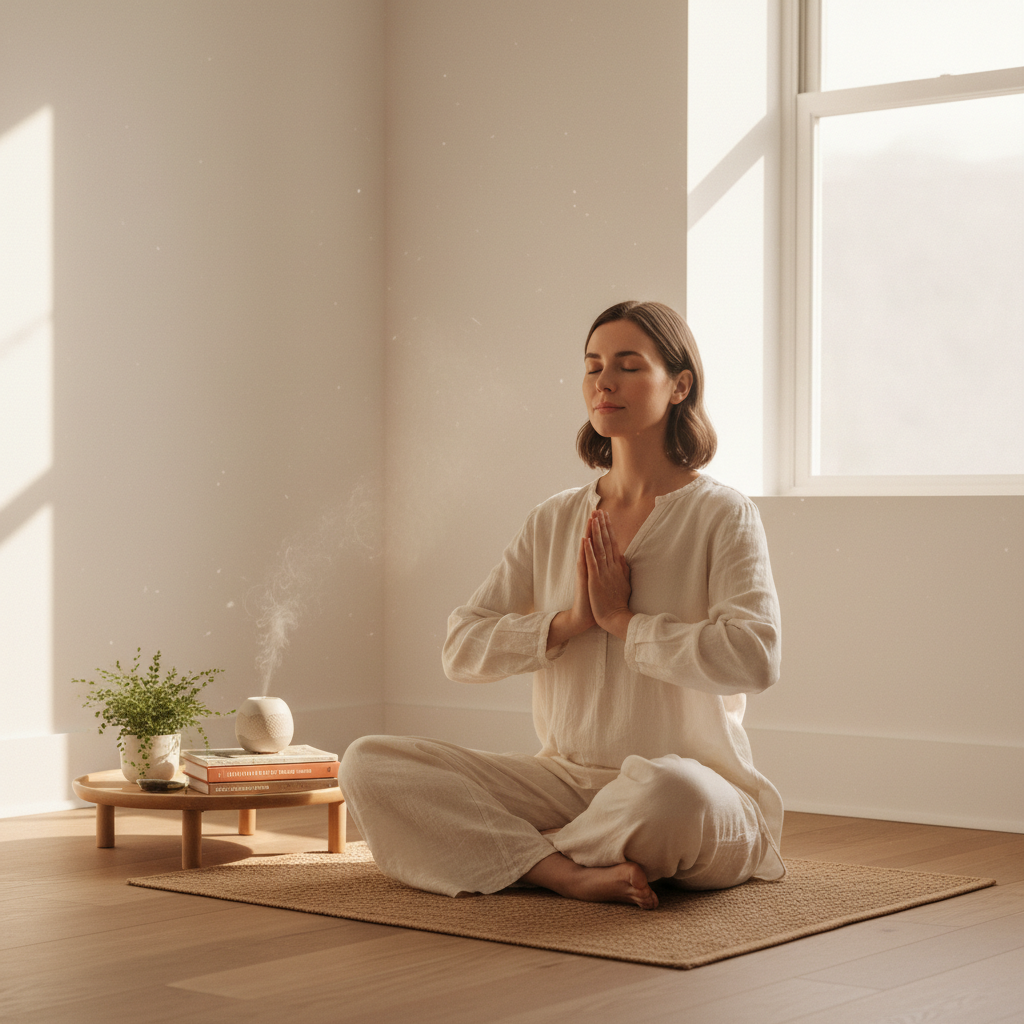
Sit comfortably and take a few slower breaths. There is no need to impose a complicated breathing pattern. Let the exhale lengthen slightly, then notice where you are holding effort: perhaps the jaw, shoulders, chest or stomach.
You might place one hand over your heart and one over your lower abdomen, then say quietly: I do not need to prove anything in this moment. I only need to begin. For some people, language like this may feel unfamiliar. If so, choose words that are plainer: I can make a rough start. The point is not the phrase itself, but the permission it offers.
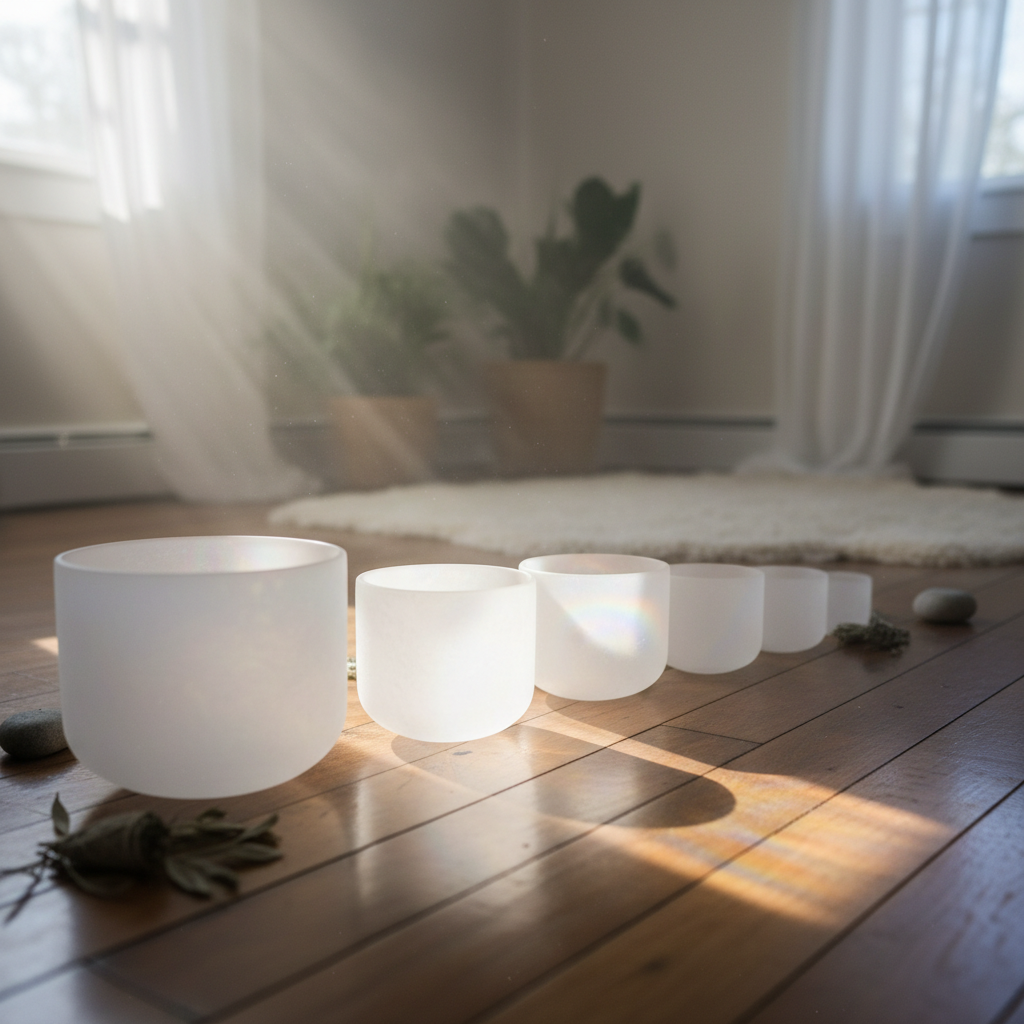
Sound can be especially supportive here. A few minutes of a singing bowl, a low ambient track or even the gentle rhythm of your own breath can give the thinking mind something soft to rest against. At Luminous Resonance, we hold sound as a companion to inner listening, not a demand to feel a particular way. Let it create atmosphere, then allow silence to remain available too.
Name what is present
Before making, write without stopping for three minutes. Begin with: What feels difficult about this work right now? Let the response be unpolished. You may find impatience, sadness, perfectionism, boredom or fear beneath the surface. You may also discover that the problem is practical: you need more information, a clearer brief or a proper break.
Then ask: What is the smallest true next step? This question is more useful than asking for your best idea. It gives your system a manageable point of contact with the work.
A creative ritual is not intended to turn every feeling into content. Some experiences need rest, privacy, conversation or professional support rather than immediate expression. The practice is simply a place to acknowledge what is here, without letting it quietly direct the whole session.
Make something deliberately imperfect
Set a timer for eight to twelve minutes and create a first, private version. Write badly on purpose. Make the rough sketch. Record a voice note full of fragments. Arrange images without deciding whether any of them belong. Keep the work below the threshold of performance.
This matters because creative block often thrives on premature evaluation. When every sentence must be excellent and every concept must justify itself, the playful part of the mind retreats. Giving yourself a contained space for imperfection can bring it back into the room.
When the timer ends, pause before you assess. Notice one thing that has shifted, even if it is only that the page is no longer empty.
Let your ritual meet the kind of block you have
Not all blocks ask for the same care. If you are overstimulated, your ritual may need less input: lower light, fewer sounds, a handwritten page and a brief walk without a podcast. If you feel flat or disconnected, a little sensory richness may help: warm cacao, music that moves through the body, colour, texture or a change of location.
If perfectionism is the pattern, make the ritual more playful and time-limited. Use a cheap notebook, work in pencil or give yourself a deliberately absurd prompt. If the work feels emotionally tender, create a stronger closing boundary afterwards. Wash your hands, step outside, stretch, or write one sentence that separates the practice from the rest of your day.
There are days when creativity will not arrive, even after the most thoughtful preparation. That does not mean the ritual failed. Perhaps it helped you recognise exhaustion before you demanded more from yourself. Perhaps it kept you in kind contact with the work rather than abandoning it entirely. These are meaningful outcomes too.
Make the return easier next time
Close each session with a small note for your future self. Write down where you stopped and what you might do first when you return. For example: Choose between the two opening lines, or find one image for the final slide. This reduces the friction of re-entry, particularly when your next session is days away.
You can also keep a simple record of what supports you. Over several weeks, patterns become visible. You may notice that you create more freely after rest, that certain times of day invite clearer thinking, or that your best ideas arrive after movement rather than more screen time. This is not about building the perfect routine. It is about learning the conditions in which your own voice becomes easier to hear.
A ritual will not remove the uncertainty that belongs to meaningful creative work. It can, however, change your relationship with that uncertainty. Instead of waiting to feel fully ready, you can create a small sanctuary of attention, listen inwardly, and let the next honest mark be enough.