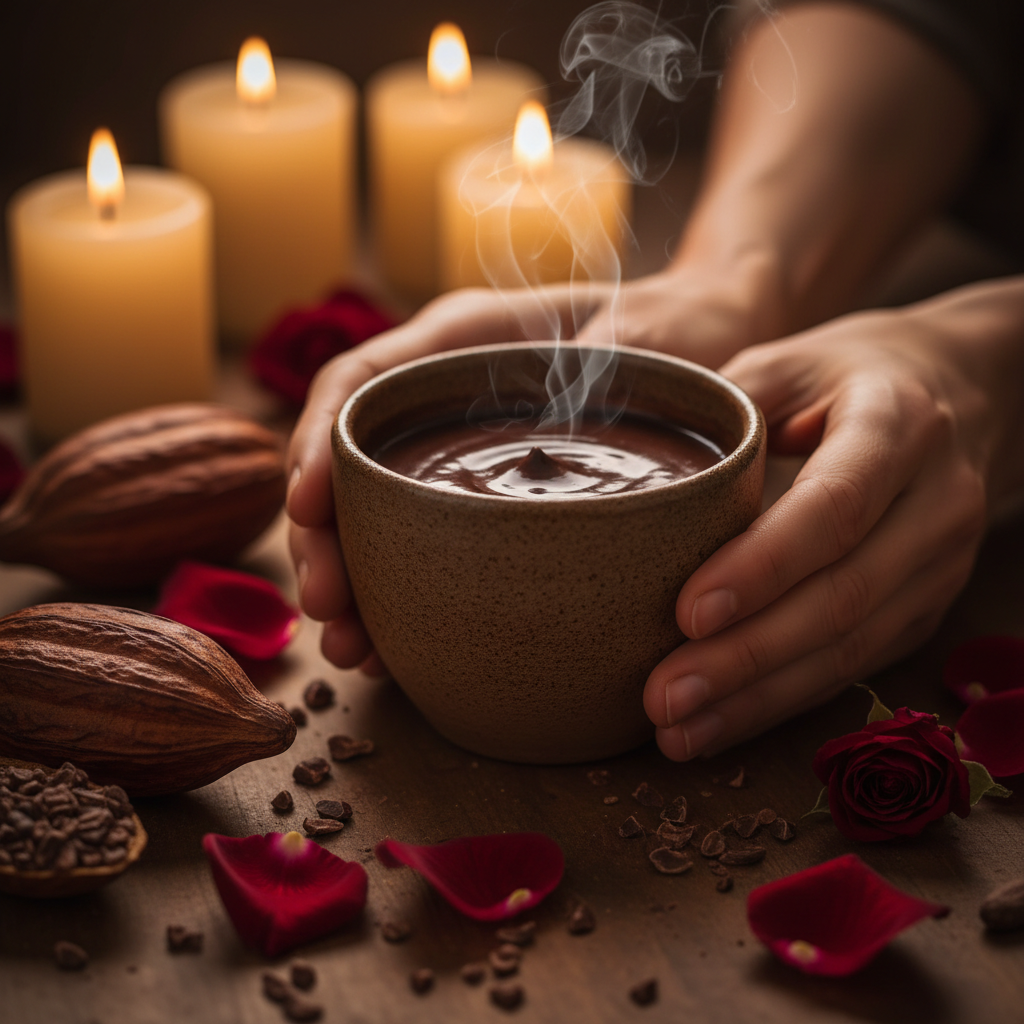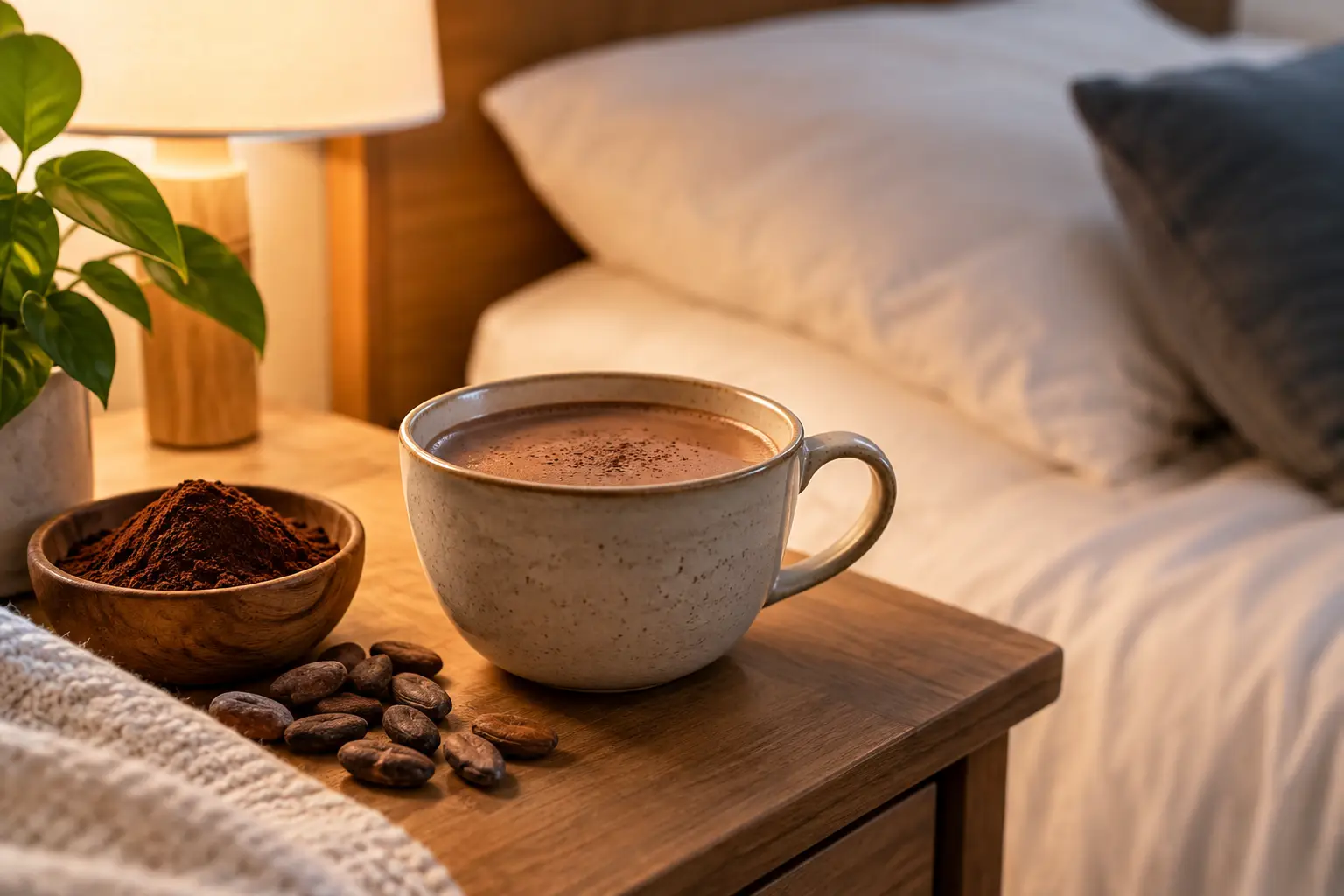
A warm cup of cacao can feel like an invitation to soften. Its earthy richness, the pause before the first sip, and the sense of ritual may all help the body leave the pace of the day behind. Yet if you have ever felt unexpectedly alert after an evening ceremony, you may be asking: does cacao affect sleep?
The honest answer is yes, it can - but not in one simple direction. Cacao contains naturally occurring stimulants, and each nervous system meets them differently. At the same time, a thoughtfully held cacao ritual can support emotional settling, reflection and relaxation. The difference often lies in dose, timing, sensitivity and the way you choose to work with it.
Does cacao affect sleep through its natural stimulants?
Cacao contains caffeine and theobromine, two compounds that can increase alertness. Caffeine is the more familiar one. Theobromine is gentler, longer-lasting and often experienced as a subtle sense of brightness, warmth or openness in the body.
Ceremonial-grade cacao is usually less processed than ordinary drinking chocolate and may be consumed in a more substantial amount. This can make its effects more noticeable, particularly for those who are sensitive to coffee, tea, dark chocolate or other stimulating foods. It is also worth remembering that cacao is not one fixed substance: the caffeine and theobromine content can vary between products, origins and serving sizes.
For some people, cacao in the late afternoon or evening creates a pleasant, focused calm. For others, it can delay the moment when the mind and body are ready to rest. You may feel mentally awake, have lighter sleep, wake more easily during the night, or notice a quicker heartbeat when you lie down.
Neither response means you are doing ritual incorrectly. It simply offers information about your own system.
Why cacao can still feel calming
Cacao is not only about its biochemical effects. The context around the cup matters deeply. When cacao is prepared with care, enjoyed without rushing and paired with breath, gentle sound or journalling, it can become a meaningful transition out of a demanding day.
A slow ritual may help signal safety to the nervous system. Sitting down, placing both feet on the floor, inhaling its aroma and allowing a few quiet minutes before looking at a screen again can interrupt the cycle of busyness. This is where cacao can support rest indirectly: not as a sedative, but as an intentional practice of coming back to yourself.
There is a useful distinction here. Feeling emotionally soothed is not always the same as feeling sleepy. Cacao may create a sense of connection and presence while also making you more awake. For an evening ceremony, that can be beautiful if the aim is reflection, creativity or gentle inner work. If the aim is early, uninterrupted sleep, a smaller serving or an earlier time may serve you better.
The timing that may work best for you
There is no universal cacao curfew, but many people find it helpful to treat cacao as they would other sources of caffeine. If you already know that an afternoon coffee affects your sleep, consider enjoying cacao in the morning or early afternoon first.
For an evening practice, give yourself a generous window before bed. Six to eight hours is a cautious starting point for caffeine-sensitive people, though your personal experience matters more than a rule. A cacao ceremony at 7pm may feel entirely comfortable for one person and keep another quietly alert past midnight.
Begin with a lower amount rather than assuming a ceremonial serving will suit you at night. You can also make the drink more spacious: sip it slowly, eat a nourishing meal beforehand if that feels right for your body, and avoid pairing it with other caffeine sources. Cacao can feel stronger on an empty stomach, especially when you are tired, stressed or have not eaten regularly.
A gentle way to find your rhythm
For two or three occasions, try cacao at a similar time of day and make a brief note afterwards. Notice the quality of your energy, your emotional state, the ease of falling asleep and how restored you feel the following morning. Keep the rest of your evening relatively consistent where possible.
This is not about turning your ritual into a performance or a health project. It is simply a form of self-listening. Your journal may reveal that a small cup at 4pm supports a grounded evening, while anything after 6pm brings too much mental activity. Or you may find that your body welcomes an occasional low-dose cacao and sound practice before bed.
Factors that can make cacao more activating
Sleep is sensitive to more than the contents of your cup. A stimulating response is often shaped by the wider landscape of your day. Stress, hormonal changes, poor sleep from the previous night, alcohol, medication and a late heavy meal can all alter how cacao feels.
The setting matters too. A quiet sound bath, dim lighting and an unhurried close to the evening invite a different experience from drinking cacao while answering messages, scrolling or completing work. If your nervous system has been holding a great deal, cacao may bring emotions and thoughts closer to the surface. That can be supportive when you have time and containment for it, but it may not be what you need just before sleep.
If you are prone to anxiety, palpitations, migraines, reflux or insomnia, take particular care with the amount and timing. It is wise to speak with a qualified healthcare professional before using cacao ceremonially if you are pregnant, managing a health condition, or taking prescribed medication - especially medication that affects mood, blood pressure or the heart.
Creating an evening cacao ritual that honours rest
When your intention is restoration, choose gentleness over intensity. A smaller portion of cacao can still hold the essence of a ritual. You do not need a large serving for the moment to be meaningful.
Prepare your space before you make the drink. Lower the lights, place your mobile phone away from reach and decide what will help you land afterwards. It might be ten minutes of quiet listening, a few lines of honest journalling or a warm shower. Let the ritual have an ending, rather than allowing it to flow straight into a bright screen or a long list of tasks.
You might begin with a simple inner question: what would feel supportive tonight? Some evenings, the answer may be cacao, music and gentle reflection. On others, it may be herbal tea, an earlier bedtime and no inner work at all. Both are valid forms of care.
At Luminous Resonance, this is part of the spirit behind guided practice: ritual is not about following a prescribed experience. It is about creating an emotionally safe space in which you can listen more closely to what is true for you.
When to choose a daytime ceremony instead
Daytime cacao can be especially supportive when you want to pair ritual with creativity, intention-setting, movement or a sound bath that leaves you feeling clear and open. You can welcome the heart-centred quality many people associate with cacao without wondering whether it will accompany you into the night.
Morning or early afternoon sessions also give you time to integrate what arises. A meaningful ceremony can open tenderness, insight or a desire to make a change. Having some daylight afterwards may feel more spacious, particularly if you are new to cacao or navigating a demanding season.
The most nourishing cacao practice is not necessarily the strongest or latest one. It is the one that respects your body, your sleep and the genuine needs beneath your intention. Let your evening ritual be an act of attunement: if cacao brings ease, receive it slowly; if rest calls for something quieter, trust that wisdom too.