The moment emotional overwhelm arrives, it can make the smallest decision feel impossible. Your thoughts may race ahead, your chest may tighten, or you may feel strangely distant from your own body. To ground during emotional overwhelm is not to force yourself into calm or make your feelings disappear. It is to offer your nervous system a simple message: here, now, you are supported enough to take one next breath.
Overwhelm is often a sign that too much is asking for your attention at once. It may follow a difficult conversation, a demanding week, grief, uncertainty, sensory overload, or the slow accumulation of needs you have not had space to meet. Grounding creates a pause between the feeling and the impulse to solve, avoid, explain or push through.
Begin with less, not more
When you are overwhelmed, elaborate rituals can become another demand. Choose one small point of contact with the present rather than trying to regulate every sensation at once. Place both feet on the floor. Feel the pressure of the chair beneath you. Let your eyes rest on the outline of a familiar object in the room.
You might quietly name what is true: “I am having a hard moment.” Then add something equally true and more anchoring: “I am in my kitchen.” “It is Tuesday afternoon.” “My feet are on the ground.” These phrases are not designed to argue with emotion. They simply give the mind and body a place to land.
If closing your eyes makes you feel more unsettled, keep them open. If stillness feels unbearable, let grounding include gentle movement. There is no single right response. The practice should meet your system where it is, rather than asking it to perform peace.
Let the body lead the way back
Emotional overwhelm is not only a thought pattern. It is a whole-body experience, which is why reasoning with yourself can sometimes have limited effect in the first few minutes. Before analysing the situation, try offering the body cues of steadiness.
Feel the weight in your heels and slowly press them into the floor for a count of five, then release. Repeat a few times. Wrap your hands around a warm mug, a blanket or your upper arms. Notice the temperature, texture and weight. These ordinary sensory details can interrupt the feeling that everything is happening everywhere at once.
Breath can help too, provided it does not become another task to get right. Rather than taking deep breaths, which can feel uncomfortable for some people, allow the out-breath to become slightly longer than the in-breath. Inhale naturally, then exhale as if softly fogging a mirror. A few unforced rounds may be enough.
Humming is another quiet option. The vibration in the chest, throat and face can offer a tangible focus when words feel unavailable. You do not need to sound musical. A low, gentle tone is sufficient. Let it be private, uncomplicated and yours.
Use your senses to ground during emotional overwhelm
The senses are a direct route into the immediate environment. When your inner world feels loud, noticing what is physically present can restore a little orientation. Move slowly through your surroundings and identify five things you can see. Let your gaze settle on colour, shape, light and shadow rather than scanning for what might be wrong.
Then notice what you can feel: fabric against your skin, cool air on your hands, the solid surface beneath your body. Listen for the nearest sound, then a sound farther away. If it feels supportive, choose a scent with a clear association of comfort, such as tea, soap, essential oil or fresh air at an open window.
You are not trying to distract yourself from something meaningful. You are widening the frame. The difficult feeling is real, but it is not the only thing that is real in this moment.
Create a small boundary around the moment
Overwhelm often carries urgency. There may be messages to answer, decisions to make, people to care for and a long internal list of what should happen next. Where possible, create a short container around yourself before responding.
Put your mobile phone face down for ten minutes. Step into another room. Sit beside a window. Tell a trusted person, “I need a little time to settle before I can speak clearly.” A boundary is not a rejection of responsibility. It is a way of returning to responsibility with more presence.
If you cannot leave your situation, make the boundary internal. Choose one task only. Let the rest wait on paper rather than in your mind. Write down the next smallest action, such as drinking water, sending one brief reply or taking a shower. Overwhelm narrows capacity, so the next step must be genuinely small.
Let sound hold what words cannot
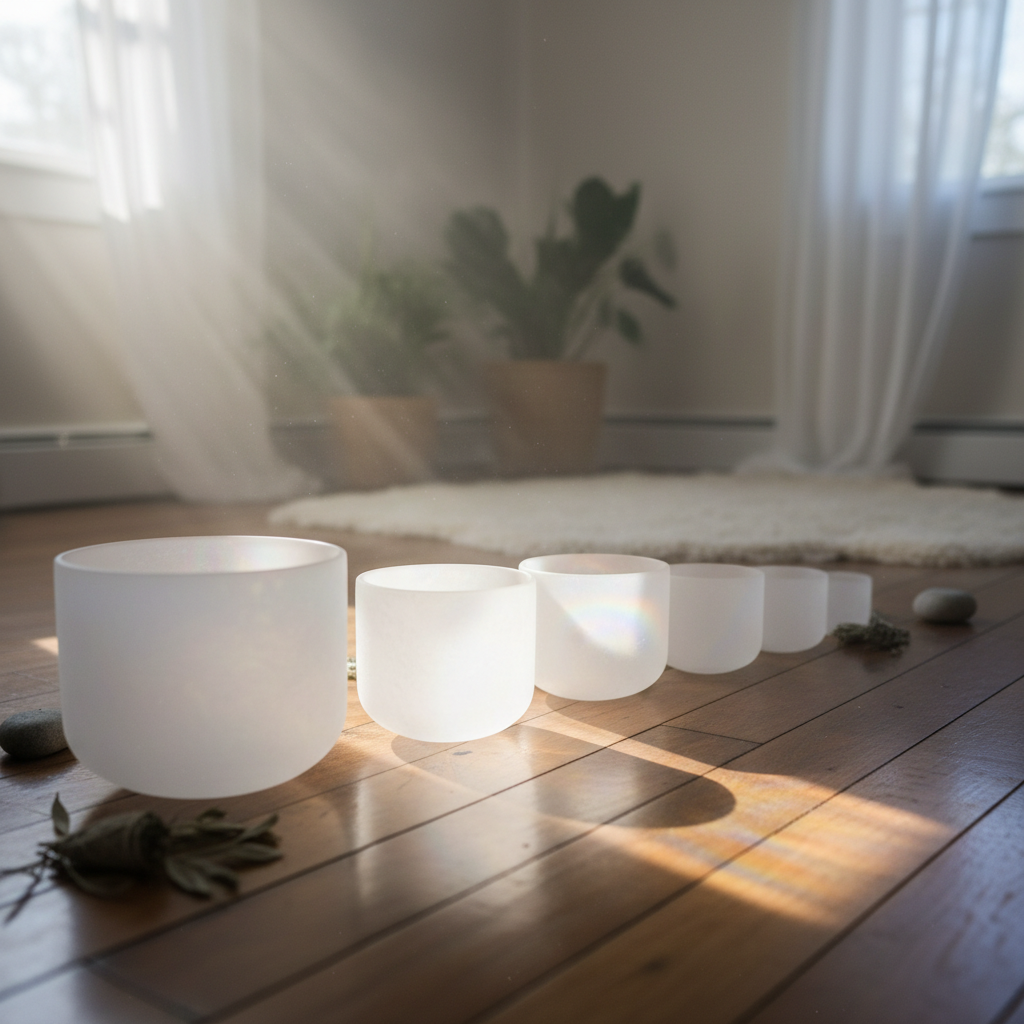
Sound can be especially supportive when thinking feels circular. A familiar piece of gentle music, the rain against a window, a singing bowl recording or your own humming can become an anchor for attention. Notice the beginning, middle and fading edge of each sound. You do not need to interpret what you feel while listening.
A therapeutic sound bath may offer a deeper held space when you have enough time and privacy to receive it. Its value is not that it removes difficult emotions, but that it can invite the body out of constant vigilance and into listening. Some people feel calmer with immersive sound; others find certain tones or headphones too intense when already overstimulated. Lower the volume, sit farther from the sound, or choose silence if that is what your body asks for.
At Luminous Resonance, sound and ritual are approached as invitations rather than prescriptions. The most supportive practice is always the one that leaves you feeling more connected to yourself, not more pressured to have a particular experience.
Bring ritual back to its simplest form
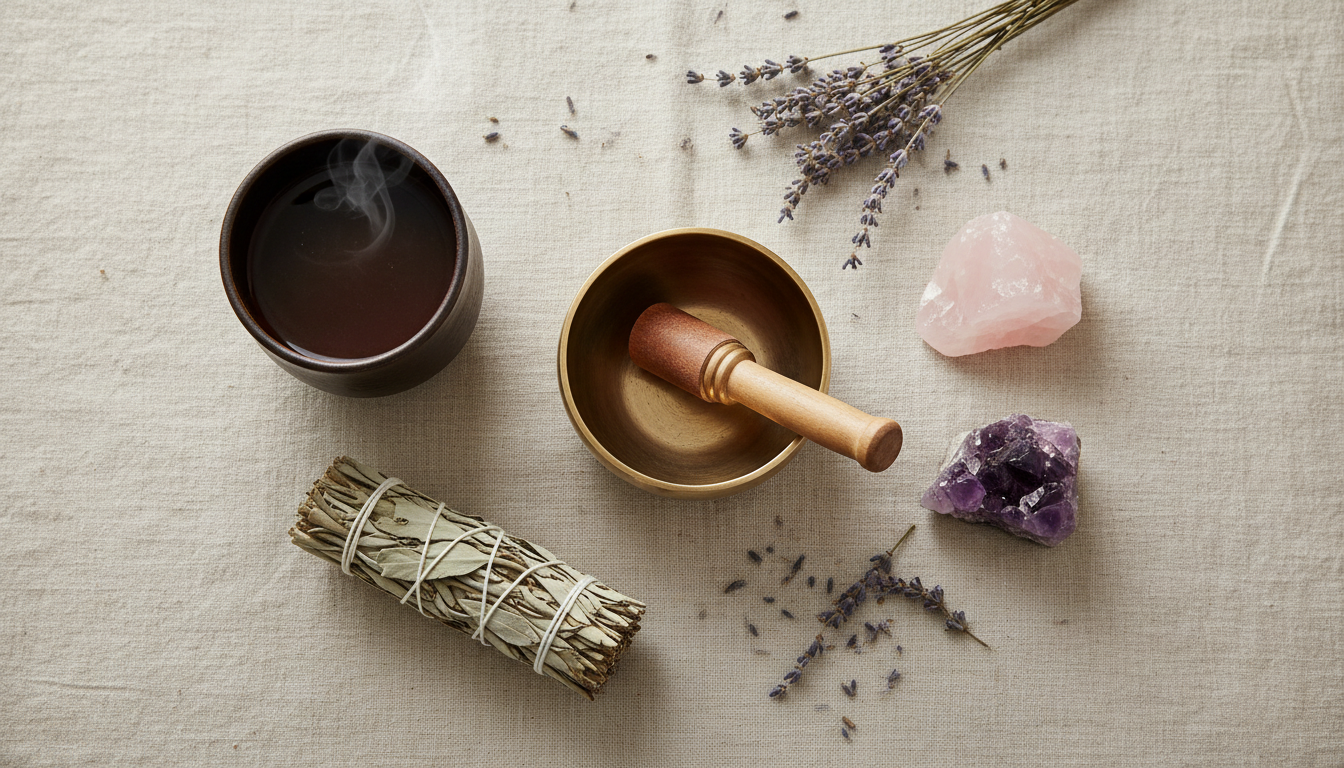
Ritual can give shape to a moment that feels shapeless. It does not need to be elaborate or ceremonial to be sacred. Lighting a candle, washing your hands slowly, making a warm drink or placing one hand over your heart can signal a transition from reactivity to care.
If cacao is part of your practice, approach it with attention rather than expectation. Notice its warmth, scent and bitterness. Let preparing it become a single-task moment. Cacao may not feel right when you are highly activated, sensitive to caffeine, pregnant, managing a health condition or taking medication that requires particular care. In those moments, warm water, herbal tea or no drink at all may be the wiser choice.
The ritual is not the object itself. It is the quality of presence you bring to what is available.
After the wave, listen for the need beneath it
Grounding is first aid for the nervous system, not a demand to move on quickly. Once the intensity has softened, even slightly, you may be able to ask a kinder question: what does this overwhelm seem to be protecting?
Perhaps you need rest, food, reassurance, a clearer boundary, a cry, practical help or an honest conversation. Perhaps nothing needs resolving tonight. Journalling can help, especially if you keep it gentle. Try completing one sentence: “Right now, the kindest thing I can offer myself is…” Then stop. You do not have to turn every feeling into a lesson.
If overwhelm is frequent, escalating, affecting daily life, or linked with trauma, panic or thoughts of harming yourself, reaching out for professional support is a grounding act in itself. In an immediate emergency in the UK, call 999. For urgent mental health support, NHS 111 can guide you to the appropriate service. You deserve care that is responsive, practical and human.
The aim is not to become someone who never feels overwhelmed. It is to slowly build a relationship with yourself in which intensity does not mean abandonment. One hand on the heart, one foot on the floor, one honest breath at a time: this is how steadiness begins to return.