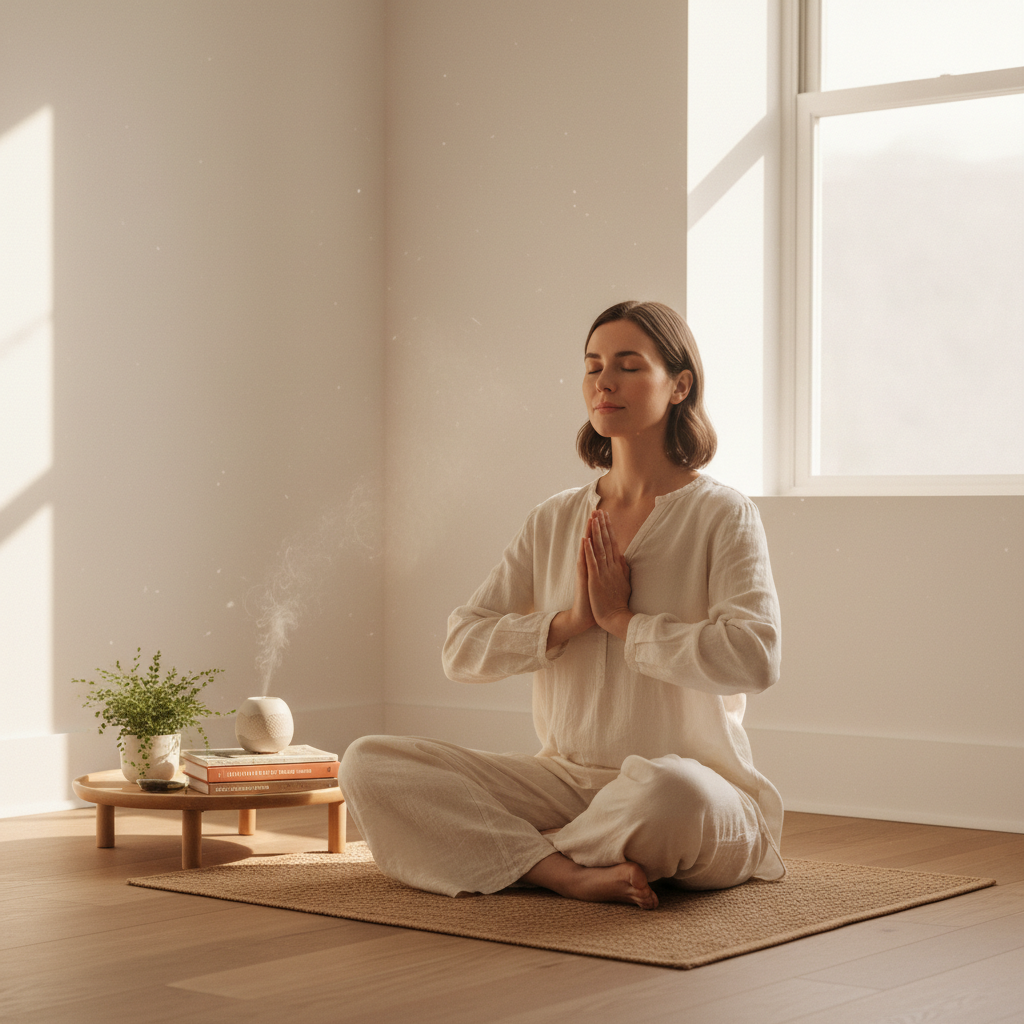
Some days the mind does not simply feel busy. It feels unheld. Thoughts race ahead, emotions swell quickly, and even small decisions can seem strangely heavy. In those moments, grounding techniques mind practices can offer something simple and quietly powerful - a way back to the body, the breath, and the present moment.
Grounding is often mistaken for forcing yourself to calm down. In practice, it is gentler than that. It is the act of creating enough inner safety for your system to remember where you are, what is real, and what can wait. For many people, especially those carrying stress, grief, overstimulation or emotional fatigue, grounding is not a luxury. It is a stabilising ritual.
What grounding techniques for the mind really do
When the mind becomes scattered, it usually is not because you have failed at coping. More often, your nervous system has moved into protection. You may notice spiralling thoughts, difficulty focusing, shallow breathing, irritability, numbness, or the feeling that you are nowhere fully at all.
Grounding techniques help interrupt that drift. They anchor awareness in something immediate and tangible, which signals to the body that it can soften its guard a little. This does not erase the underlying cause of stress, and it is worth saying that clearly. Grounding is not a cure-all. It is a way to create steadiness so you can meet what is happening with more clarity.
For some people, grounding means feeling their feet on the floor. For others, it might be naming what they can see in the room, holding a warm mug, listening to a steady rhythm, or returning to a familiar prayer or affirmation. The right practice depends on what your system responds to.
When to use grounding techniques mind practices
These practices are especially supportive when you feel mentally flooded, emotionally activated, or slightly detached from yourself. They can help before a difficult conversation, after reading upsetting news, during periods of overwork, or in the quiet aftermath of an emotionally charged experience.
They are also valuable within spiritual practice. Reflection, meditation and ceremonial work can open tender inner spaces. That can be beautiful, but it can also leave you feeling porous if there is not enough structure around the experience. Grounding helps spiritual expansion remain connected to psychological safety.
If a technique makes you feel more agitated, that matters. Not every method suits every person or every moment. Someone carrying a high level of anxiety may find silent meditation too exposed, while a sensory practice feels reassuring. Someone else may feel calmer with sound, rhythm or guided words. It depends on your history, your capacity that day, and how activated your system is.
Gentle grounding techniques for the mind
One of the simplest starting points is orientation. Instead of closing your eyes and going inward straight away, let your gaze move softly around the room. Notice the corners, the light, the shapes, the door, the window. This tells the nervous system that the environment can be assessed and understood. It is a subtle but effective way to come back into the present.
Breath can help too, though it is best approached without pressure. If you try to take a huge deep breath while distressed, the body may resist. A more supportive approach is to lengthen the exhale slightly. Breathe in naturally, then let the out-breath be slow and unforced. Even a few rounds can create a sense of space.
Physical contact with the body can be especially regulating when thoughts feel loud. Place one hand on the chest and one on the lower belly. You are not trying to change anything. You are simply offering the body a clear signal of presence. Sometimes that alone is enough to soften mental urgency.
Temperature is another useful doorway. Cool water on the wrists, warmth from a blanket, or holding a cup of tea can help the mind settle through sensation rather than analysis. This can be more effective than trying to think your way out of overwhelm.
Sound also has a special role in grounding. Repetitive, soothing sound can give the mind something steady to rest against. A soft drumbeat, a sustained tone, or a familiar piece of instrumental music may help bring scattered attention into one place. This is one reason sound-based practices can feel both spacious and containing when offered with care.
A grounding ritual for overstimulated days
When life feels fast, grounding works best when it is simple enough to repeat. You might begin by placing both feet on the floor and letting yourself feel the support beneath you. Then look around the room and name five things you can see. Follow that with three slower exhales.
After that, bring in one sensory anchor. It could be the scent of essential oil, the weight of a shawl around your shoulders, or the sound of a singing bowl. Stay there for a minute or two. Not performing calmness, just allowing contact with something steady.
Finally, say one true and present-tense phrase to yourself. Something like, I am here. This moment is what I am in. I can take this one step at a time. The point is not positive thinking. The point is orientation.
Used consistently, small rituals like this build familiarity. Over time, the body begins to recognise the pathway back to steadiness more quickly.
Grounding techniques mind support in emotional moments
Grounding can be especially helpful when emotions rise suddenly. Perhaps you feel close to tears in the middle of the working day, or your thoughts become frantic after a difficult message. In these moments, people often try to suppress what they feel or push through it. That can work briefly, but it often leaves the system more strained.
A more compassionate response is to reduce the demand. Pause if you can. Feel your feet, unclench your jaw, and let your gaze rest on something stable. If words help, name what is happening without judgement. I feel overwhelmed. I feel activated. I need a moment.
This matters because emotional regulation is not only cognitive. The mind settles more easily when the body has first received signs of safety. Once that happens, insight often returns on its own.
There is also wisdom in knowing when grounding is not enough by itself. If you are experiencing frequent panic, dissociation, trauma responses, or persistent emotional distress, deeper support may be needed. Grounding can sit alongside therapy, counselling, or other forms of care. It does not replace them.
Bringing grounding into spiritual practice
For those drawn to ritual, meditation, cacao or sound work, grounding is what helps the experience integrate rather than simply intensify. Opening the heart is meaningful, but staying resourced within that openness is what makes the practice sustainable.
This might mean beginning any ritual with clear physical anchors - a cushion beneath you, a candle flame to focus on, both hands around a warm cup. It might mean closing with journalling, nourishing food, or a few quiet minutes with your feet on the earth before returning to the rest of the day.
At Luminous Resonance, this meeting point between spiritual depth and emotional steadiness is part of what makes practice feel safe enough to be transformative. The sacred does not need to be untethered. Often, it lands more fully when the body feels held.
The quiet discipline of returning
There is no perfect way to ground. Some days a single breath helps. Other days you may need repetition, rest, and a gentler schedule than you had planned. What matters is not doing the technique flawlessly. What matters is noticing when you have drifted too far from yourself, and choosing to return with kindness.
The mind does not always need fixing. Sometimes it needs reassuring. Sometimes it needs rhythm, warmth, stillness, and the simple reminder that this moment can be met from within the body, not just from within thought.
If you begin there, grounding becomes more than a coping tool. It becomes a quiet relationship with your own inner safety, one that can support both daily life and deeper spiritual unfolding.