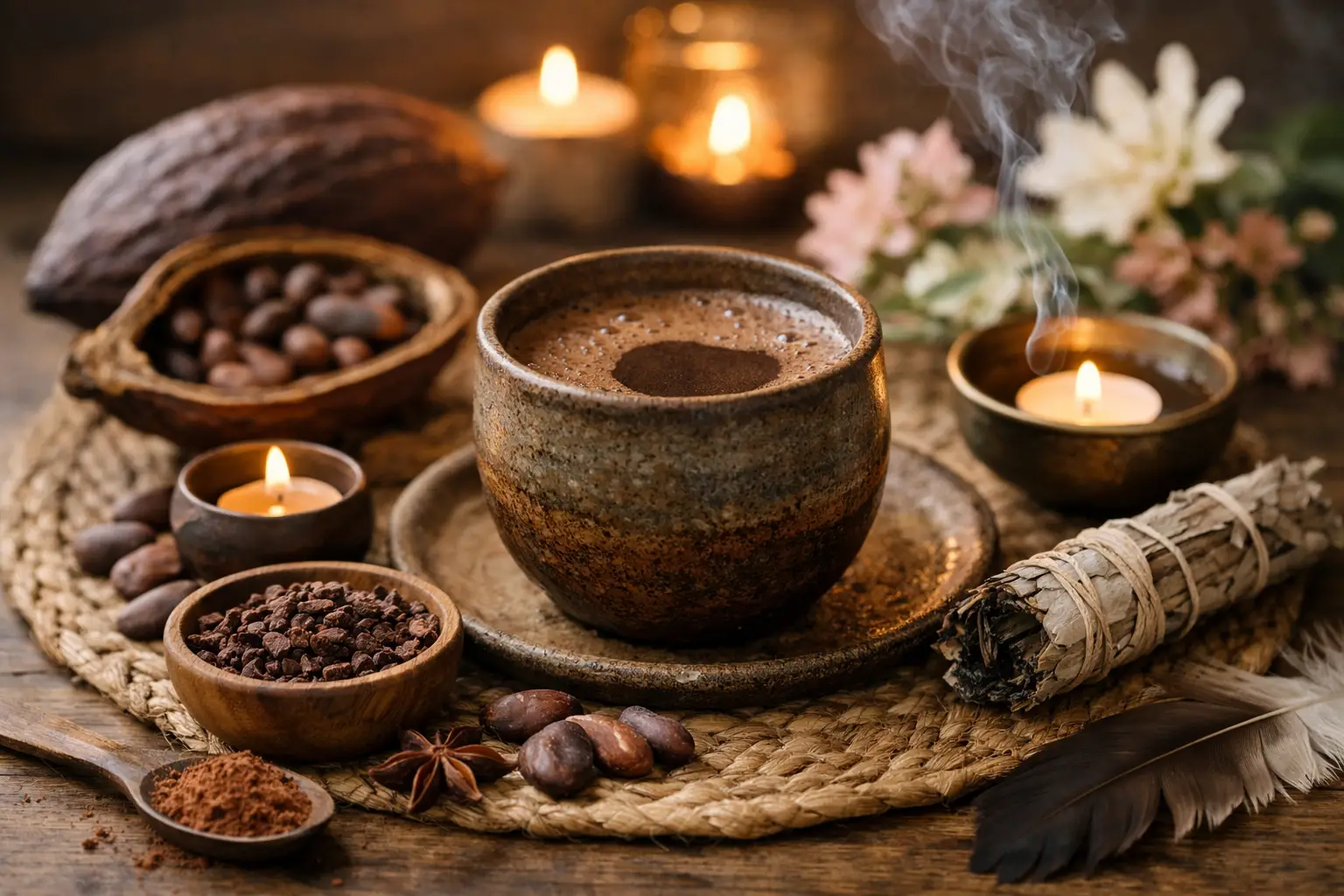
A guided cacao ceremony guide is not a script for having the perfect spiritual experience. It is a gentle framework for meeting yourself with more presence. The cacao, music and intention can create a meaningful threshold, but the real work is often quieter: noticing what you feel, allowing it to be there, and returning to your life with a little more honesty.
For people carrying full diaries, emotional responsibility or a persistent sense of disconnection, ceremony can offer a pause that feels both sacred and psychologically grounding. It is not an escape from the self. At its most supportive, it is a way of coming home to it.
What makes a guided cacao ceremony different?
Cacao has long been used in ritual and community settings across Mesoamerican cultures. In contemporary wellbeing spaces, ceremonial-grade cacao is often prepared as a warm drink and paired with meditation, breath awareness, reflective writing or sound. It contains naturally occurring compounds, including theobromine, which some people experience as gently energising and mood-lifting.
A guided ceremony adds containment. Rather than simply drinking cacao and hoping for insight, you are invited through an intentional sequence: arrival, preparation, a spoken intention, embodied awareness, stillness and a gradual return. This structure matters. When life already feels noisy, a clear beginning and ending can help the nervous system recognise that there is space to soften.
Guidance should never tell you what you are meant to feel. A thoughtful facilitator makes room for your own experience, whether that is calm, tenderness, restlessness, grief, nothing particularly dramatic, or a mixture of all of these. Spiritual depth does not need to be intense to be real.
Before the ceremony: prepare for spaciousness
The most helpful preparation is often practical. Choose a time when you do not need to rush straight into work, family demands or travel. If possible, leave a little space afterwards too. A ceremony may bring clarity, but it can also bring up feelings that need gentleness rather than immediate interpretation.
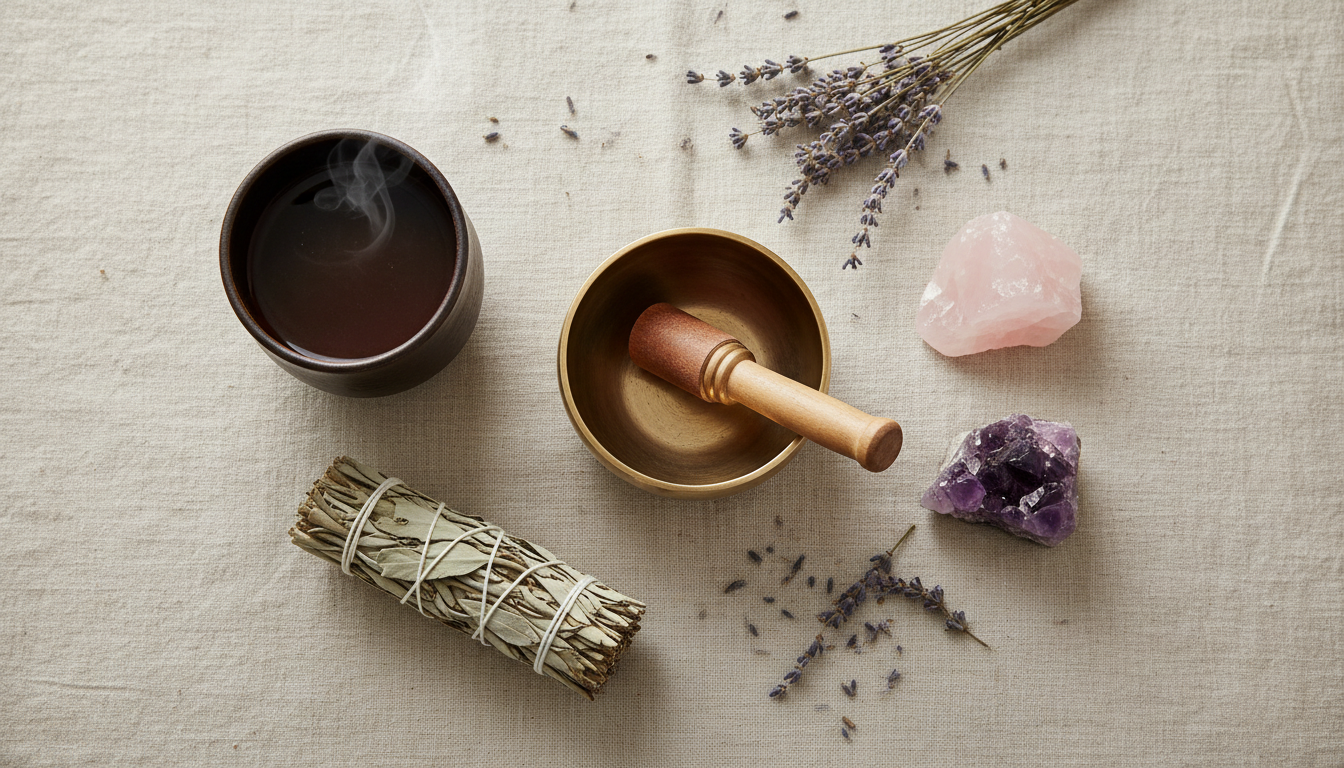
Create a small, comfortable area where you can sit or lie down without interruption. Dim lighting, a blanket, water and a journal are enough. You do not need a perfect altar or a silent house. The intention is to signal care to yourself, not to perform spirituality.
It can help to eat lightly beforehand, particularly if you are sensitive to stimulants or drinking cacao on an emptier stomach. Cacao can feel activating for some people. Begin with a modest amount if it is new to you, and give your body permission to respond in its own way.
Cacao is not suitable for everyone. If you are pregnant or breastfeeding, have a heart condition, high blood pressure, a sensitivity to caffeine or theobromine, or take medication that may interact with cacao, seek advice from a qualified healthcare professional before taking part. This is especially relevant for people using antidepressants, including MAOIs. A ceremonial setting should support discernment, never encourage you to override it.
Choose an intention, not an outcome
An intention is a direction for attention, not a demand. “I want to release everything that is holding me back” can place a great deal of pressure on one evening. A softer question may offer more room: “What needs my kindness today?” “Where am I ready to listen?” or “What would steadiness feel like?”
You may also arrive with no words at all. That is valid. Sometimes the most honest intention is simply to rest in your own company.
A guided cacao ceremony practice at home
Begin by placing both feet on the floor or settling into a supported seat. Notice the room around you. Feel the weight of your body held by the chair, cushion or ground. Before turning inward, let yourself orient to safety in the present moment.
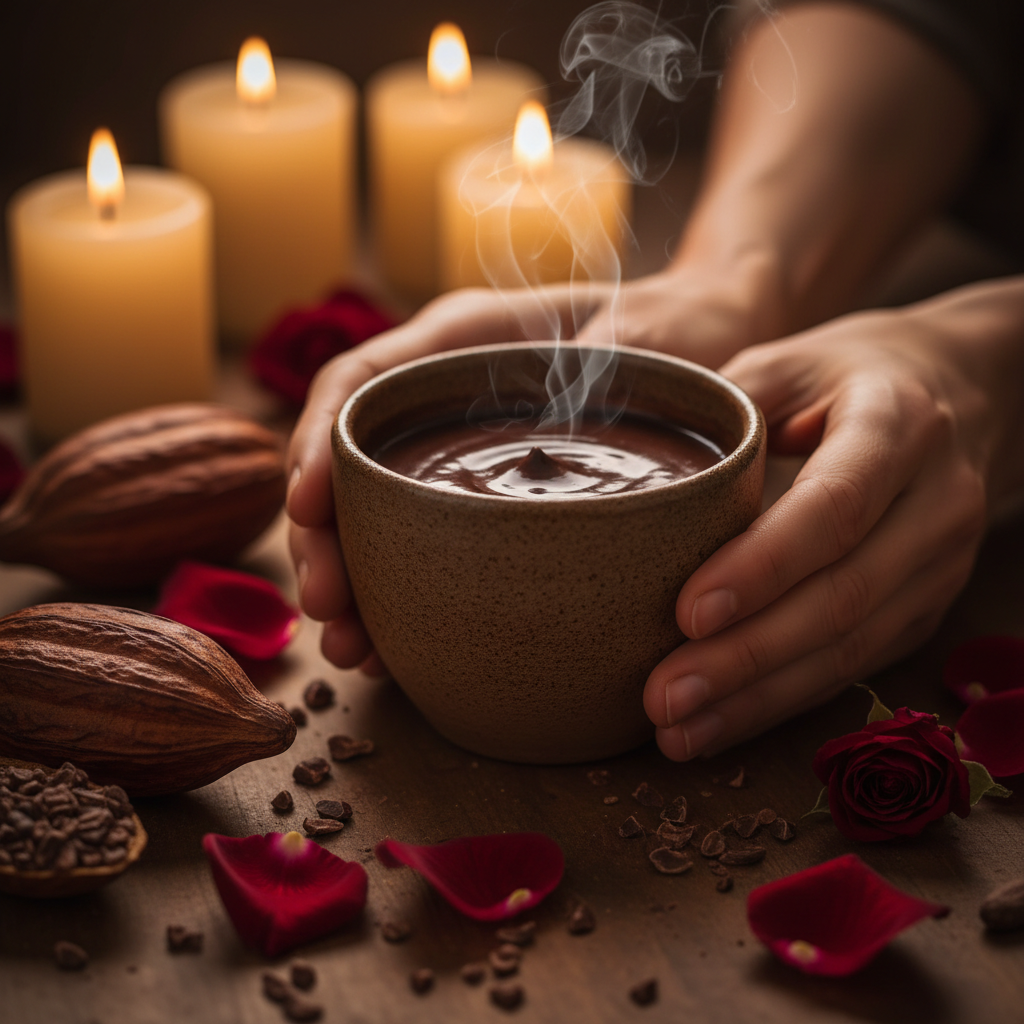
Prepare your cacao slowly. As you stir, notice its warmth, scent and colour. You might hold the cup with both hands and take three unforced breaths. There is no need to make the moment elaborate. The act of slowing down is already part of the ritual.
When you are ready, speak your intention quietly, aloud or internally. Keep it simple enough that your body can understand it. Then take a few small sips, pausing between them. Notice taste, temperature and sensation. If thoughts begin to move quickly, return to the physical facts of the moment: warm cup, steady breath, contact with the ground.
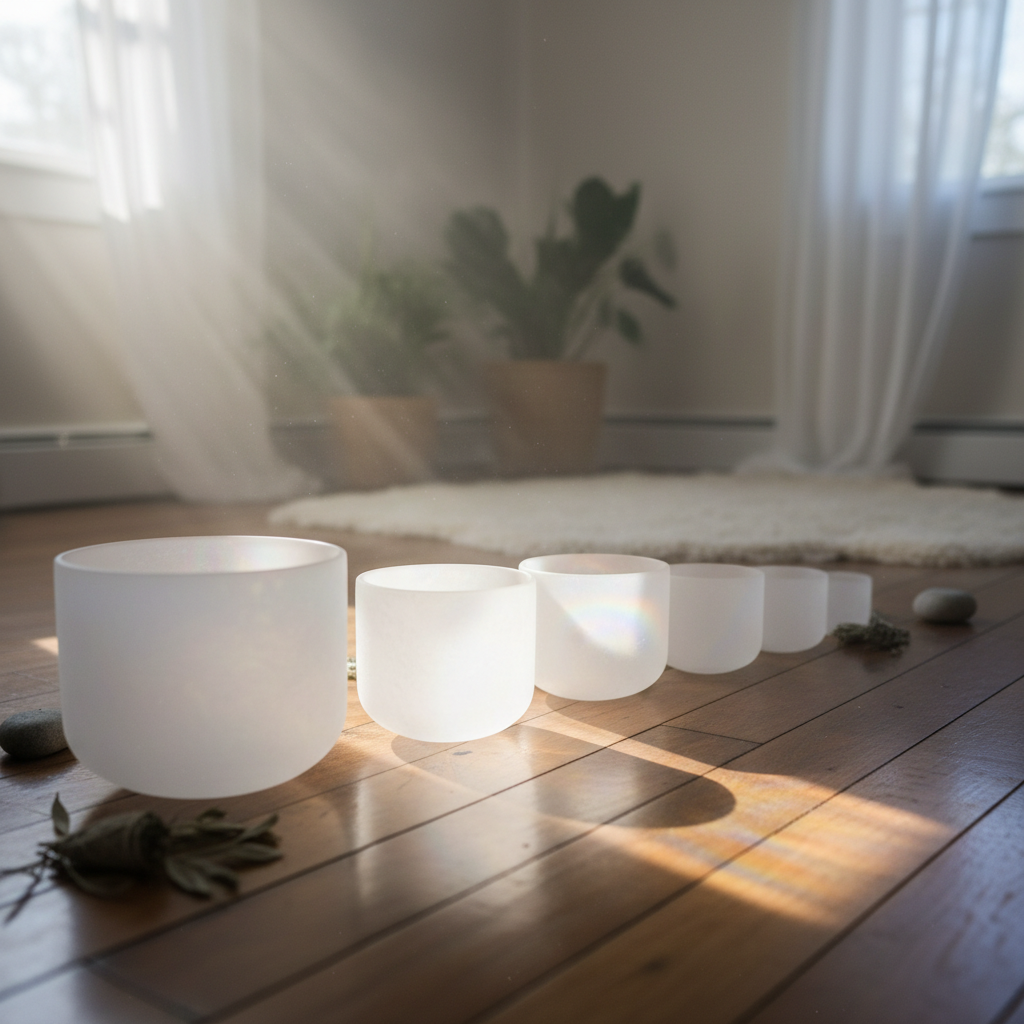
From here, a guide may invite you into breathwork, meditation or a sound bath. Sound can be particularly supportive when words feel too narrow. Bowls, chimes, voice and gentle ambient textures may offer the mind something to rest beside, while allowing emotion to move without needing to be explained.
If strong feelings arise, resist the urge to force a breakthrough. Place a hand over your chest or abdomen, lengthen your exhale slightly and remind yourself that you can pause. Open your eyes. Take a drink of water. Step into another room if needed. Emotional safety is not about avoiding feeling; it is about staying connected to choice while you feel.
A useful question during stillness is: “What am I noticing right now?” Not why am I like this, not what should I do next, but what is here. You may notice warmth, resistance, relief, tears, a busy mind or simply tiredness. Each response is information, not a grade.
Why sound can deepen the experience
The value of a sound bath is not that it can solve what is painful. Rather, it can shift the conditions in which you meet that pain. Repetitive, spacious sound gives attention a softer anchor than constant problem-solving. For many people, this makes it easier to notice bodily sensations and emotional patterns without becoming immediately entangled in them.
The experience varies. Some people feel deeply rested; others feel alert, imaginative or unexpectedly emotional. Your response may change from one ceremony to another, depending on sleep, stress, hormones, grief, surroundings and what is happening in your wider life. Let the practice be responsive rather than prescriptive.
If sound feels overwhelming, lower the volume, sit further from speakers, use a lighter covering over your ears or return to quiet. More intensity is not more healing. The right level is the one that lets you remain present.
Integration is where the ceremony becomes useful
The end of a guided practice is not the point at which its value disappears. It is where the subtle work of integration begins. Give yourself a few minutes before reaching for your mobile phone or moving into the next task. Stretch, drink water and eat something nourishing if you need it.
Then write a few lines without trying to turn the experience into a lesson. You could begin with: “I noticed…”, “I needed…”, or “I want to remember…”. Keep your observations close to the body and to real life. Perhaps you recognised that you are depleted, that a conversation needs more care, or that you have been postponing rest.
Integration can be very ordinary. It may look like taking a proper lunch break, asking for help, setting one boundary, walking without headphones or returning to a feeling before it becomes a reaction. A ceremony does not need to produce a dramatic revelation to shape your days. Small acts of self-trust are often the deeper shift.
When a guided setting is the better choice
A home practice can be deeply nourishing, especially once you understand your own rhythms. Yet a live or guided space can be valuable when you find it difficult to settle alone, want supportive pacing or are moving through a tender period. The presence of a skilled facilitator can offer a steadier container, particularly when sound, silence and reflection are woven together with care.
Choose spaces that communicate clearly about what to expect, respect personal boundaries and avoid exaggerated promises. No ceremony can replace mental health treatment, crisis support or medical care. If you are navigating trauma, significant anxiety, depression or acute distress, therapeutic support from an appropriately qualified professional may be an important part of your care alongside any spiritual practice.
At Luminous Resonance, the intention is to hold a digital sanctuary where ritual-led experience and emotional grounding can sit side by side. You are not required to arrive enlightened, open-hearted or certain. You only need to arrive as you are.
Let your next cup be less about finding an answer and more about making a little room. In that room, the breath may settle, the body may speak, and one small truthful thing may become easier to carry.