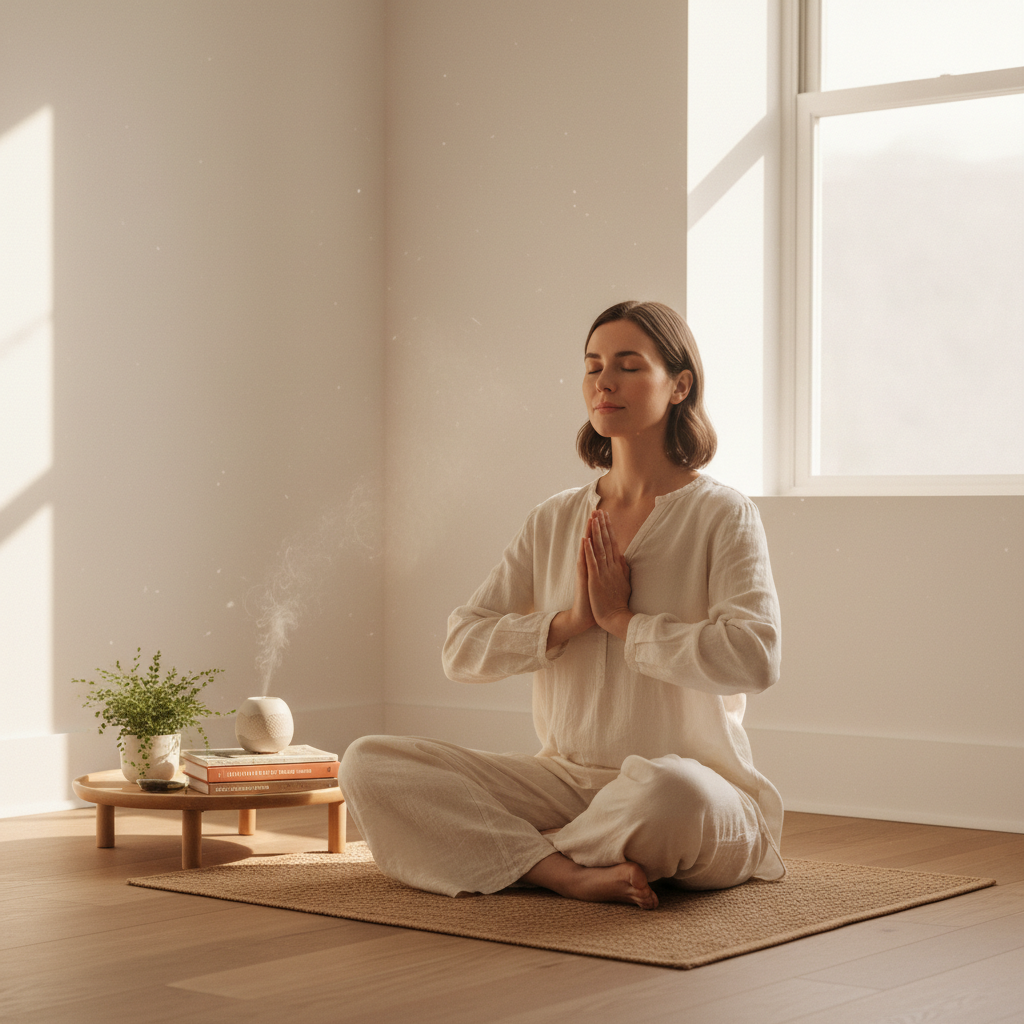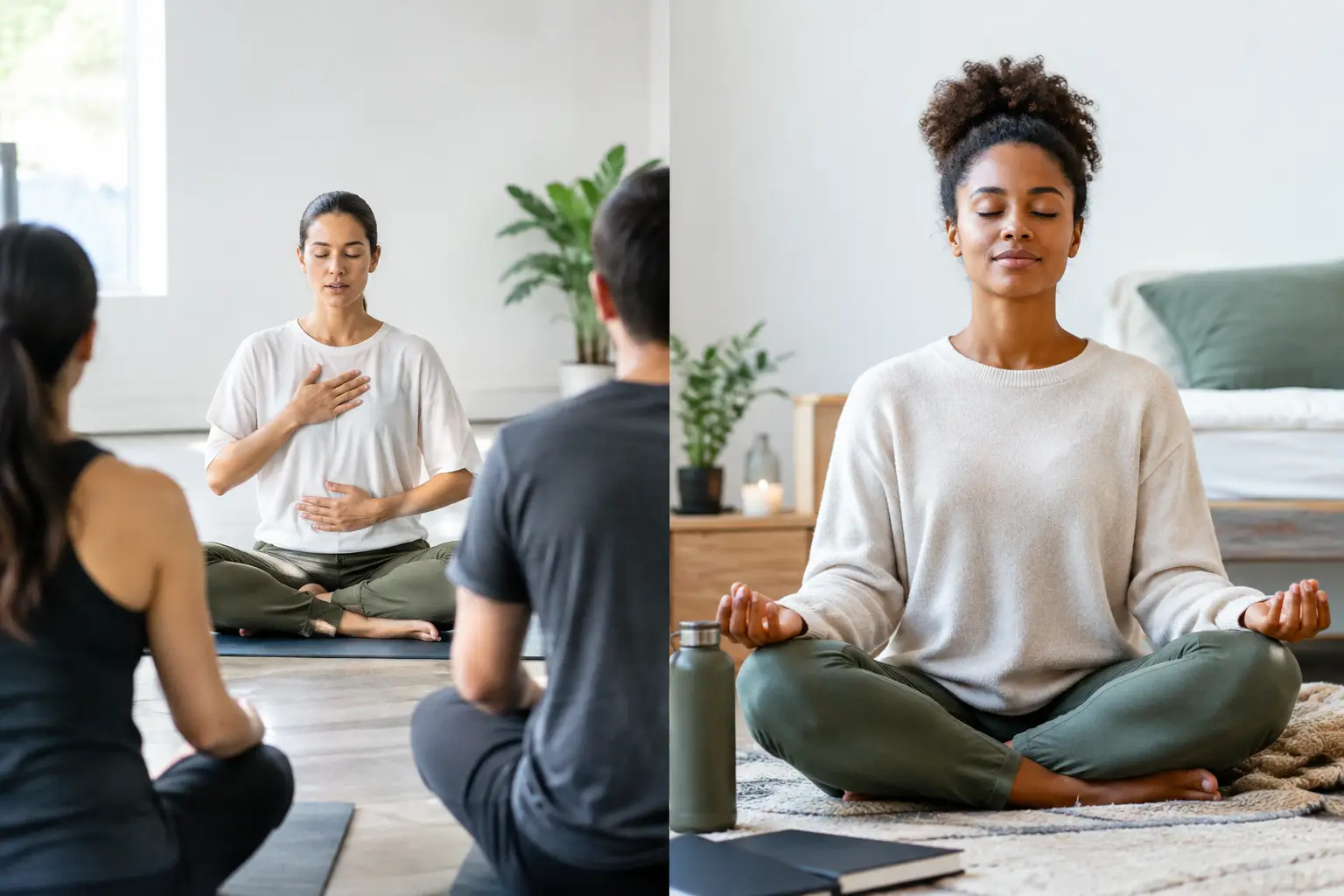
A quiet evening opens up. You could press play on a guided sound bath, join a cacao ceremony with others, or simply sit with your journal and breathe. The question of guided rituals versus self practice is not about which path is more spiritual or more disciplined. It is about recognising what kind of care your mind, body and inner life are ready to receive.
Both can become meaningful places of return. Both can help create a pause between the demands of the day and the deeper truth of how you feel. Yet they offer different forms of support, and understanding that difference can make your practice more sustaining.
Guided rituals versus self practice: the essential difference
A guided ritual offers a held container. A facilitator shapes the beginning, middle and close of the experience, perhaps through a considered invitation, breath, music, silence, visualisation or reflection. In a cacao and sound-based practice, the sensory elements can help signal to the nervous system that it is safe to soften, listen and settle.
Self practice is the space you create for yourself. It might be ten quiet minutes with a cup of tea, a familiar meditation, free movement in your living room, or writing without trying to make your thoughts neat. There is no external rhythm to follow. You choose the intention, the pace and the point at which you finish.
Neither approach is inherently deeper. The value lies in the relationship it helps you build with yourself. Sometimes that relationship needs gentle guidance. At other times, it needs room to speak in its own language.
What guidance can offer when life feels full
When you are carrying work pressure, caregiving responsibilities, grief or a persistent sense of emotional overload, deciding how to care for yourself can become another demand. A guided ritual removes some of the decision-making. You do not need to plan the music, hold the timing, wonder whether you are doing it correctly, or find the right words for an intention before you have even exhaled.
This structure matters. A well-held practice gives permission to arrive as you are, including when you feel distracted, tired or unsure. Rather than requiring you to generate calm alone, it offers an atmosphere in which calm may gradually become more possible.
Guidance can also help people stay present when an experience becomes tender. Sound, breath and carefully paced invitations can offer an anchor while emotion moves through. This is not about forcing a breakthrough. It is about being accompanied while you meet what is already there.
For people new to ritual, shared experiences can be especially reassuring. There is comfort in knowing that others are also making space for reflection, even from their own homes. The collective quality of an online ceremony can soften isolation without asking you to perform or explain yourself.
The limits of being guided
A guided session will not always meet the exact rhythm of your day. You may need more silence than the practice offers, or find that a particular invitation does not resonate. That is not failure. It is useful information about your preferences, boundaries and current needs.
It is also wise to keep your agency intact. A facilitator can offer a framework, but only you can sense whether you need to rest, mute the sound, step away, or choose a gentler practice. Ritual should support self-trust, not replace it.
The quiet strength of self practice
Self practice develops a different kind of confidence. It teaches you that you do not need perfect conditions, a special setting or another person’s voice to return to yourself. Over time, this can make wellbeing feel less like an appointment and more like a lived relationship.
The simplicity is part of its power. A hand on your heart before opening your laptop. Three slower breaths at the kitchen window. A few lines in a journal after a difficult conversation. These small acts can become steady points of orientation, particularly on days when a longer ritual is not possible.
Practising alone also makes room for honest experimentation. You may discover that silence feels more nourishing than a meditation track, that evening reflection leaves you awake while morning pages clear your mind, or that movement helps you process what stillness cannot. There is freedom to follow your own inner weather.
Self-led rituals are often more adaptable, too. They can change with your energy, cycle, schedule and season. The practice may be five minutes one day and forty the next. Consistency does not have to mean repeating the same form. It can mean returning with attention.
When self practice can feel difficult
Freedom can become friction when you are depleted. Without a clear beginning or ending, it is easy to postpone the practice, scroll through the time you meant to reserve, or sit down with an expectation that you must immediately feel peaceful.
Some feelings are also harder to meet alone. If you notice intense distress, recurring trauma responses, thoughts of harming yourself, or a sense that you are becoming overwhelmed, a personal ritual may not be the right level of support. Reaching out to a qualified mental health professional, a trusted GP or urgent support is a compassionate and practical next step.
For many people, the challenge is not a lack of desire but a lack of containment. In those seasons, a guided ritual can offer the regularity that helps a personal practice take root later.
Choosing the support your nervous system needs
Instead of asking, “Which is better?”, begin with a more intimate question: “What would help me feel safely supported today?” The answer may change from week to week.
Guided practice may serve you when your thoughts are busy, your motivation is low, you are learning a new modality, or you long to feel held by a shared field of intention. It can be a meaningful choice after a demanding week, during a transition, or when you want an experience that feels distinct from the rest of your routine.
Self practice may be the better fit when you feel resourced enough to listen inwardly, when time is limited, or when you want to strengthen your ability to respond to yourself without external prompts. It can also be valuable after a guided experience, when insight needs spaciousness rather than more input.
Your response in the body is often a useful guide. If structure feels relieving, receive the structure. If it feels constricting, create more room. If being alone feels peaceful, honour that. If it feels isolating, seek gentle connection.
Let the two practices support one another
The most nourishing rhythm is often not guided rituals versus self practice as an either-or choice. It is a thoughtful conversation between the two.
A monthly or weekly guided ceremony can become an intentional threshold: time set aside to receive, release and reconnect. Between sessions, a simpler self-led practice can help carry that quality into ordinary life. You might light a candle before journalling, return to one phrase that stayed with you, sit with a cup of ceremonial cacao in quiet attention, or listen to a few minutes of sound as you transition out of work.
This balance protects against two common pressures. You do not need to depend on a special event to feel connected, and you do not need to hold every difficult moment alone. The guided space reminds you that receiving support is allowed. The personal space reminds you that your own presence is a resource.
At Luminous Resonance, this meeting of structure and personal reflection is held with care. Ritual-led experiences can offer a grounding place to begin, while the reflections that follow leave room for your own meaning to emerge.
A gentler measure of progress
It can be tempting to judge a practice by whether you cried, had a revelation, slept perfectly or felt blissful afterwards. But inner work is rarely so linear. Some rituals feel spacious; others reveal restlessness. Some self-led mornings feel devotional; others are simply a few honest breaths before the day begins.
A more useful measure is whether the practice helps you become slightly more available to your life. Perhaps you notice your shoulders sooner, speak more kindly to yourself after a mistake, or recognise the need for rest before exhaustion takes over. These are quiet forms of transformation.
Choose the practice that meets you with enough support and enough freedom. Then let it be small, sincere and repeatable. The sanctuary you are seeking does not always arrive as a dramatic moment. Often, it is built each time you return to yourself with care.