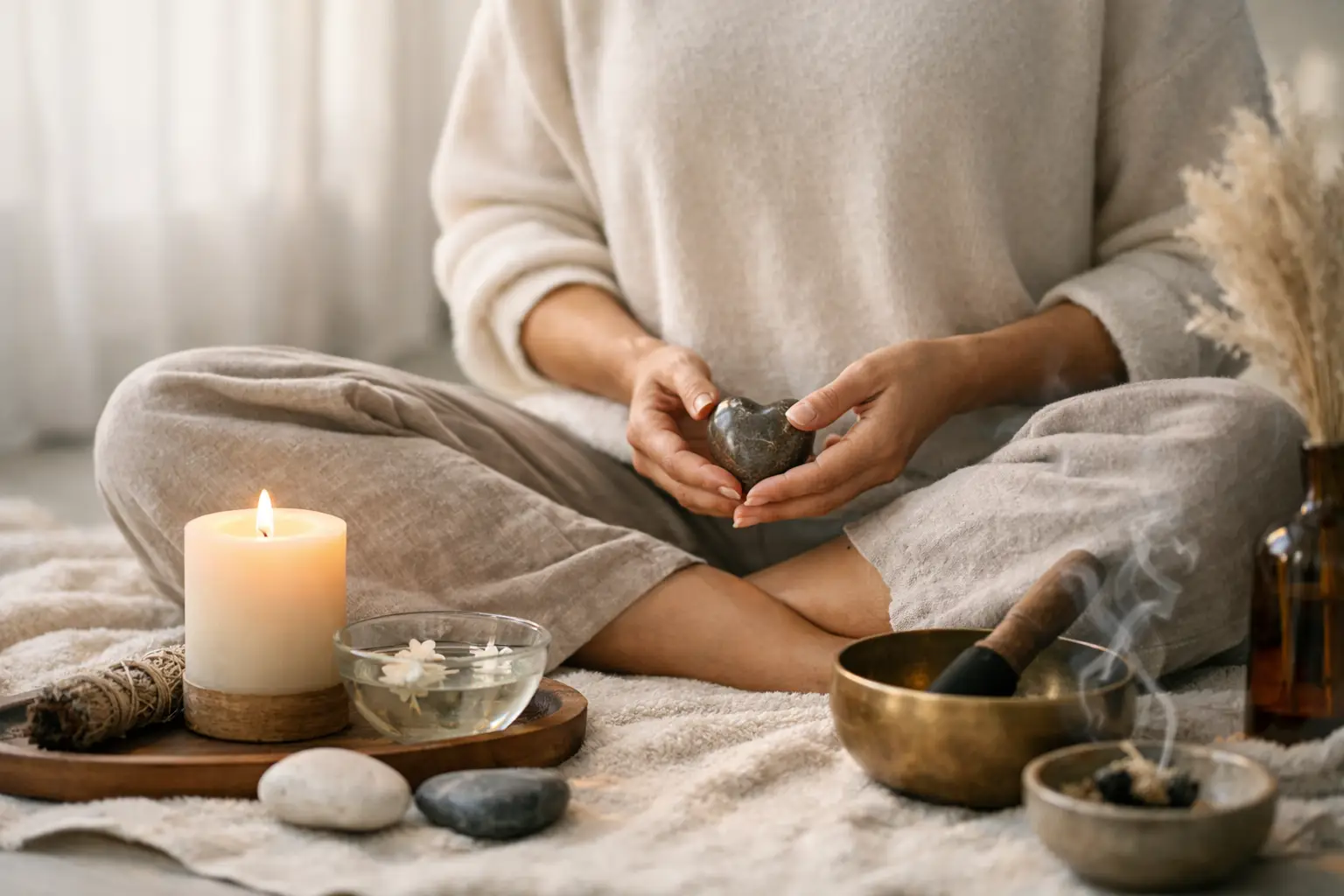
A healing ritual need not be elaborate to be meaningful. It may begin with the moment you decide not to rush past what you are feeling. Learning how to create a healing ritual is less about getting every element right and more about creating a reliable threshold: a small, intentional space where your body can soften, your mind can settle, and your inner life can be met with care.
For many of us, stress is not only a busy diary or a restless night. It is the quiet accumulation of unfinished thoughts, held emotions and disconnection from our own needs. A ritual offers a different rhythm. It gives the nervous system a signal that, for this moment, nothing needs to be performed or solved.
Begin with the need beneath the ritual
Before choosing candles, music or a journal prompt, pause with a simpler question: what am I hoping this space will hold?
You may need comfort after a demanding week. You may be moving through grief, creative fatigue, change or a feeling that you have drifted from yourself. You may simply want a more intentional beginning or ending to the day. The purpose does not have to sound profound. “I want to feel steadier” is enough. “I need somewhere to put this sadness” is enough too.
Naming the need gives your practice shape without making it rigid. A ritual for restoration might be quieter and more sensory. A ritual for clarity may include writing, gentle movement and a few minutes of silence. When the need changes, the ritual can change with it.
Try setting one compassionate intention rather than a demand. Instead of “I must let this go”, consider “I am willing to make room for what is here.” Healing often responds better to permission than pressure.
Create a container your body recognises
Ritual becomes supportive through repetition. This does not mean recreating the exact same setting every time, particularly if your energy or living arrangements vary. It means offering a few familiar cues that tell your body it has entered a different kind of space.
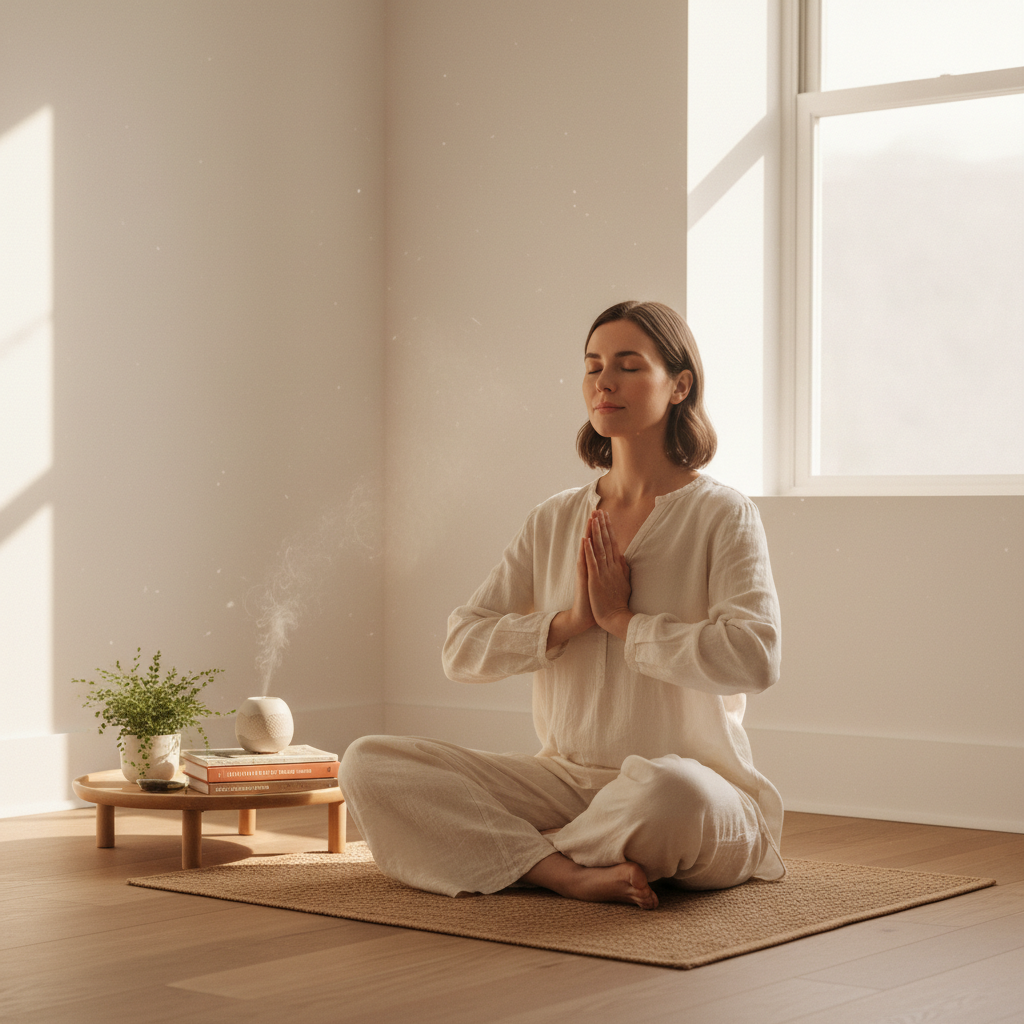
Choose a corner of your home that feels reasonably private and comfortable. A chair, cushion or folded blanket can become your place of return. Dim the lights if that feels soothing, place your mobile phone out of reach, and let the room become a little quieter than the one you have just left.
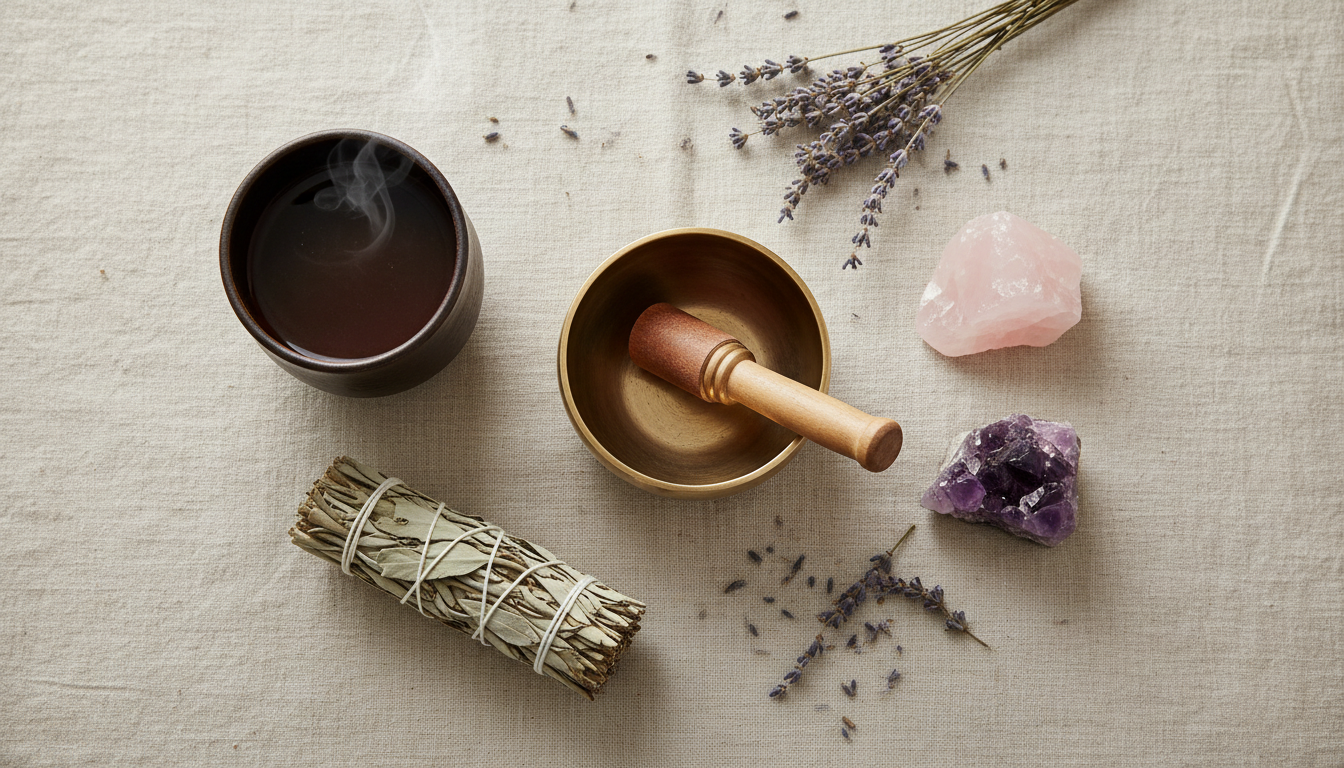
Sensory details are not decoration alone. They can help anchor attention in the present. Perhaps you make a warm drink, use a favourite scent, wrap yourself in a soft layer or play gentle instrumental sound. Keep the choices few. Too many elements can turn a restorative practice into another task to manage.
If you share a home, clear communication can be part of the container. Ten uninterrupted minutes, a closed door or headphones may be all you need. A healing ritual is not dependent on perfect silence or a beautiful home. It is built through the quality of your attention.
Let sound support, not overwhelm
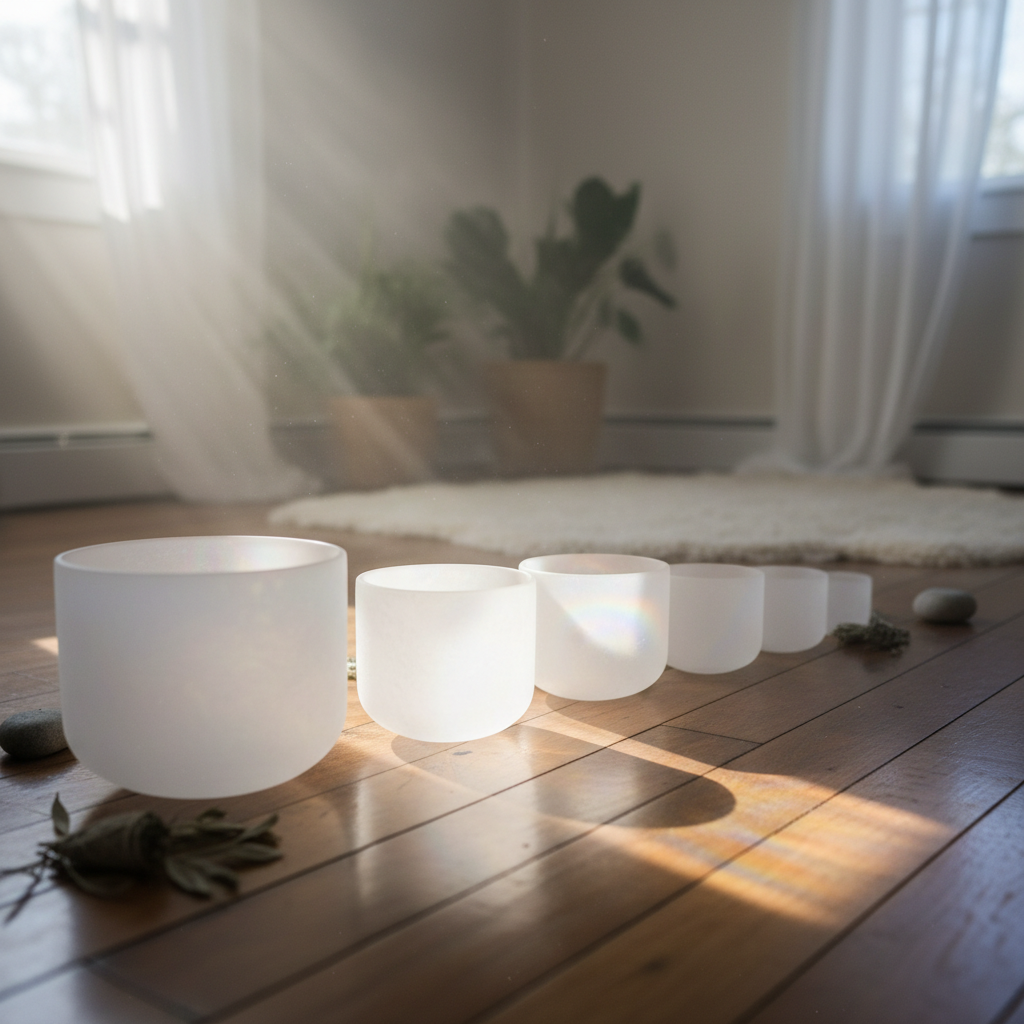
Sound can be especially useful when thinking feels loud. A soft sound bath, a sustained bowl tone, nature recordings or a playlist without lyrics can offer the mind something gentle to rest alongside. Notice what your system responds to. Some people settle with spacious, low tones; others find unfamiliar sounds activating or distracting.
There is no need to push through discomfort in the name of spiritual growth. Lower the volume, change the sound, or choose quiet if that is what allows you to feel most present.
Choose a simple sequence for your healing ritual
The most sustainable rituals have a clear beginning, middle and close. This sequence matters because it helps you arrive gradually rather than expecting instant calm.
Begin by marking the transition. You might light a candle, wash your hands slowly, open a window, or place both feet on the floor and take three unhurried breaths. Say a few words aloud or inwardly: “I am here now.” This is not a performance. It is an orientation.
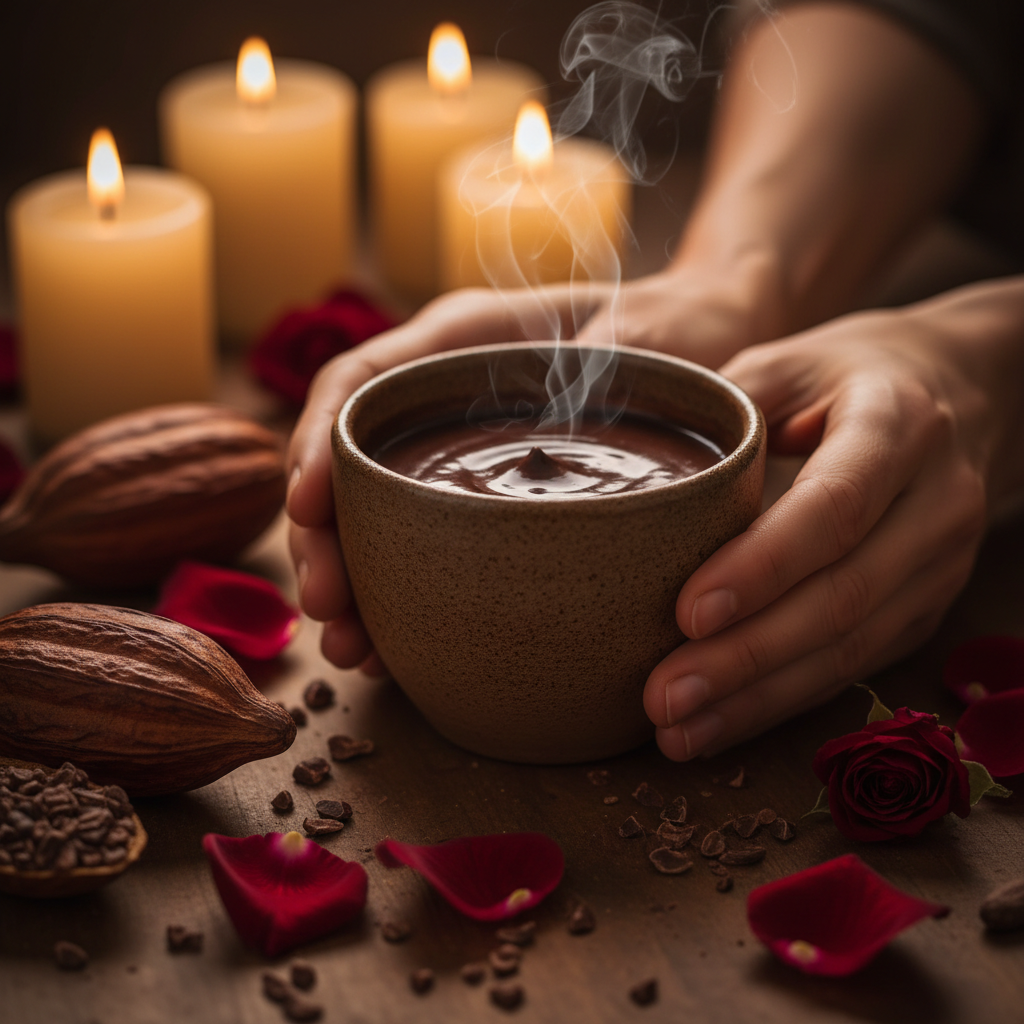
Then move into the heart of the practice. Keep it to one or two forms of attention. You could sit with a cup of ceremonial cacao and notice its warmth, write freely for five minutes, listen to sound with your eyes closed, or place a hand over your chest and abdomen while breathing naturally. The aim is not to empty the mind. It is to become more intimate with your actual experience, without immediately judging it.
Close with something that helps you re-enter ordinary life. Stretch your shoulders, drink water, write down one thing you need, or offer gratitude for the time you made. Extinguishing a candle or putting your cup away can be a meaningful closing signal. Without this final step, a practice may feel unfinished, particularly if it has brought tender feelings close to the surface.
Meet emotion with steadiness, not urgency
A healing ritual can create enough quiet for feelings that have been waiting in the background. Tears, tiredness, irritation, relief or numbness may arise. None of these responses mean you are doing it wrong.
When emotion appears, begin with the body. Feel the support beneath you. Name five things you can see. Lengthen your exhale only if it feels comfortable. You might say, “This is difficult, and I am safe enough to be with this moment.” Such phrases are not meant to deny reality. They help establish psychological grounding while you feel what is true.
It is also wise to know the limits of a personal ritual. If you feel overwhelmed, dissociated, panicked, or pulled into memories that do not settle when you ground yourself, pause the practice and seek appropriate support from a qualified mental health professional or trusted care service. Ritual can sit beautifully alongside therapy, medical care and community support. It does not need to carry the whole weight of healing alone.
Work with cacao thoughtfully
For some people, cacao offers a gentle, heart-centred focus for ritual. Preparing it slowly can become a sensory invitation to arrive: the warmth of the cup, the aroma, the act of receiving nourishment before asking anything of yourself.
Cacao is not required, and it is not a shortcut to transformation. Its role is simply to support intention, presence and connection where it feels right for you. If you use it, choose an amount that feels comfortable, take time to notice how your body responds, and avoid treating intensity as proof that a practice is working.
Cacao may not be suitable for everyone, including those with particular health conditions or medication considerations. If you are pregnant, managing a health condition, taking medication, or unsure of its suitability, seek personalised advice from a qualified clinician. A cup of herbal tea, warm water or no drink at all can be equally ceremonial when held with care.
Make the practice small enough to keep
Consistency is more healing than occasional perfection. A twenty-minute ritual may be nourishing on a quiet Sunday, but a three-minute practice is often more realistic on a Wednesday between responsibilities. Both count.
Consider creating a minimum version that you can return to when life is full: sit down, place one hand on your body, breathe naturally, and ask, “What would support me now?” You may not receive a clear answer. The asking itself rebuilds a relationship with your inner knowing.
It can help to keep a small record afterwards. Rather than analysing every session, note a few words: what you arrived with, what shifted, and what you need next. Over time, this becomes a quiet map of your patterns. You may notice that certain sounds help you rest, that evenings are better for reflection, or that your body asks for movement before stillness.
How to create a healing ritual that remains alive
A ritual should serve your life, not become another rule within it. Revisit it when it begins to feel flat, overly demanding or disconnected from what you are carrying. You may need less ceremony and more sleep. You may need a longer sound practice, a walk outdoors, a conversation with someone safe, or simply permission to do nothing.
The sacred quality of a ritual does not come from its objects or its length. It comes from the honest attention you bring to yourself. Each time you pause with tenderness, you practise a form of return: to your breath, your body, your needs, and the part of you that has never stopped asking to be met.