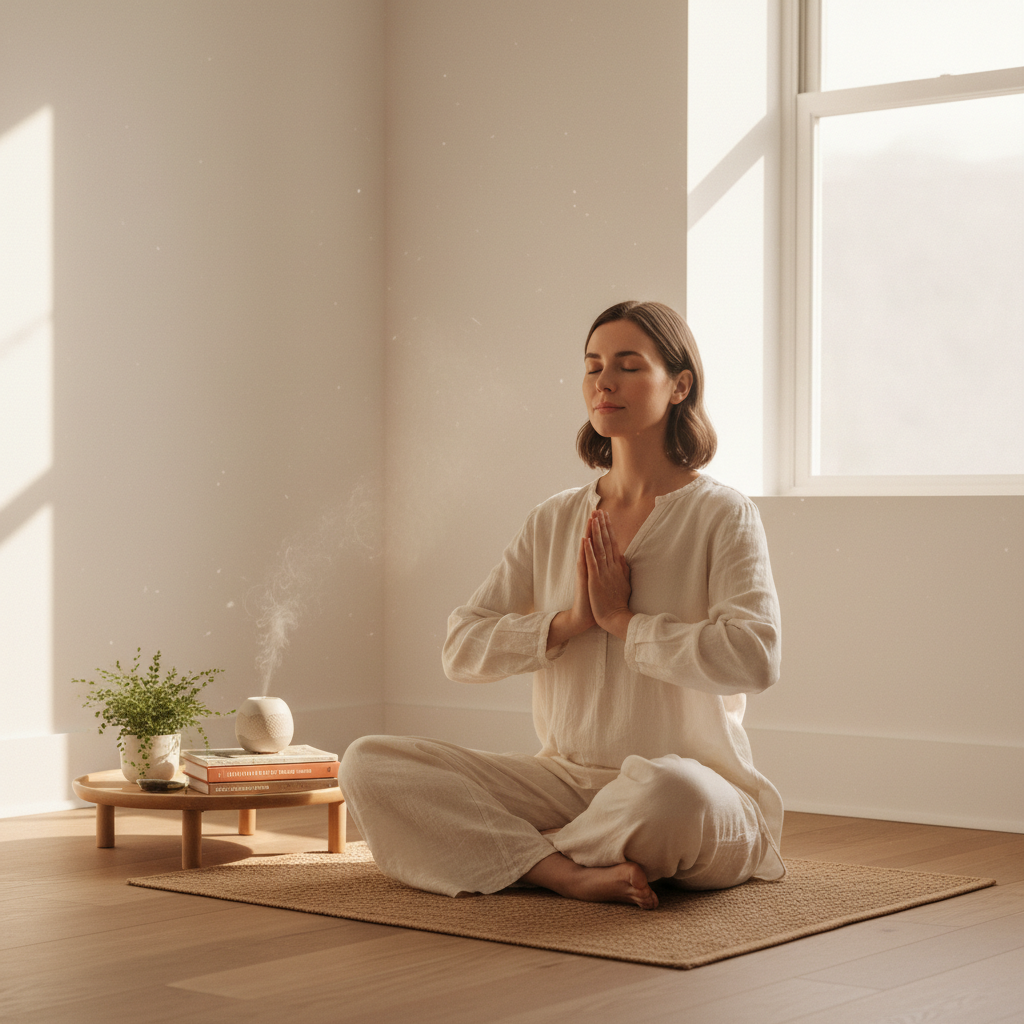
There are moments when emotion arrives all at once - a message, a memory, a difficult conversation - and suddenly your body feels less like home and more like a place you are trying to escape. If you have been wondering how to do emotional grounding, the first thing to know is that it is not about shutting feeling down. It is about creating enough safety inside yourself to stay present with what is here.
Emotional grounding is often spoken about as a coping skill, but for many people it is also a quiet return. A return to the body, to breath, to the room around you, and to the simple truth that you are here now. In a life shaped by constant stimulation, emotional labour, and subtle overstretching, grounding offers a way to meet intensity without becoming consumed by it.
What emotional grounding really means
At its heart, emotional grounding is the practice of settling yourself when feelings become overwhelming, disorientating, or too fast to process. It helps bring attention away from spiralling thoughts or rising panic and back into immediate experience. This can support nervous system regulation, but it also supports discernment. When you are grounded, you are more able to notice what you feel without being entirely led by it.
That does not mean grounding will make every emotion disappear. Sometimes sadness remains. Sometimes anger still needs space. Sometimes grief softens only slightly. The shift is not always dramatic. More often, grounding creates a little more room around the feeling so that you can breathe, choose, and listen.
For some people, grounding is most useful in acute moments of stress. For others, it becomes a daily ritual that helps prevent emotional build-up. Both approaches are valid. It depends on your temperament, your history, and how your body responds to overwhelm.
How to do emotional grounding in the moment
When emotion is already surging, simplicity matters. Long practices can feel inaccessible when you are flooded, so begin with what is immediate and sensory.
Start by orienting to the space around you. Let your eyes move slowly across the room and name a few things you can see. Not as a performance, and not with pressure to feel better instantly. Just let your attention land on what is physically present - the curtain, the mug, the light on the wall, the texture of the rug beneath your feet. This reminds the body that it is here, not inside the story alone.
Then bring awareness to contact points. Notice your back against a chair, your feet on the floor, your hands resting together. If it helps, press your feet gently down and feel the support beneath you. Grounding often begins with weight. The body tends to trust what it can feel.
Breath can help, but only if it feels safe. For some people, deep breathing creates relief. For others, especially in states of panic, it can feel intrusive or effortful. Instead of forcing a pattern, try lengthening the out-breath by a small amount. Breathe in naturally, then exhale a touch more slowly. A soft sigh can be enough.
Language matters too. You might quietly say to yourself, I am feeling a lot right now, and I am still here. This kind of inner naming can reduce fear without dismissing the emotion itself. If self-talk feels inaccessible, place a hand over your chest or lower belly and let touch do the speaking.
Begin with the body, not the analysis
Many emotionally aware people try to think their way back to calm. Sometimes insight is helpful, but in the first wave of distress, analysis can add more activation. If your system is overloaded, the body usually needs care before the mind can make sense of anything.
This is where grounding becomes less about solving and more about sensing. Warm tea held in both hands. Cool water on the wrists. A blanket around the shoulders. Standing barefoot on the floor for thirty seconds longer than usual. These are small gestures, yet they speak directly to the nervous system.
Rhythm can also be deeply regulating. Gentle tapping on the chest, slow walking around the room, or rocking slightly from side to side can help discharge excess energy. There is no need to make it look polished. The question is simply: what helps your body remember steadiness?
When grounding needs to feel a little more sacred
For people drawn to ritual, emotional grounding can become more than a quick regulation tool. It can be a devotional practice of returning to yourself with tenderness.
You might light a candle before sitting quietly for five minutes. You might place one hand on the heart and one on the belly and listen to the resonance of a singing bowl or a low, steady piece of instrumental music. You might sip ceremonial cacao slowly and allow the act itself to mark a transition from reactivity into presence. In a digital sanctuary such as Luminous Resonance, this kind of ritual-led grounding can offer both emotional safety and spiritual depth.
The key is not aesthetic perfection. It is intention. Ritual works because it gives the body and mind a recognisable pathway back to safety. Repetition builds trust.
What to do if grounding does not work straight away
One of the gentlest truths about this practice is that grounding is not always immediate. If you are highly activated, exhausted, or carrying older unresolved material, the first attempt may not shift very much. That does not mean you are doing it badly. It may simply mean your system needs more time, or a different doorway.
If stillness makes things worse, choose movement. If internal awareness feels too intense, focus on the outer environment. If breathing practices irritate you, try sound instead - humming, chanting softly, or listening to a steady tone. Grounding is personal. What settles one person may agitate another.
There are also moments when grounding alone is not the full answer. If you regularly feel emotionally flooded, dissociated, or unable to regain stability, it may help to work with a therapist or trained practitioner. Support can make grounding more effective because it gives your system a co-regulated sense of safety to learn from.
How to build emotional grounding into daily life
The most supportive grounding practice is often the one you use before you desperately need it. A few minutes each day can create familiarity, so that in harder moments your body already knows the route.
That might mean pausing each morning to feel your feet on the floor before looking at your mobile phone. It might mean a short evening check-in where you ask, what am I carrying today, and where do I feel it in my body? It might mean closing your working day with a cup of tea in silence rather than moving straight into the next demand.
Consistency matters more than intensity. A two-minute ritual practised often can be more regulating than a twenty-minute one you only attempt when you are already overwhelmed.
Journalling can help here, especially if you keep it simple. Note what you felt, what you tried, and what brought even a slight sense of settling. Over time, patterns emerge. You may discover that sound grounds you faster than breath, or that being near water softens agitation, or that touch is more reassuring than words.
A gentle practice for how to do emotional grounding
If you want one practice to return to, try this.
Sit somewhere you feel reasonably safe. Let both feet rest on the floor. Look around and name five things you can see. Then notice three points of contact in the body - perhaps your feet, your seat, and your hands. Place one hand over your heart and breathe out slowly three times, without forcing the in-breath. Finally, say inwardly, In this moment, I am safe enough to be here.
Stay for one minute. Not until everything feels fixed. Just long enough to send a new message to the body.
There is a quiet dignity in learning how to remain with yourself when emotion rises. Not perfectly, not all at once, but with patience, honesty, and care. Each time you practise emotional grounding, you strengthen the path back to your own centre.