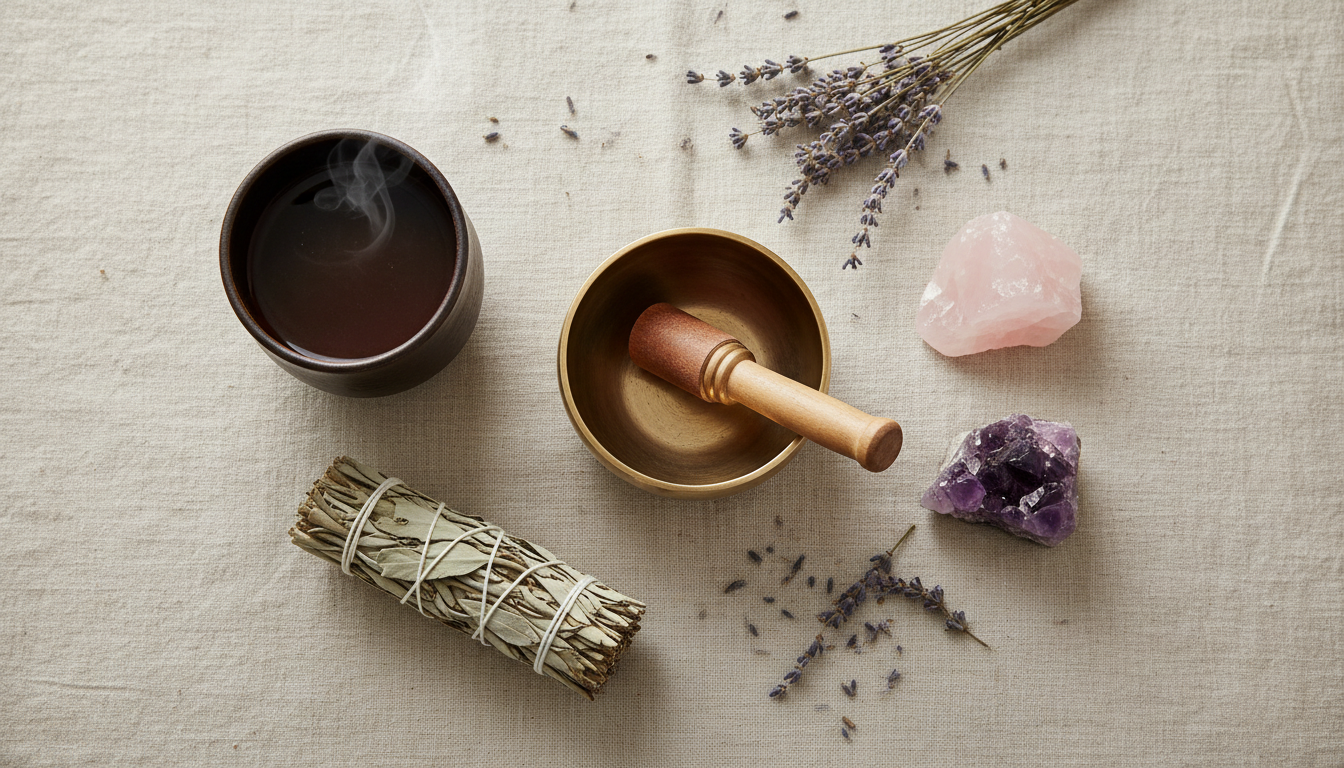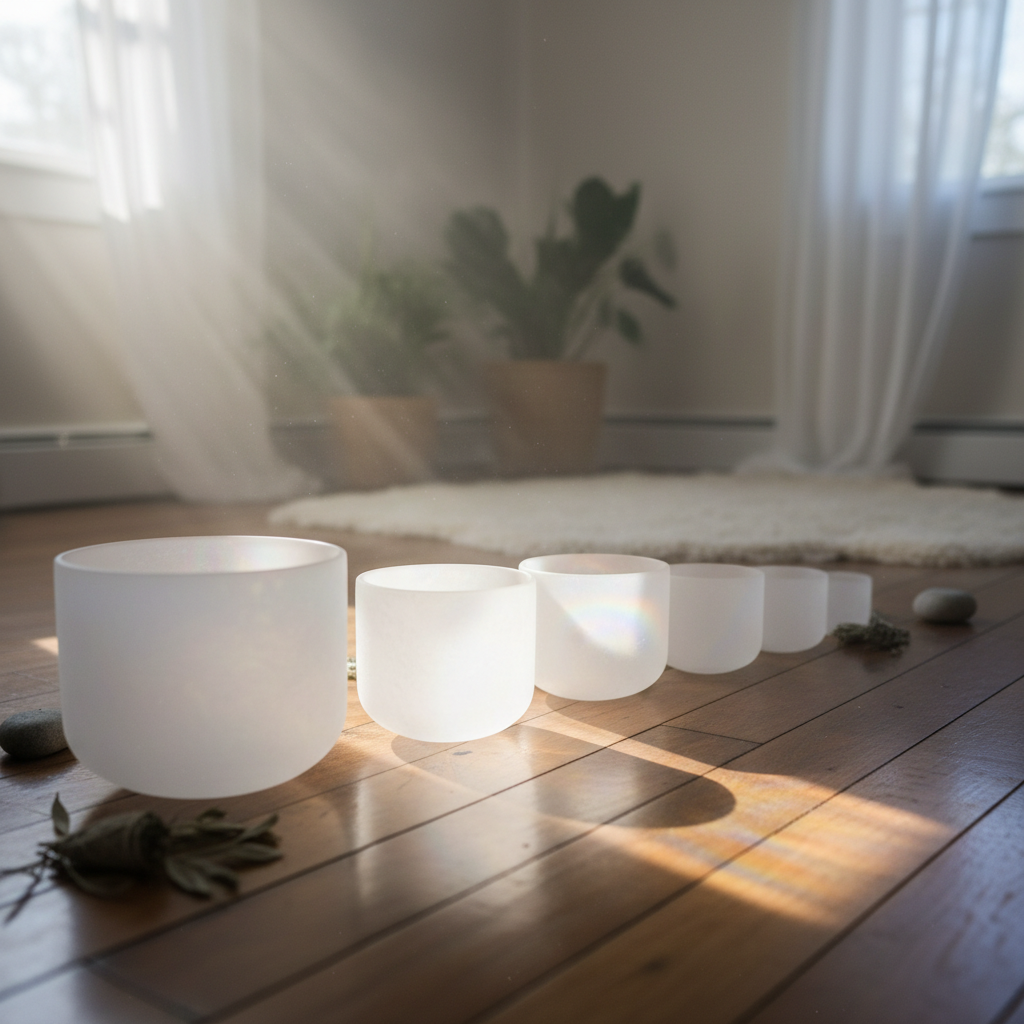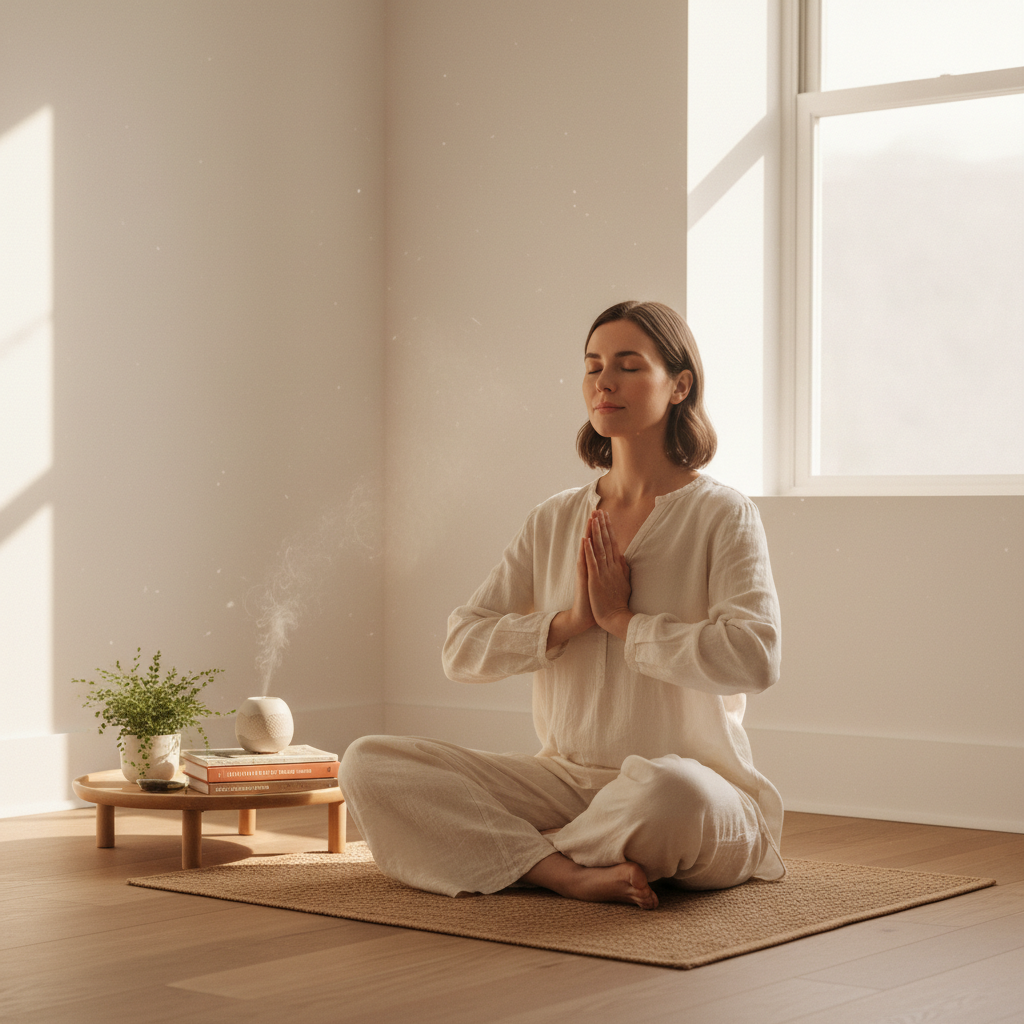
The final tone has faded, yet something within you may still be moving. To journal after a sound bath is not to pin that experience down too quickly. It is a gentle way of listening for what remains: a softened feeling in the chest, an unexpected memory, a clear inner no, or simply a little more space around the day.
Sound can invite the nervous system towards rest, while also bringing forward emotion, imagery and sensation. Journalling creates a quiet threshold between the practice and everything that follows. It allows the experience to become personally meaningful, without asking you to explain it perfectly.
Why journal after a sound bath?
During a sound bath, sustained tones, vibration and periods of silence can draw attention away from the mind's usual commentary and back into the body. Some people leave feeling peaceful and spacious. Others feel tender, unsettled or unusually awake. There is no single response that means a session has ‘worked’.
Writing afterwards offers psychological grounding. It can help you notice what you need, name a feeling before it recedes, or recognise a recurring pattern with greater compassion. For those on a spiritual path, it may also be a place to hold symbols, intuitive impressions or a sense of connection that does not need immediate interpretation.
The aim is not to create a beautiful account of the session. Nor is it to search for a breakthrough every time. A few honest lines can be enough.
Create a soft landing before you write
If possible, do not reach for your mobile phone the moment the practice ends. Give yourself five or ten minutes to return gradually. Drink water, use the loo, wrap yourself in a blanket, or sit with both feet on the floor. These ordinary gestures tell the body that it is safe to complete the experience.
Choose a notebook that feels easy to return to rather than precious. A pen and paper can be especially supportive after a screen-based event, when your senses have already had plenty to process. If handwriting feels effortful, a voice note or a few words in your notes app are equally valid.
Before writing, pause and ask: What is here now? Not what should be here, and not what you hoped to feel. Let your response be simple. You might notice warmth, heaviness, quiet, irritation, grief, gratitude or nothing in particular. Nothing in particular is still information.
How to journal after a sound bath
Begin with the body, because the body often speaks before language arrives. You could write for three minutes without lifting your pen, starting with: “Right now, I notice…” Describe sensations rather than trying to assign them a meaning. Perhaps your jaw has softened, your belly feels fluttery, or your shoulders are carrying more than you realised.
Then make room for the emotional layer. Ask yourself whether any feeling became more present during the session. It may not have been dramatic. A slight ache, relief, longing or resistance deserves the same care as an obvious release. Try the phrase: “There is room for me to feel…” and finish it as honestly as you can.
Only then, if it feels useful, explore the images or insights that arose. Sound baths can sometimes bring colours, memories, dreams, phrases or a sense of being drawn towards a particular choice. Hold these lightly. An image can be meaningful without being a message you need to act upon. You are allowed to remain curious.
A helpful closing question is: “What would support me over the next 24 hours?” The answer may be to go to bed early, take a gentle walk, send a message you have been delaying, or protect an hour of quiet. Insight is most caring when it is met with a realistic next step.
Prompts for deeper reflection
When you have more time, return to one prompt rather than trying to answer them all. Let the page remain spacious.
- What shifted in my breath, body or energy during the session?
- Which sound, silence or moment stayed with me?
- What am I ready to soften towards, even slightly?
- Is there an emotion asking to be witnessed rather than solved?
- What boundary, desire or truth feels clearer now?
- What would integration look like in one small act of care?
If a prompt feels too exposing, skip it. Reflective practice is an invitation, not a test. Your journal belongs to you, and you decide how closely to approach what is arising.
When your journal feels blank
A blank page after a sound bath can feel disappointing, particularly if you expected clarity or catharsis. Yet stillness is not emptiness. Sometimes the most restorative outcome is that your system has had a rest from producing, analysing and making sense.
In that moment, record only the practical details: the date, where you practised, a word for your mood before and after, and one thing you can see or hear around you. This kind of simple orientation can be profoundly grounding. It also gives you a gentle record to revisit later, when connections may become clearer with time.
Equally, some sessions may leave you with more material than you know what to do with. If writing feels like it is intensifying overwhelm, stop. Place a hand on your heart or thigh, look around the room, and name a few objects you can see. Speak with someone you trust if that feels supportive. Sound-based practice can complement emotional wellbeing, but it is not a replacement for professional mental health care when you need it.
Let insight become integration
The value of journalling is not only in what you discover on the page. It is in the relationship you build with your inner world over time. As entries gather, you may begin to notice what helps you settle, which sounds invite ease, what tends to surface when life is demanding, and what your own language for care truly is.
Try not to turn every insight into a task. Spiritual expansion does not always ask for a grand decision. Sometimes integration looks like making a nourishing meal, declining an invitation, taking a slower route home, or sitting in silence for two extra minutes before work begins.
At Luminous Resonance, we hold ritual as a meeting place for depth and daily life. The sounds may open a doorway, but your attention afterwards is what helps you walk through it with tenderness. Let the journal be less of a record to get right and more of a companion: patient, private and ready whenever you are.
When you close the notebook, take one final breath and notice the room around you. You do not need to carry every feeling forward. Keep only what feels nourishing, and allow the rest to settle in its own time.