A good cup of ceremonial cacao should feel like an arrival, not a rush. Before you think about ingredients or heat, the heart of how to make cacao for ceremony is presence. The preparation itself becomes part of the practice - a quiet threshold between ordinary time and the space you are about to enter.
Ceremonial cacao is not quite the same as hot chocolate, and treating it that way often flattens the experience. It is typically made from pure cacao paste or blocks, minimally processed and rich in the natural compounds that give cacao its depth, bitterness, and subtle uplifting effect. When prepared with care, it can support emotional openness, embodied awareness, and a softened inward focus.
What makes ceremonial cacao feel ceremonial
The difference is not only in the cacao itself, although quality matters. Ceremony begins with intention. You may be preparing a cup before journalling, meditation, a sound bath, breathwork, or a moment of stillness at the end of a long day. In that sense, the drink is only one part of the container.
That said, practical details do shape the experience. The texture should be smooth and comforting. The flavour should remain earthy and true to the bean, rather than heavily sweetened. And the dose should suit your body, your sensitivity, and the kind of practice you are entering. A strong ceremonial serving before a deep personal ritual may feel beautiful for one person and overstimulating for another.
How to make cacao for ceremony
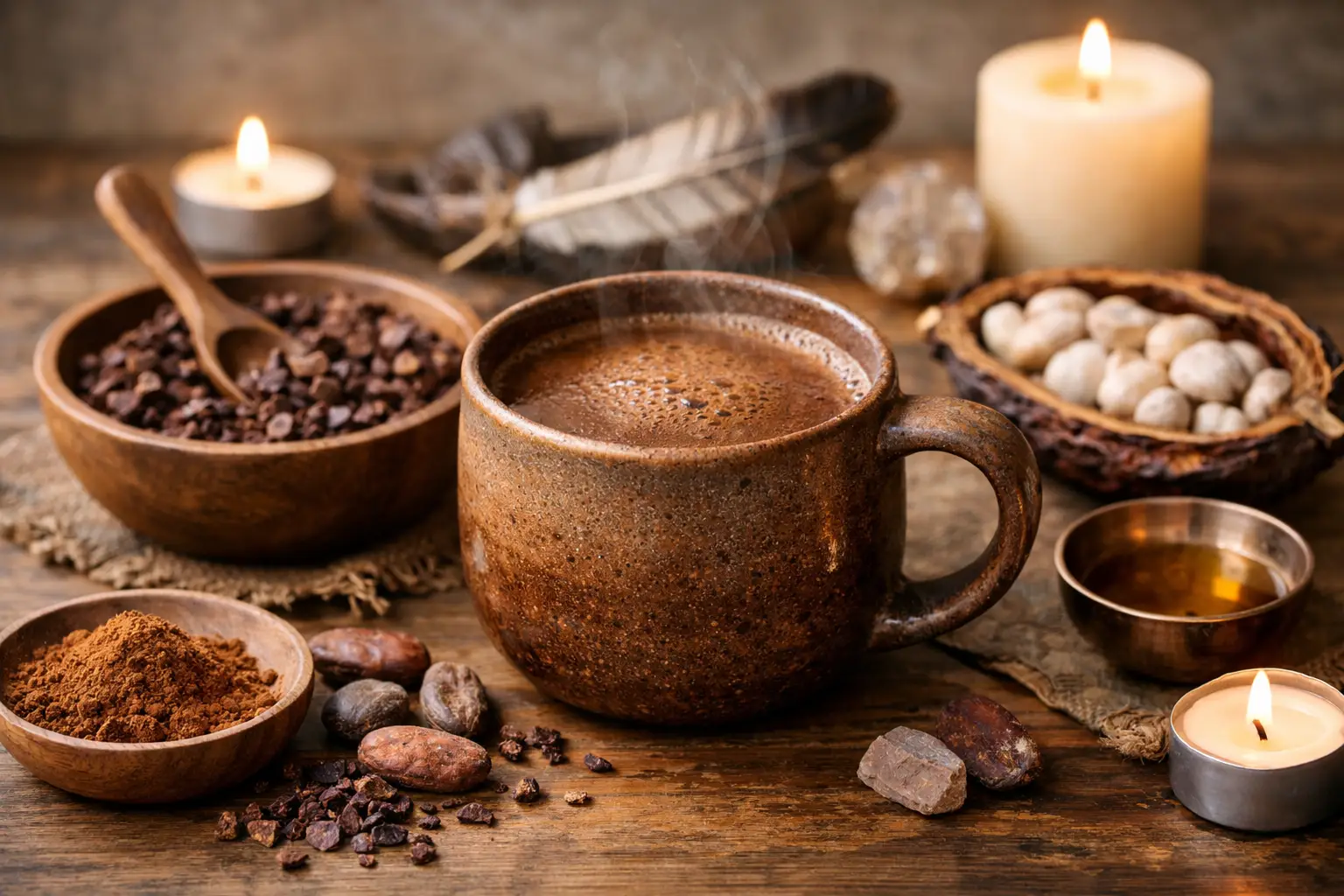
Start simply. You need ceremonial grade cacao, water, and a way to warm and whisk. Plant milk can be used, but many people prefer water because it keeps the drink lighter and allows the cacao itself to come through more clearly. If you do use milk, a small amount is often enough.
For one cup, use around 20 to 30 grams of cacao for a gentler daily ritual, or 35 to 42 grams for a fuller ceremonial dose. There is no prize for making it stronger than your system can comfortably receive. If you are new to cacao, beginning with less is often the wisest and most respectful approach.
Warm about 200 to 250ml of water until it is hot but not boiling. Boiling water can dull the flavour and make the preparation feel harsher than it needs to. Finely chop or grate the cacao, place it into your pan or blender, and pour over the warm water. Whisk steadily on a low heat until the cacao has melted and the texture becomes glossy.
At this point, some people add a small pinch of cinnamon, chilli, vanilla, cardamom, or sea salt. These additions can be lovely, but restraint matters. If every cup becomes a recipe project, the ritual can drift away from its centre. Let the cacao remain the main note.
If the bitterness feels too intense, a small amount of maple syrup or honey may soften it. Still, it helps to meet some of cacao's natural bitterness rather than immediately covering it. That flavour is part of its character - grounding, honest, and deep.
Preparing the space as well as the cup
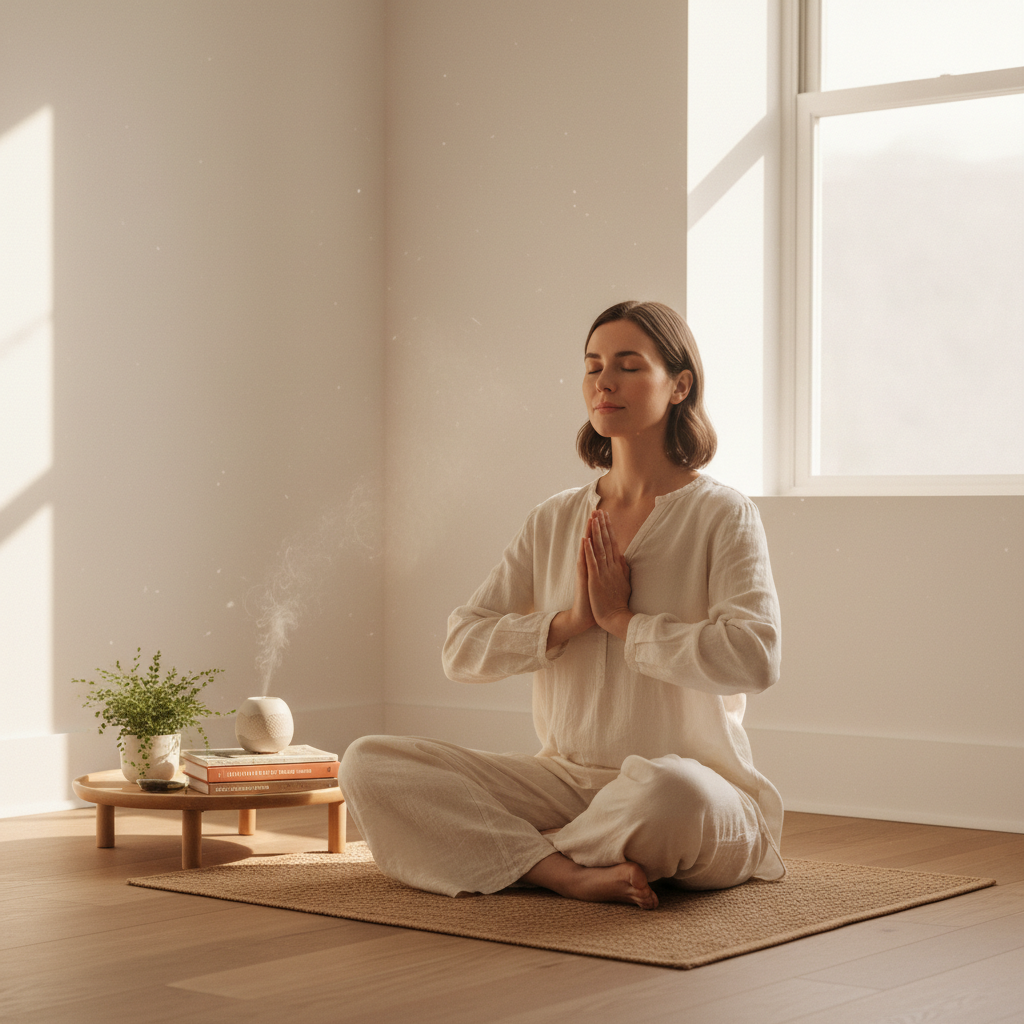
If you want to understand how to make cacao for ceremony in a more complete sense, include the environment. The space does not need to be elaborate. It simply needs to feel intentional enough that your nervous system registers a change.
You might dim the lights, sit with a candle, place a journal nearby, or begin with a few slower breaths while the cacao warms. Some people like to speak an intention softly over the cup. Others prefer silence. Neither is more spiritual than the other. What matters is sincerity.
If you are sharing cacao with others, this same principle applies. Move gently. Pour with attention. Allow a little space before conversation takes over. In group practice, the tone is often set long before the first sip.
A simple ceremonial method
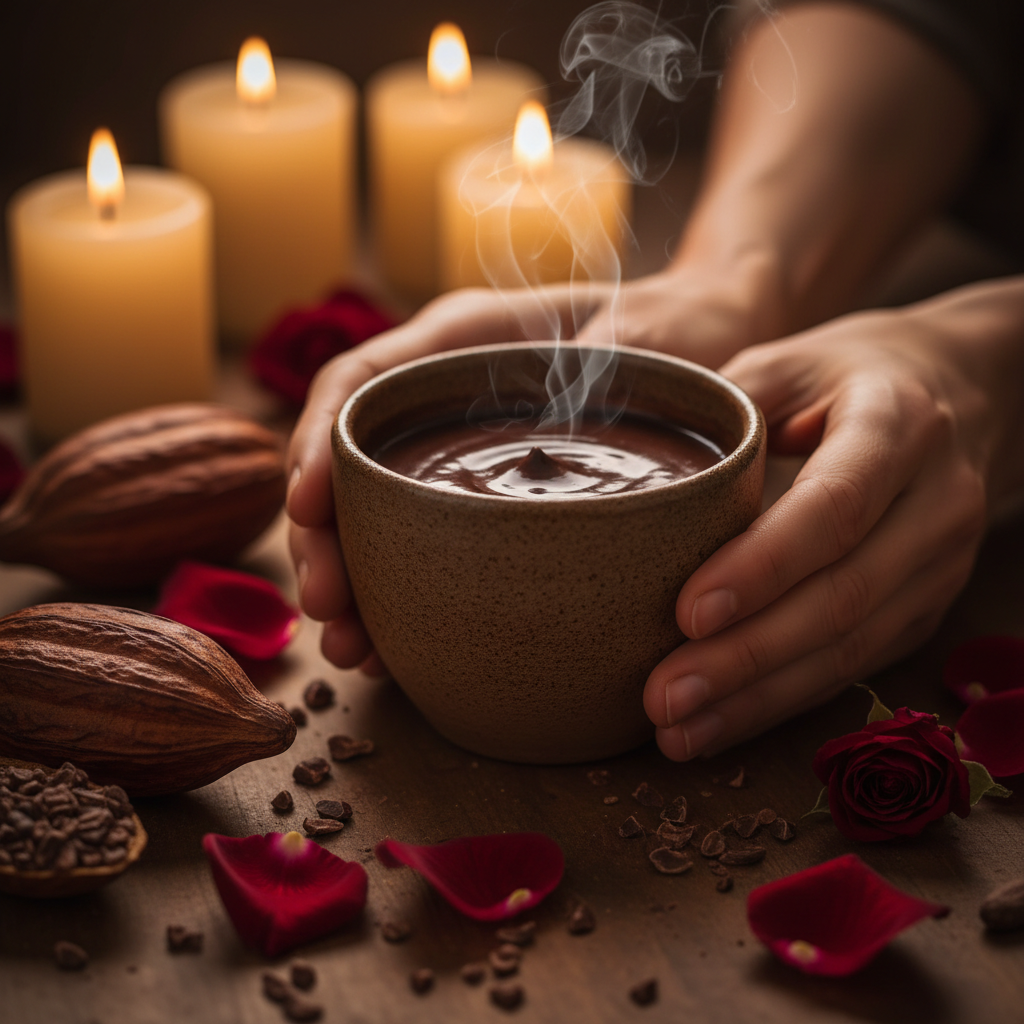
As the cacao heats, stir clockwise if that feels meaningful to you and bring your attention to what you are inviting in. This may be clarity, rest, courage, grief, tenderness, or simply a willingness to listen inwardly. Hold the cup in both hands before drinking. Notice the warmth, the scent, the weight of it.
Take the first sip slowly. Rather than drinking it absent-mindedly, let it mark the beginning of your practice. From there, move into whatever ritual is calling you - meditation, music, journalling, mindful movement, or rest.
Finding the right dose for your body
This is where discernment matters. Not every ceremonial cup needs a high dose, and stronger is not always better. Cacao contains theobromine, which many people experience as heart-opening and gently energising, but sensitivity varies. A dose that feels supportive in the morning might feel too activating in the evening.
If you are prone to anxiety, headaches, or physical sensitivity, start lower and notice how your body responds. If you have not eaten for many hours, cacao may also land more intensely. Some prefer it on an emptier stomach for ceremonial clarity, while others feel more grounded after a light meal. It depends on your constitution and the kind of experience you want.
Those who are pregnant, taking certain medications, or living with particular heart conditions may wish to check that cacao is appropriate for them. Sacred practice can still be practical. Emotional safety includes physical awareness.
How to make cacao for ceremony that feels grounded
One of the quiet misunderstandings around ceremonial cacao is the belief that the drink itself creates transformation. In reality, cacao can support a process, but it does not replace the inner work. It may help you feel more present, emotionally receptive, or connected to your body, yet what unfolds still asks for your participation.
This is why grounding matters. After drinking, sit for a moment before moving into anything intense. Feel your feet. Notice your breath. Let the body catch up with the ritual. If emotion rises, there is no need to force meaning too quickly. Sometimes cacao opens a gentle doorway, and sometimes it simply offers warmth and steadiness.
For many people, the most nourishing home ceremonies are the least performative. A quiet corner. A real intention. A cup made with care. That is enough.
Optional additions, used thoughtfully
You do not need many extras, but a few can support the experience if chosen well. Cinnamon can add warmth. A touch of chilli may create brightness and circulation. Rose can bring a softer aromatic quality, though too much can overpower the drink. Adaptogens and powders are sometimes added, but they can complicate a ritual that benefits from simplicity.
If your aim is deep listening, keep the recipe uncluttered. If your aim is comfort on a winter evening, a little more richness may suit the moment. Ceremony is not rigid. It is responsive.
Common mistakes when making ceremonial cacao
The most common mistake is overheating it. Gentle warmth gives a smoother, more pleasurable cup. The next is using too much sweetener and turning the drink into a dessert. Another is choosing a dose that does not match your body, then wondering why the experience feels edgy rather than centred.
Rushing also changes the quality of the ritual. If you make cacao while answering messages, half-distracted and already late for something else, the cup may still taste pleasant, but the ceremony has not really begun. Even five undisturbed minutes can shift that.
Quality matters too. Pure ceremonial cacao tends to feel fuller, less sugary, and more energetically resonant than drinking chocolate mixes or standard cocoa powder. If the source feels clean, the preparation often feels cleaner as well.
Bringing it into your regular practice
You do not need to save cacao for rare, highly curated evenings. It can become a gentle rhythm in daily or weekly life. A small cup before Sunday journalling. A stronger serving before a personal ritual. A shared cup before an online gathering or guided sound bath. At Luminous Resonance, this meeting point between ritual and psychological grounding is where cacao often feels most supportive - not as escape, but as a return.
Over time, your way of making it may become more intuitive. You may use less liquid for a denser cup, or slightly more for softness. You may decide mornings suit you best, or that dusk feels more spacious. Let experience teach you. The body is often the clearest guide.
A ceremonial cup does not need perfection. It needs care, honesty, and enough stillness for you to hear what is already present beneath the noise.