Some cups are made to wake you up. Others are made to bring you back to yourself. If you are learning how to prepare ceremonial cacao, the process matters almost as much as the cacao itself. A rushed mug made between emails will feel very different from one prepared with attention, warmth, and a clear intention.
Ceremonial cacao sits in a different space from ordinary hot chocolate. It is less about sweetness and comfort in the usual sense, and more about presence. The flavour is often deeper, more earthy, sometimes slightly bitter, and the experience can feel grounding, heart-opening, or emotionally clarifying. That said, the cup alone does not create the ceremony. The way you prepare it helps shape the quality of what follows.
What ceremonial cacao asks of the moment
Before looking at the practical side of how to prepare ceremonial cacao, it helps to understand what makes the preparation distinct. This is not about perfection or strict ritual rules. It is about creating enough spaciousness for your nervous system to register that something intentional is happening.
For some people, that means lighting a candle, sitting in silence for a minute, or taking a few slow breaths while the water warms. For others, it is simply choosing not to multitask. The point is not performance. The point is relationship - with the cacao, with your body, and with whatever you are carrying that day.
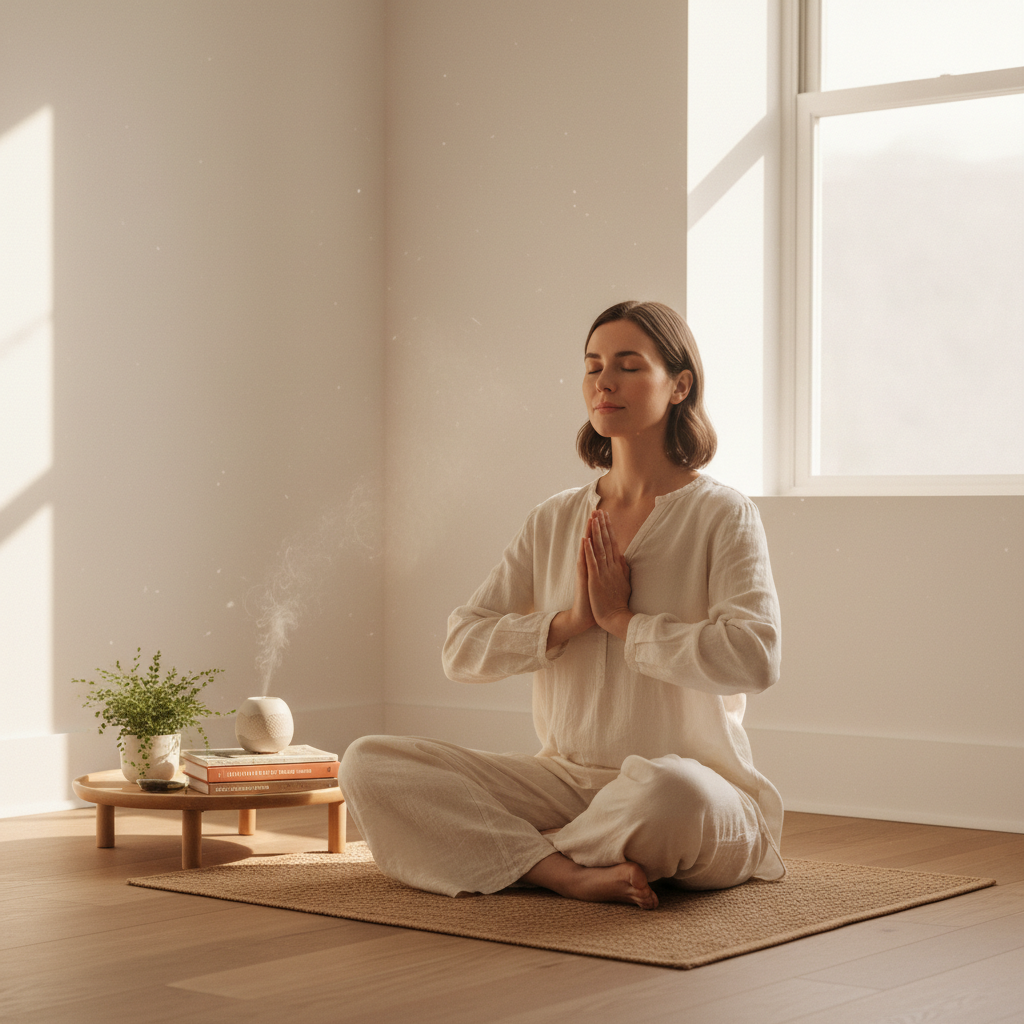
If you are approaching cacao as part of a reflective or spiritual practice, your preparation can become the first gentle threshold. You move from doing into listening. From speed into rhythm.
How to prepare ceremonial cacao at home
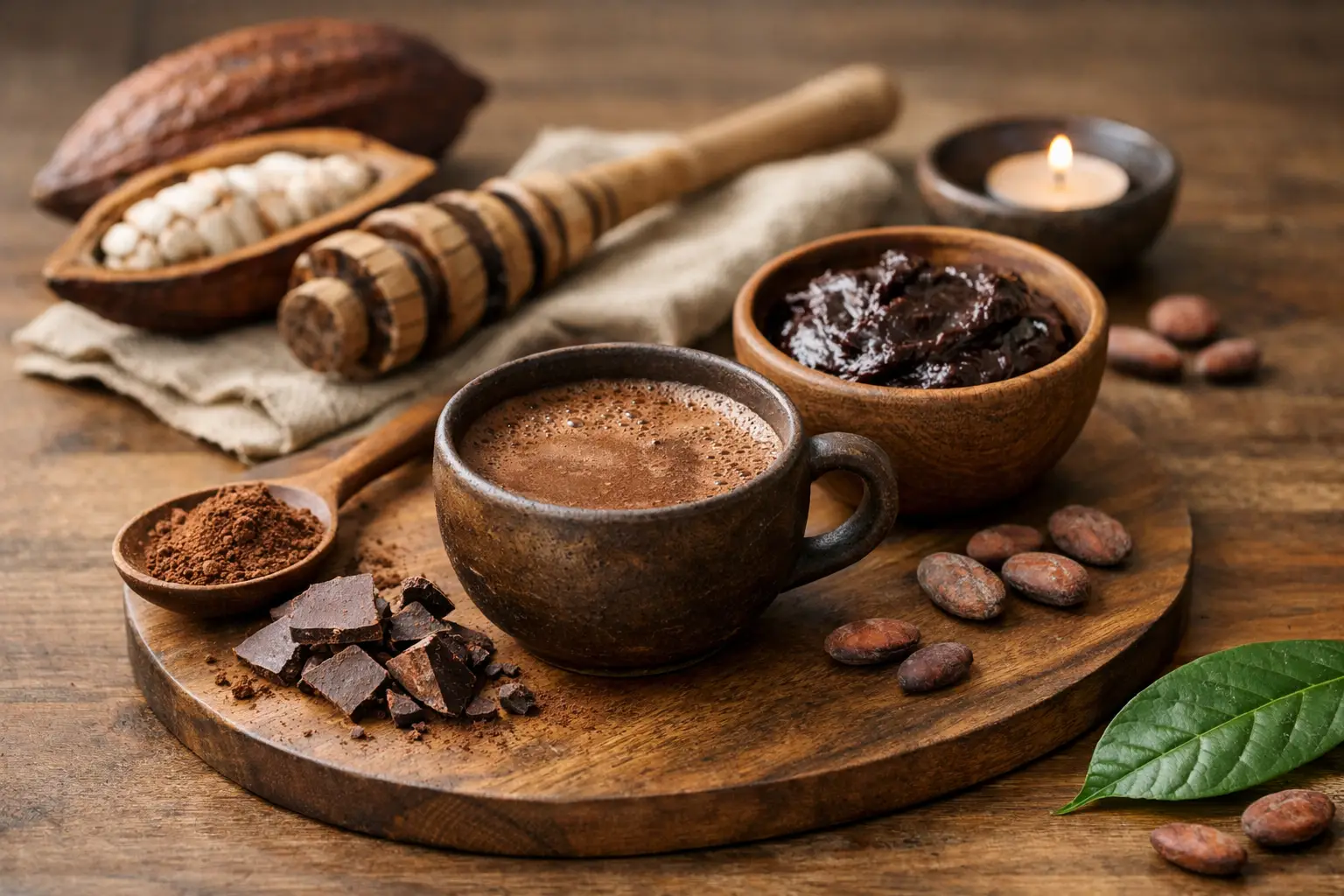
The core method is simple. You gently combine ceremonial cacao paste with hot water, stirring or blending until smooth. What changes from person to person is the strength, the texture, and the atmosphere around it.
A typical serving is often between 20g and 40g of ceremonial cacao. If you are new to it, starting at the lower end usually feels wise. A full ceremonial dose can be beautiful, but stronger is not always better. Your body size, sensitivity to stimulants, whether you have eaten, and your emotional state can all shape how cacao lands.
Chop or grate your cacao finely so it melts more easily. Heat water until it is hot but not boiling. Boiling water can dull the subtle qualities of cacao, and gentler heat tends to preserve a softer taste and feel. As a guide, water just off the boil is usually suitable if you let it settle briefly before pouring.
Place the cacao in your mug or blender, add the hot water, and stir thoroughly. Some people prefer a spoon or small whisk. Others like to blend it for a silkier texture and a light froth on top. Neither is more correct. Stirring feels slower and more intimate. Blending creates a smoother cup. It depends what kind of experience you want.
The amount of water matters too. Less water gives you a richer, thicker drink with a more concentrated flavour. More water makes it lighter and easier to sip slowly. If you are building a longer ritual, a slightly thinner drink may feel more supportive than an intensely dense one.
A simple ratio to begin with
If you want a starting point, 25g to 30g of ceremonial cacao with around 200ml to 250ml of hot water is a gentle place to begin. From there, you can adjust. If it tastes too strong, add more water. If it feels too mild, increase the cacao next time rather than forcing down a cup that does not suit you.
That is often the quiet lesson in ritual practice - notice first, adjust second.
Should you add anything else?
Purists sometimes drink ceremonial cacao with water only, and there is something beautifully direct about that. But there is also room for personal preference, especially if an additive helps your body receive the drink more comfortably.
A small amount of cinnamon, chilli, vanilla, cardamom, or a touch of maple syrup can complement the cacao without overwhelming it. Plant milk is also an option, though many people use mostly water to keep the drink light and clear. If you do add milk, using too much can make the cup heavy, which may shift the experience from ceremonial to more indulgent and sleepy. That is not wrong. It is simply a different intention.
Sweetener is another area where it depends. Ceremonial cacao is naturally intense. For some, that bitterness is part of its medicine. For others, a little sweetness softens resistance and helps them stay present. There is no need to force austerity. If a small adjustment allows you to meet the drink with openness rather than tension, it may be the kinder choice.
Preparing the space as well as the drink
If you only learn the mechanical steps of how to prepare ceremonial cacao, you will know how to make the drink. If you also prepare the space around it, you create the conditions for a deeper experience.
This does not need to be elaborate. A tidy corner, a cushion, a blanket, a journal, or a quiet playlist can be enough. You are not trying to stage a perfect ritual scene. You are offering yourself a small container of safety.
This matters because cacao can gently amplify awareness. You may feel warmth in the chest, a subtle lift in mood, clearer thinking, or emotion rising closer to the surface. In a supportive space, that can feel nourishing and illuminating. In a rushed or overstimulating environment, it may simply feel like too much is happening at once.
For those who use cacao alongside meditation, breathwork, or sound healing, preparation becomes part of the regulation. At Luminous Resonance, this kind of intentional pacing supports cacao not as a quick wellness fix, but as an entry into psychological grounding and spiritual expansion.
When to drink it, and when to pause
Morning or early afternoon often works best, especially if you are sensitive to natural stimulants. Ceremonial cacao contains compounds that can feel energising and enlivening, so a late evening cup may not suit everyone.
It is also worth considering what else is in your system. If you have had several coffees, eaten a heavy meal, or are already feeling jangly, cacao may feel less balanced. On the other hand, taking it on a completely empty stomach can feel intense for some people. A light meal beforehand is often a steady middle ground.
There are also moments when pausing is the more mindful choice. If you are pregnant, taking medication that affects mood or blood pressure, or have a heart condition, it is sensible to seek professional advice before drinking ceremonial cacao regularly or at higher doses. Sacred practice still benefits from practical care.
The felt experience matters more than the recipe
Many people ask for the perfect ceremonial cacao recipe, but the deeper question is often how they want to feel. Supported? Open? Clear? Comforted? The same ingredients can create very different experiences depending on pace, dosage, and attention.
If your cup tastes slightly different each time, that is not failure. Cacao is a living ritual ingredient, and your needs are not static. Some mornings ask for strength. Others ask for softness. Your preparation can respond to that.
You may notice that one day you want silence, and another day you want music. One day you sip slowly with your journal, and another day you drink before sitting in meditation. Over time, your way of working with cacao becomes more intuitive. You stop looking for the right formula and start listening for the right relationship.
A simple ritual after preparation
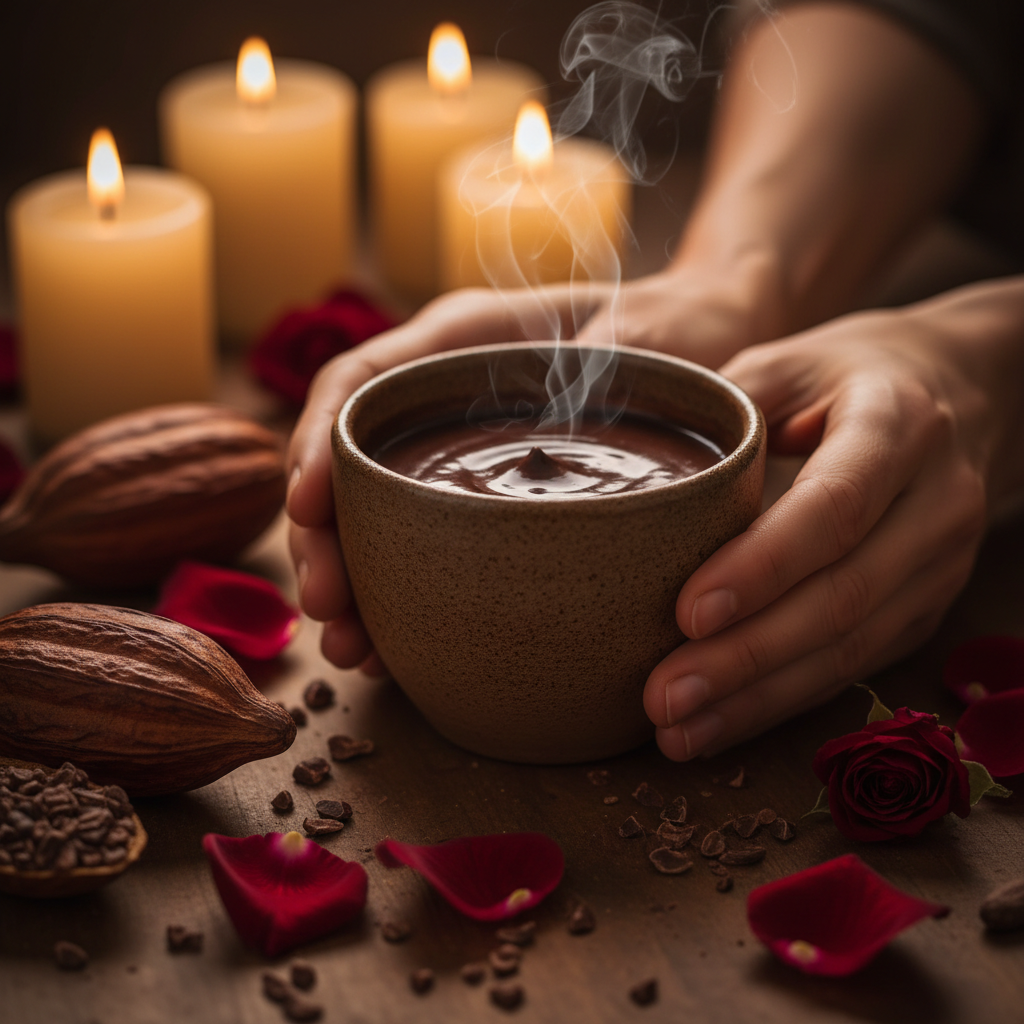
Once your cacao is ready, resist the urge to drink it absent-mindedly. Hold the cup for a moment. Notice the warmth in your hands. Let the aroma meet you before the first sip. You might set a quiet intention, not as a demand, but as an invitation. Something simple is enough: show me what needs care, help me soften, let me hear myself clearly.
Then drink slowly.
The ceremony does not begin after the cacao. It begins with the first moment of attention you offer it. And if you are still learning how to prepare ceremonial cacao, that is the most useful thing to remember. A beautiful cup is not made by technique alone, but by the quality of presence you bring to it.
Let it be simple at first. Let it be honest. The ritual will deepen as you do.