A difficult email, a crowded train, a conflict at home, an old memory rising unexpectedly: overwhelm rarely arrives at a convenient moment. The mind may race ahead, the chest may tighten, or you may feel strangely far away from yourself. Learning how to use grounding techniques gives you a quiet, practical way to return to the present without needing to solve everything at once.
Grounding is not about forcing yourself to be calm or spiritually bypassing a real feeling. It is a way of offering the nervous system evidence that, in this moment, there is something steady to meet. From that steadier place, you can listen to what you need with more clarity and compassion.
What grounding techniques are really for
When we are stressed, anxious or emotionally activated, the body can move into protection. You might feel restless and alert, frozen and numb, tearful, irritable, or caught in repetitive thoughts. Grounding practices gently bring attention back to the body, the senses and the immediate environment.
This can support psychological grounding because the present moment is often less threatening than the story our nervous system is trying to predict. Notice the word support. A grounding practice cannot erase grief, resolve a difficult relationship or replace professional care. It can, however, create a little more space around an intense experience, so that you are not carrying it alone in your thoughts.
The most effective practice depends on your state. If you feel panicky and overcharged, a simple sensory focus or firm contact with the floor may help. If you feel disconnected, slow movement, warmth or sound can be more inviting than trying to meditate in stillness. There is no prize for doing the most elaborate ritual. The practice that helps you feel a fraction more here is enough.
How to use grounding techniques in the moment
Begin by loosening the expectation that you must feel better immediately. Instead, ask a smaller question: What would help me feel 5 per cent more present? Then give your attention to one clear anchor for a minute or two.
Feel the support beneath you
Place both feet on the floor, ideally without shoes if you are somewhere comfortable and private. Notice where your heels, soles and toes meet the ground. Press down gently, then release. You are not trying to root yourself perfectly. You are simply feeling the support that is already there.
If you are sitting, sense the chair beneath your thighs and back. If you are lying down, feel the weight of your body being held by the bed or mat. Quietly name three points of contact. This is especially useful when your thoughts are moving quickly, because it gives the mind a specific, physical task.
Orient to the room around you
Let your eyes move slowly around the space. Find five things you can see, beginning with ordinary details: the edge of a window, a familiar mug, the texture of a curtain, a patch of light on the wall. Then notice three sounds, including distant or subtle ones.
This is sometimes called orienting. Rather than scanning for danger, you are allowing your system to register the actual room you are in. Keep your gaze soft. If closing your eyes makes you feel less settled, keep them open. Grounding should increase your sense of choice, not take it away.
Use touch, temperature and texture
The senses offer a direct route back to the body. Hold a warm cup of tea and feel its weight between your palms. Rinse your hands in cool water. Wrap yourself in a blanket, place one hand over your heart and the other over your abdomen, or hold an object with an interesting texture.
Describe the sensation without judging it: warm, smooth, rough, heavy, soft, cool. This simple language gives your awareness somewhere to land. For some people, a stronger sensation such as holding a cold drink or pressing the palms together is more helpful during acute anxiety. For others, gentleness is what the body can receive. Let your response guide you.
Lengthen the exhale, without forcing it
A breath practice can be deeply regulating, but it should never feel like another demand. Take a natural inhale, then allow the exhale to be just a little longer. You might breathe in for a count of three and out for a count of four, repeating this for several rounds.
If focusing on breathing increases anxiety, return to touch or sight instead. This is valuable information, not failure. Your body is communicating its preference. Grounding is an ongoing relationship with that communication.
Give the mind a kind, factual phrase
When emotion feels consuming, use words that are true and immediate. Try: “I am in my room. My feet are on the floor. This feeling is here, and I am here too.” Or, “I do not need to decide everything in this moment.”
Avoid statements that feel unbelievable. You do not need to persuade yourself that everything is fine. A calm factual phrase often lands more deeply than forced reassurance.
Create a grounding ritual before you need it
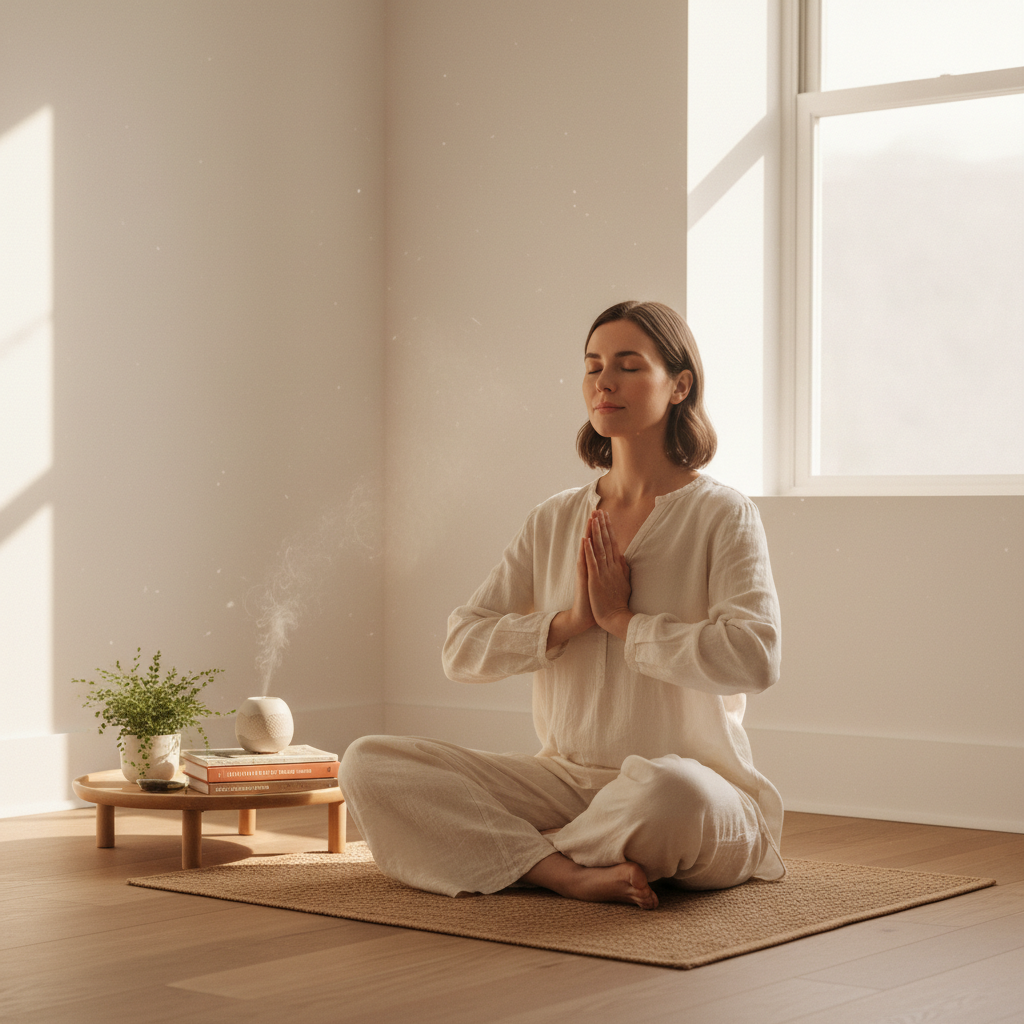
Grounding becomes easier when it is not reserved only for crisis moments. A small daily ritual teaches the body what returning feels like. It might take three minutes before opening your laptop, after the school run, or at the end of a working day when you want to leave its mental noise behind.
Begin with a familiar cue: lighting a candle, preparing ceremonial cacao with intention, placing a hand on your chest, or sitting with a cup of tea before the first sip. Feel your feet, look around the room, and take three unhurried exhales. You could then write one line in a journal: “Right now, I notice...” There is no need to make it poetic. Honest is more useful than polished.
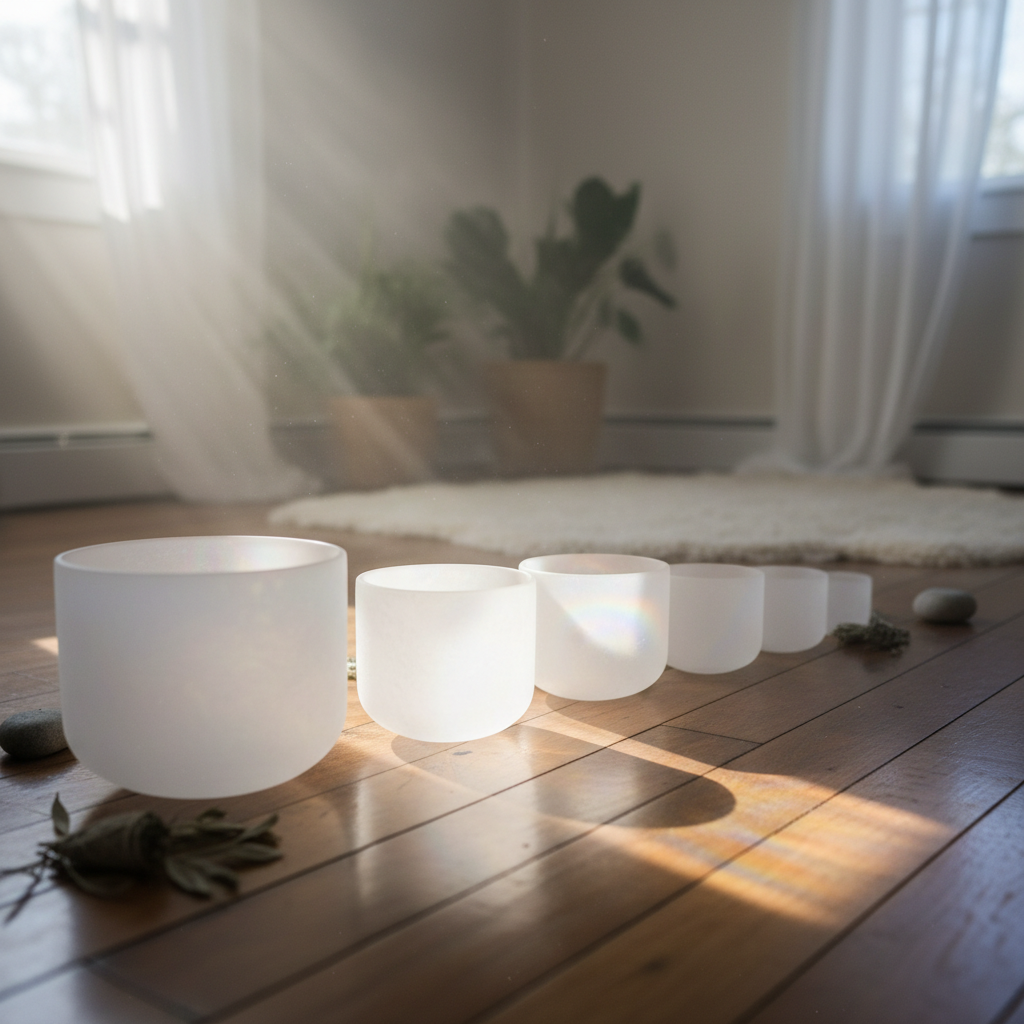
Sound can also be a powerful anchor. A sustained bowl, a calming playlist, rain at the window or the soft hum of your own voice can offer something steady to follow. In a sound bath, allow sound to be felt as well as heard. Notice whether it seems to settle in the chest, belly, jaw or shoulders. If a particular tone feels too intense, adjust your position, open your eyes, or step away. Sacred practice is most nourishing when it honours your boundaries.
At Luminous Resonance, this meeting of ritual and regulation is held with care: the spiritual dimension of practice can be expansive, while the body still deserves simple, tangible safety.
When grounding does not feel soothing
Some practices may feel uncomfortable, particularly if you live with trauma, panic attacks or dissociation. Closing your eyes, being very still, or bringing attention inward can sometimes intensify rather than settle an experience. In these moments, choose external anchors: name colours in the room, speak to someone you trust, walk slowly outside, or hold something solid and cool.
It may also help to make the practice more active. Stamp your feet gently, stretch your arms, shake out your hands, or walk while noticing the rhythm of each step. The aim is not to perform release. It is to remind the body that it can move, orient and choose.
If you feel at risk of harming yourself or someone else, are unable to stay safe, or overwhelm is becoming frequent and unmanageable, seek urgent support from local emergency services, a crisis service or a qualified mental health professional. Grounding can sit alongside therapeutic care, but it is not a substitute for it.
Let the present be enough
You do not need a perfect routine, a silent home or an hour of uninterrupted time to come back to yourself. Sometimes grounding is simply feeling your feet beneath the table while a meeting continues, taking one slower breath before replying, or noticing the warmth of water on your hands.
Each return is a small act of devotion to your own wellbeing. Let it be simple. Let it be imperfect. The ground has been beneath you all along.