A warm cup of cacao can feel like an invitation to slow down: a small pause before breath, sound, reflection or rest. But when a ritual is intended to support deeper inner work, care matters as much as intention. Is cacao safe? For many adults, moderate amounts of pure cacao can be enjoyed safely. Yet ceremonial cacao is not the right choice for every body, every season of life or every health history.
The most grounded approach is neither fear nor assumption. It is listening: to the ingredients, to the amount you use, to your nervous system and, where needed, to qualified medical guidance. Cacao can be a beautiful companion to a mindful practice, but it is not a substitute for healthcare or therapeutic support.
Is cacao safe in ceremonial amounts?
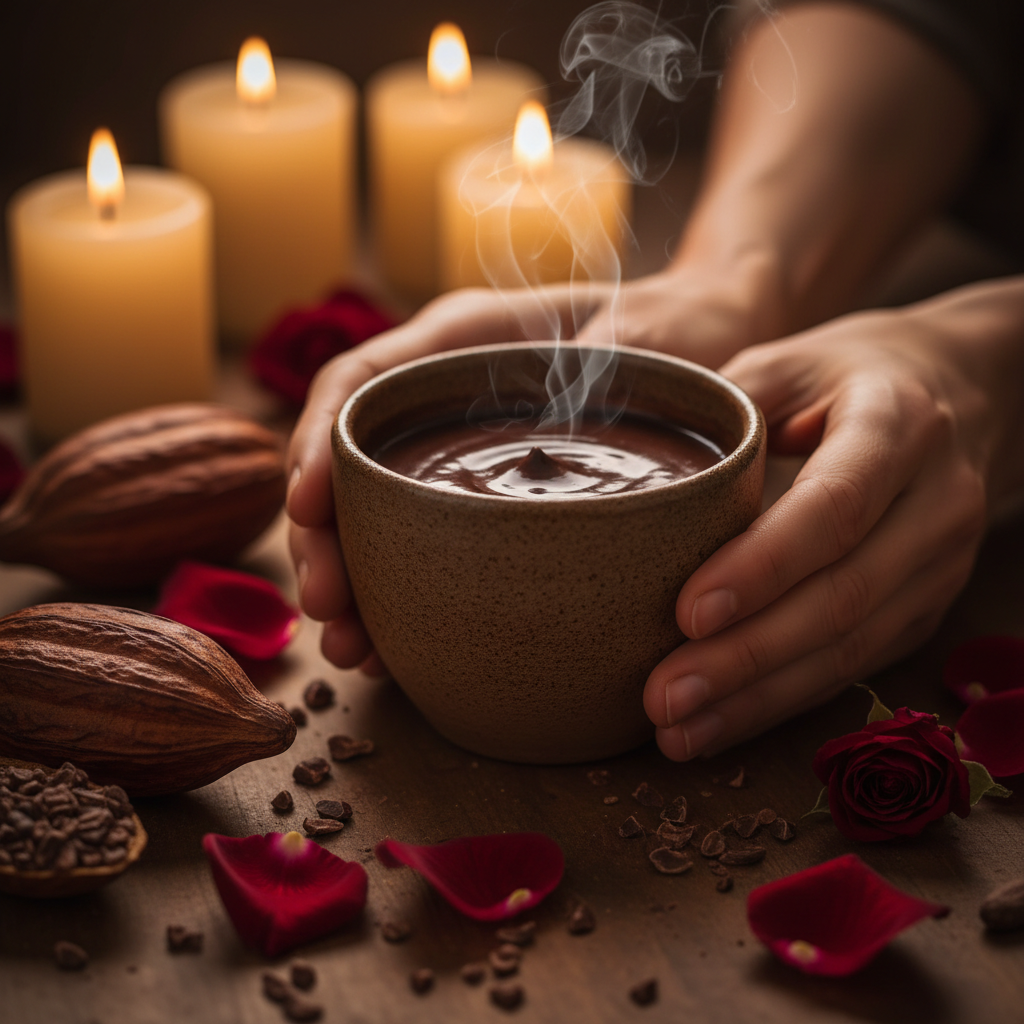
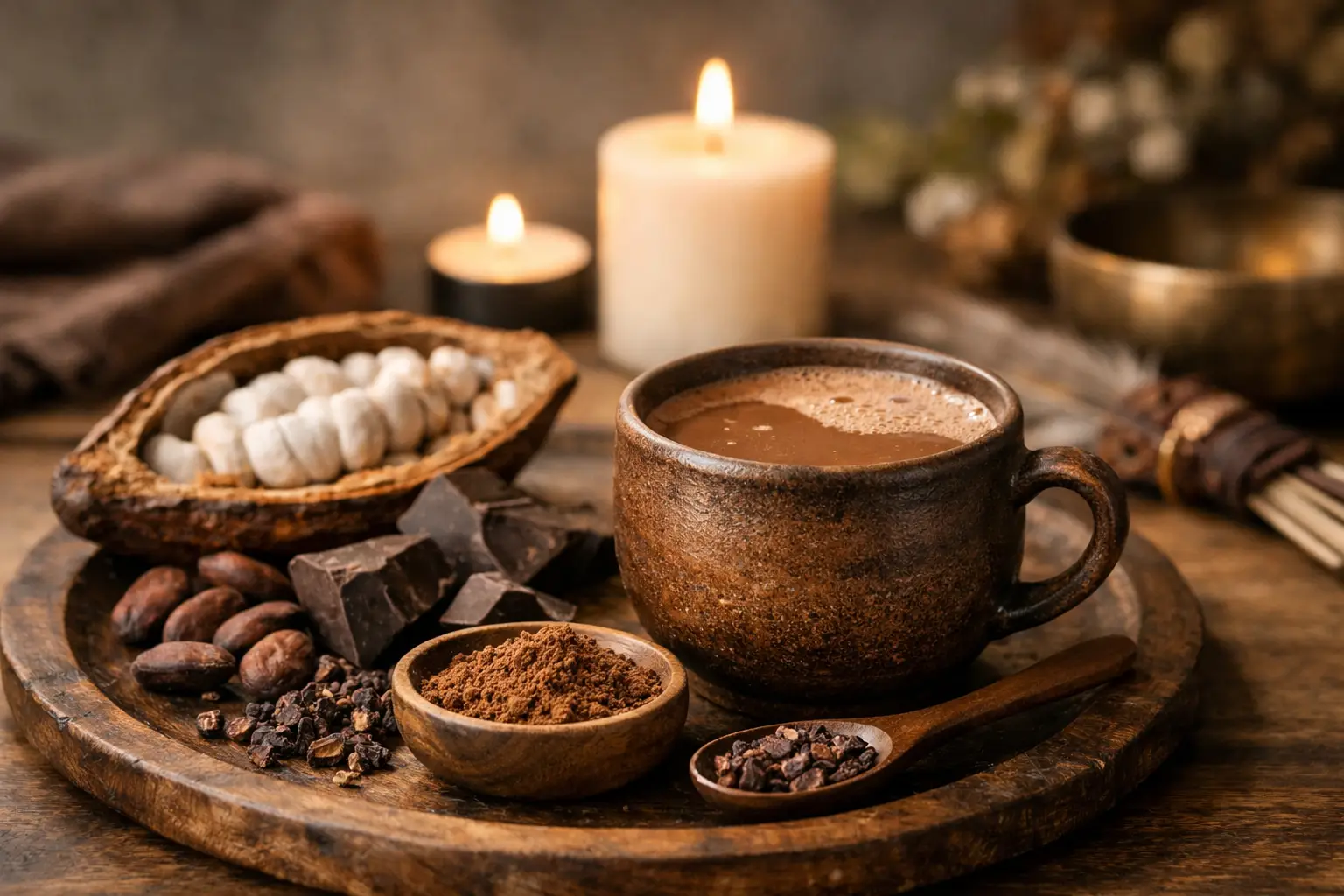
Cacao is the minimally processed form of the cacao bean, often prepared as a paste or block and blended with hot water or plant milk. Unlike a sweet hot chocolate, ceremonial-style cacao is usually richer, more concentrated and served in a larger quantity. It contains naturally occurring compounds including theobromine, a gentle stimulant, along with some caffeine, flavanols and minerals such as magnesium.
For a healthy adult, a small to moderate serving is commonly well tolerated. The experience may feel warming, gently energising or mood-lifting. Some people notice greater focus or a more open, embodied quality in meditation. Others simply enjoy its earthy flavour and the sense of ritual it creates.
Safety depends on dose, sensitivity and context. Theobromine and caffeine can affect people differently. A serving that feels spacious and supportive for one person may feel overstimulating for another, particularly if they are tired, anxious, prone to palpitations or already relying on coffee to get through the day.
There is no universal ceremonial dose, and the word ‘ceremonial’ itself is not a regulated medical term. A full serving is often around 25 to 40 grams of cacao paste, but beginning with 10 to 20 grams is a more considerate place to start if you are new to cacao or unsure how your body responds. More is not necessarily deeper. A practice becomes more nourishing when it leaves you feeling settled enough to integrate what arises.
When to take extra care with cacao
Cacao deserves a more individual conversation if you have a heart condition, high or low blood pressure, a history of palpitations or an irregular heartbeat. Its stimulant compounds may be uncomfortable for some people, even at modest amounts. If you have been advised to limit caffeine or stimulants, speak with your GP, pharmacist or specialist before joining a cacao practice.
The same care applies if you are taking prescribed medication. This is especially relevant for monoamine oxidase inhibitors, often called MAOIs, and for medicines that affect mood, blood pressure, blood sugar or heart rhythm. Cacao is not automatically unsuitable for everyone taking antidepressants or other medication, but interactions and individual sensitivities are not something to guess at. A pharmacist can offer practical guidance based on the exact medicine and dose you take.
Pregnancy and breastfeeding are also times to be cautious. Cacao contains caffeine, and its content can vary considerably between products and serving sizes. Small amounts may fit within general caffeine guidance for some people, but concentrated ceremonial servings can make it easier to exceed a comfortable daily total when tea, coffee, cola or energy drinks are also part of the picture. Your midwife, GP or pharmacist can help you make a decision that reflects your circumstances.
If you experience migraines, reflux, irritable bowel symptoms, anxiety or panic, cacao may be something to approach slowly. It can trigger headaches or digestive discomfort in certain people, while its stimulating quality can amplify a sensitised nervous system. Cacao can also be unsuitable for people with a cacao allergy. Symptoms such as hives, swelling, wheezing or difficulty breathing require urgent medical attention, rather than waiting to see whether they pass.
People managing kidney stones or advised to follow a low-oxalate diet may wish to seek individual advice too. Cacao can be high in oxalates, and the right choice will depend on your medical history and the wider pattern of your diet.
A gentle way to begin
Your first experience does not need to be a full ceremonial serving. Choose a day when you are well rested, hydrated and not rushing from one demand to the next. Avoid combining cacao with several coffees, pre-workout products, alcohol or other stimulants. The quieter the conditions, the easier it is to hear your body clearly.
Have a small amount after a light meal if you tend to feel nauseous or shaky on an empty stomach. While some traditions prefer cacao before food, there is no prize for following a ritual instruction that does not suit your physiology. Your wellbeing comes first.
Drink it slowly. Allow at least an hour or two before deciding whether you would like more on another occasion. Notice physical sensations as well as emotional ones: a racing heart, dizziness, nausea, headache, agitation, reflux or disrupted sleep are useful signals to reduce the amount or pause altogether. If symptoms are severe, persistent or concerning, seek medical advice.
Cacao is sometimes described in expansive language, but a safe practice remains embodied. You do not have to push through discomfort to access insight. Rest, water, quiet music, journalling and a simple walk can be just as meaningful as a more intense experience.
Choosing cacao with care
The quality of your cacao is part of the safety conversation. Look for products with a clear ingredient list, ideally pure cacao paste without unnecessary stimulants, extracts or large amounts of added sugar. If a blend includes herbs, mushrooms or other functional ingredients, assess those separately. A product may be suitable for someone else and still be a poor fit alongside your own medication or health needs.
Cacao can also contain naturally occurring heavy metals such as cadmium and lead, which are absorbed from soil and can vary by growing region and processing. This is not a reason to panic over an occasional cup. It is a reason to choose transparent producers who take sourcing and testing seriously, and to avoid treating high-dose cacao as an unquestioned daily essential.
Be discerning with claims, too. Cacao may support a moment of connection, but it does not cure trauma, depression, anxiety or physical illness. A well-held ritual can sit beautifully alongside therapy, medical care and other forms of support. It should never ask you to abandon them.
Let your nervous system set the pace
A cacao ceremony can create a meaningful threshold between the busyness of the day and a more attentive inner space. At Luminous Resonance, that threshold is approached with psychological grounding as well as spiritual depth. The invitation is to meet yourself honestly, not to perform transformation.
If you choose to drink cacao, let the smallest effective amount be enough. If you choose not to, the ritual can still hold you. Breath, sound, silence and your own presence remain available. The safest practice is the one that leaves you more connected to your body, more informed about your needs and more able to care for yourself afterwards.