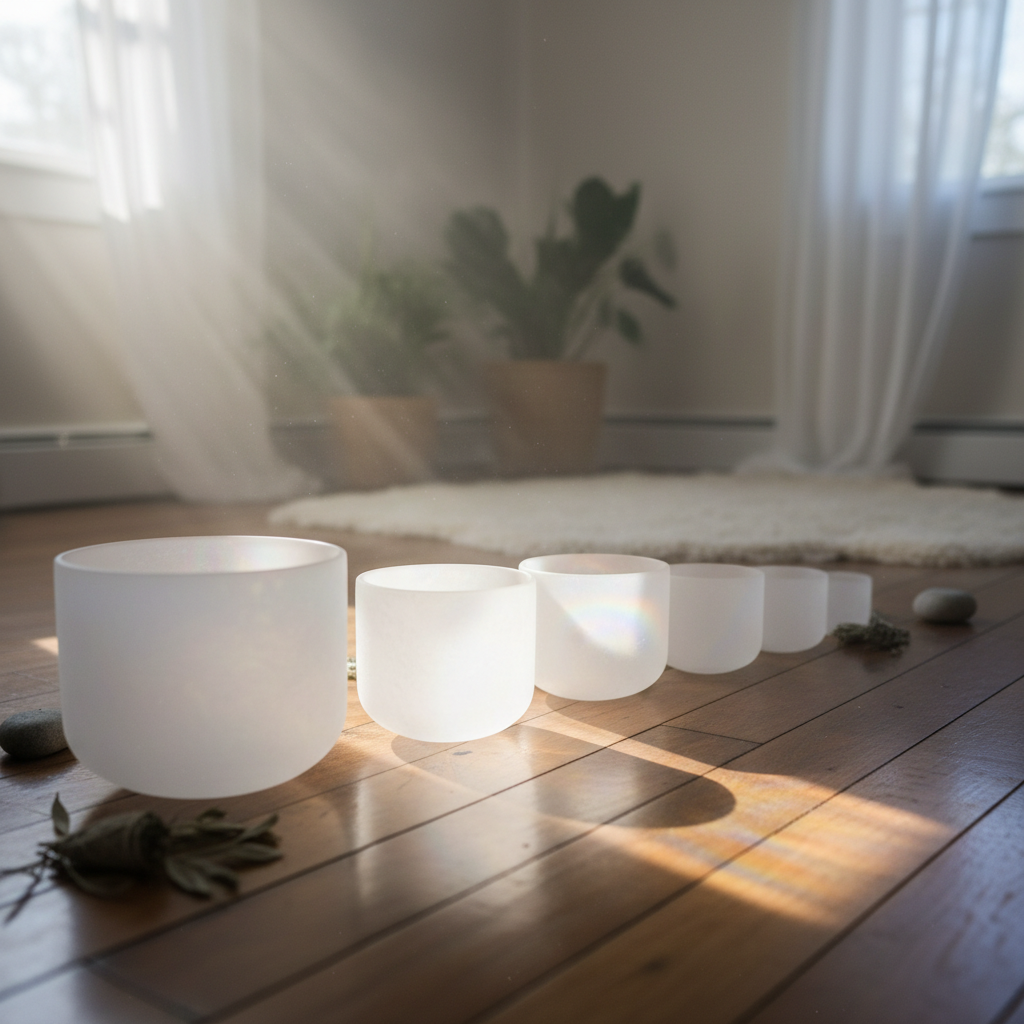
Some feelings do not arrive as neat sentences. They appear as a tight chest before a meeting, a wave of sadness while washing up, or the strange exhaustion that follows a difficult conversation. Journal prompts for healing offer a quiet place to meet these moments without forcing them to resolve. The page does not ask you to be positive, articulate or spiritually evolved. It simply gives what is true a place to land.
Journalling is not a substitute for therapy, medical care or crisis support. It can, however, be a steady companion alongside them: a private ritual for noticing your inner landscape, tending your nervous system and hearing the parts of yourself that busyness has taught you to ignore.
Begin with safety, not self-improvement
Healing is rarely helped by interrogation. If a prompt makes your body contract, your mind race or your emotions feel too large to hold alone, you are allowed to pause. Put down the pen. Feel your feet on the floor. Take a sip of water, look around the room, or return to a simpler question such as, “What would feel supportive for the next ten minutes?”
Before writing, create a small threshold between daily life and reflection. You might make a warm cacao, sit beneath a blanket, light a candle, or place one hand over your heart and one over your lower belly. These gestures are not requirements for meaningful journalling. They are signals of care. They let the body know that it is not being asked to perform.
Set a gentle container too. Ten minutes can be enough. You do not need to uncover the origin of every pattern in one sitting. Often, the most restorative practice is to write one honest paragraph, then stop while you still feel present.
Journal prompts for healing after emotional overload
When life has asked too much of you, the mind may try to solve everything at once. These prompts bring attention back to the immediate experience. Write in fragments if that is all you have. A few words can be a complete response.
- What has felt heavy lately, and where do I feel that weight in my body?
- What am I carrying that may not be mine to carry?
- If my tiredness could speak with kindness, what would it ask for?
- What did I need today that I did not receive or give myself?
- What is one thing I can let be unfinished for now?
Notice the difference between insight and pressure. You may realise that a commitment needs to change, a conversation needs to happen, or rest is overdue. But you do not have to act on every realisation immediately. Let the page be a place where understanding can arrive before action is demanded.
Prompts for grief, endings and change
Grief is not confined to bereavement. It can follow a relationship ending, a move, a changed body, a lost version of a future, or the recognition that someone cannot meet you in the way you hoped. It does not always move in a straight line, and it is not a problem to be tidied away.
Try writing: “What am I truly mourning here?” Then continue with, “What did this person, place or season make possible in me?” These questions can hold both the ache of loss and the reality that something mattered.
You might also ask, “What have I survived that I rarely give myself credit for?” This is not an invitation to turn pain into a lesson before you are ready. It is a way of acknowledging your own endurance without romanticising what hurt.
If an ending feels especially raw, write a letter that you do not send. Say what remains unsaid. Name what you wish had been different. Let the letter include love, anger, confusion and relief if they are there. Human feeling is often more than one thing at once.
When self-criticism is louder than self-trust
A harsh inner voice often developed for a reason. It may have tried to keep you accepted, productive, safe or in control. Meeting it with shame usually makes it louder. Meeting it with curiosity can create a little space.
Begin with: “The part of me that is being critical is afraid that...” Let the sentence continue without correcting it. Then ask, “What does this part believe it is protecting me from?” You may not agree with its methods, but understanding its intention can soften the internal struggle.
Follow with a more grounded response: “What would I say to someone I love who was in this exact position?” Read your answer back slowly. Which words feel believable enough to offer yourself today? Compassion does not need to sound grand. Sometimes it is simply, “Of course this is difficult,” or, “I am allowed to learn as I go.”
Prompts to return to the body
The body often knows before the conscious mind does. A clenched jaw, shallow breath or numbness may be information, not failure. Journalling after a sound bath, meditation or quiet walk can help you translate sensation into language without insisting that every sensation has a meaning.
Write for a few minutes with these invitations: “Right now, my body feels...” and “If this sensation had a colour, texture or temperature, it would be...” Then ask, “What helps my body feel five per cent more settled?” Keeping the change small matters. Nervous system regulation is often built through modest, repeatable experiences of safety rather than dramatic release.
For some people, body-focused writing can feel intense, particularly after trauma. If that is true for you, anchor your attention outside yourself instead. Describe the room, the sounds you can hear, or three objects that bring you comfort. Healing is not about pushing through discomfort. It is about developing choice.
Making room for desire and spiritual expansion
Healing is not only about processing pain. As the system becomes less occupied with surviving, desire may begin to speak more clearly. What brings you alive may be as relevant to your healing as what has wounded you.
Ask yourself, “What am I quietly longing for?” Do not edit the answer for practicality yet. Then try, “Where in my life do I feel most like myself?” and, “What conditions help that part of me come forward?” Your answers may point towards rest, creativity, honest friendship, meaningful work, ritual, play or a boundary that protects your energy.
If you work with cacao or sound as part of your practice, let the experience settle before trying to interpret it. You might write, “What shifted in me during this ritual?” followed by, “What wants to be carried into ordinary life?” A ceremony can open a door, but integration happens in the quieter choices afterwards: how you speak to yourself, how you spend an evening, what you decline, and what you permit yourself to receive.
A simple rhythm for ongoing reflection
You do not need a perfect morning routine or pages of beautiful handwriting. A sustainable practice can be as simple as returning to three questions once a week: What am I feeling? What am I needing? What is one kind next step?
Over time, your journal may become a record of patterns. You may notice which environments leave you depleted, which relationships allow you to soften, and which old stories appear when you are under stress. This awareness is valuable, but it is not a verdict on who you are. It is material for compassionate choice.
At Luminous Resonance, we hold reflection as part of ritual: a way to stay in relationship with yourself after the music fades and the cup is empty. Let your journal be less like a task to complete and more like a threshold you can cross whenever you need to come home to your own voice.
Tonight, choose one prompt that feels spacious rather than urgent. Write only until you feel a little more accompanied. Then close the notebook, place a hand on your heart, and let that be enough.