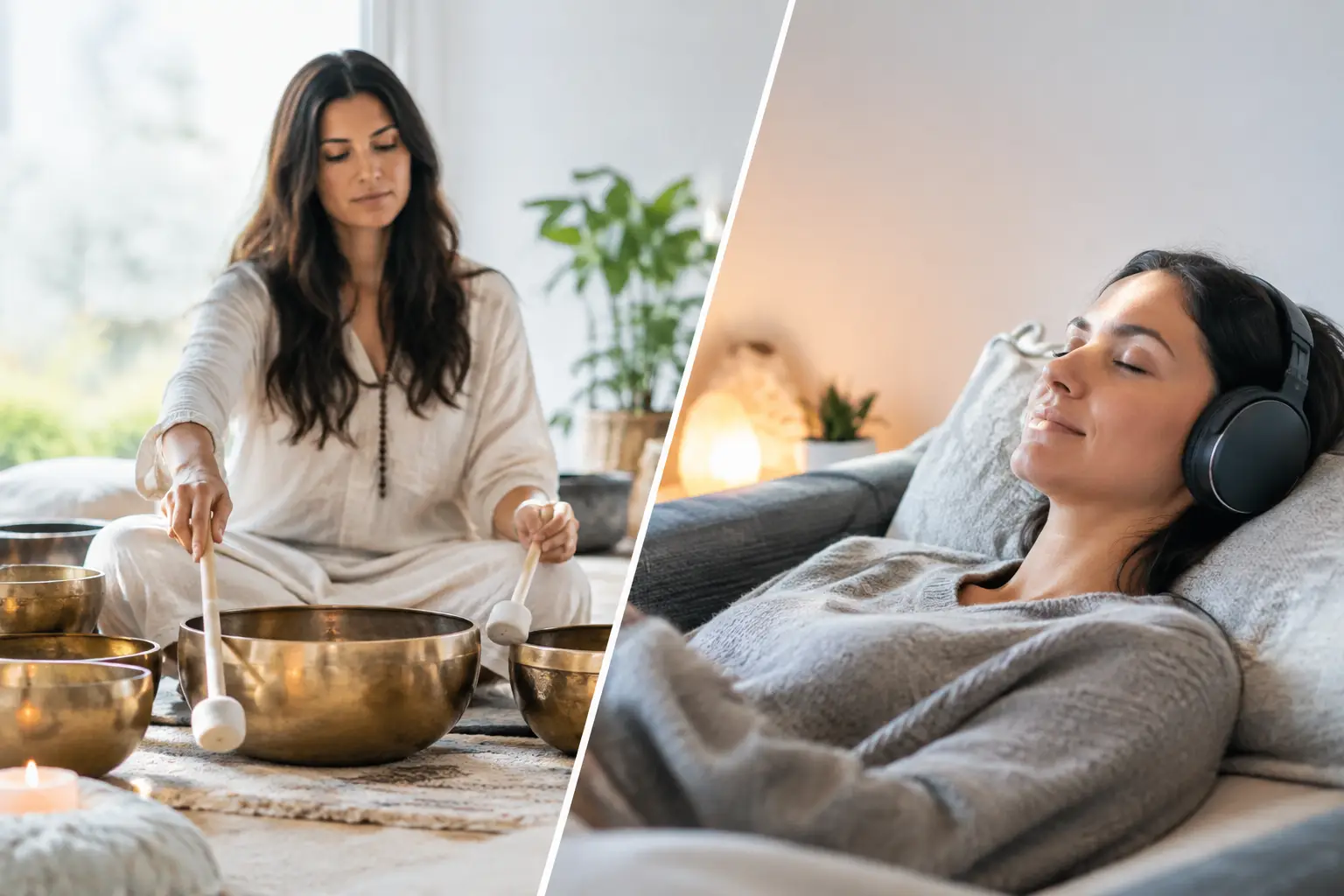
A singing bowl begins to hum, and something in you softens before you have had time to explain why. Yet the setting changes the experience. In the conversation around live versus recorded sound baths, the most supportive choice is rarely about which is objectively better. It is about what your body, emotions and available capacity are asking for in that moment.
A live session can offer the held feeling of shared ritual. A recording can make restoration possible on an ordinary Tuesday evening, with the washing still drying and no journey home afterwards. Both can become meaningful practices when approached with care.
What a sound bath can offer
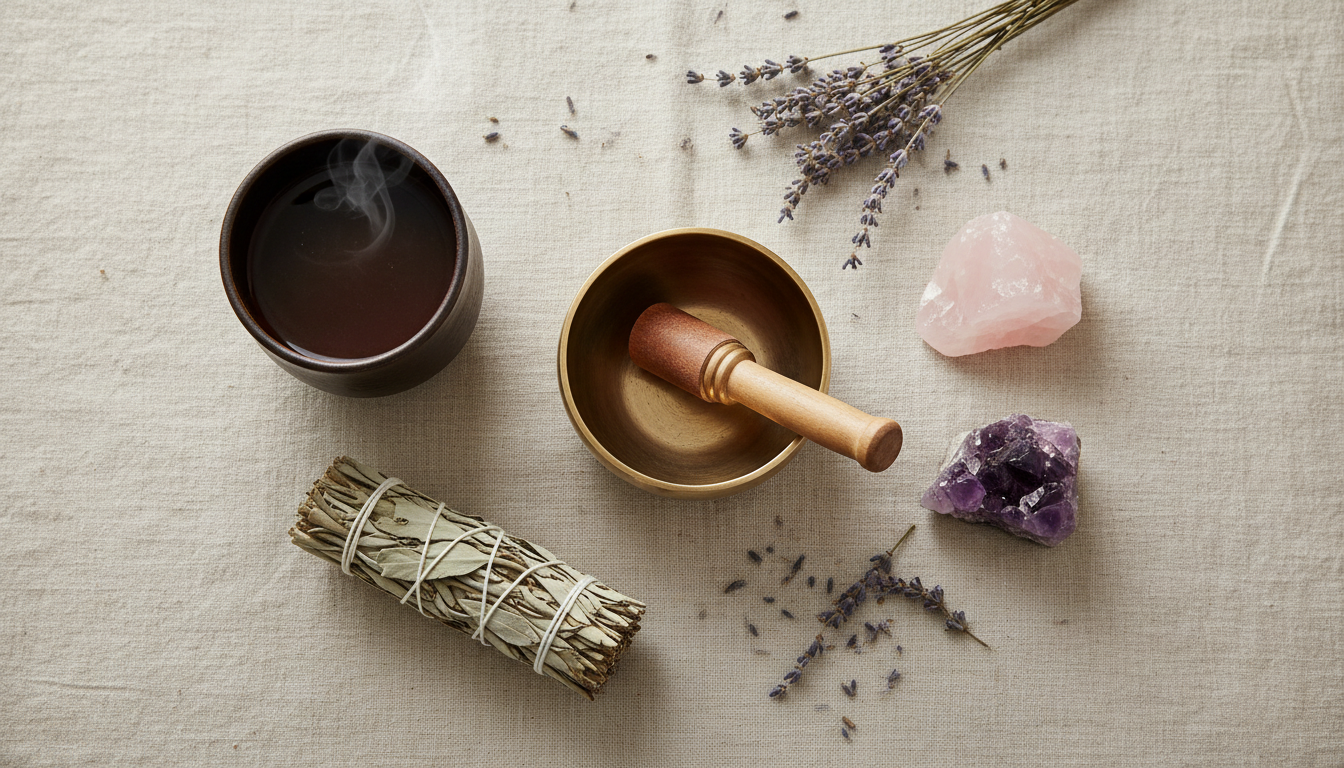
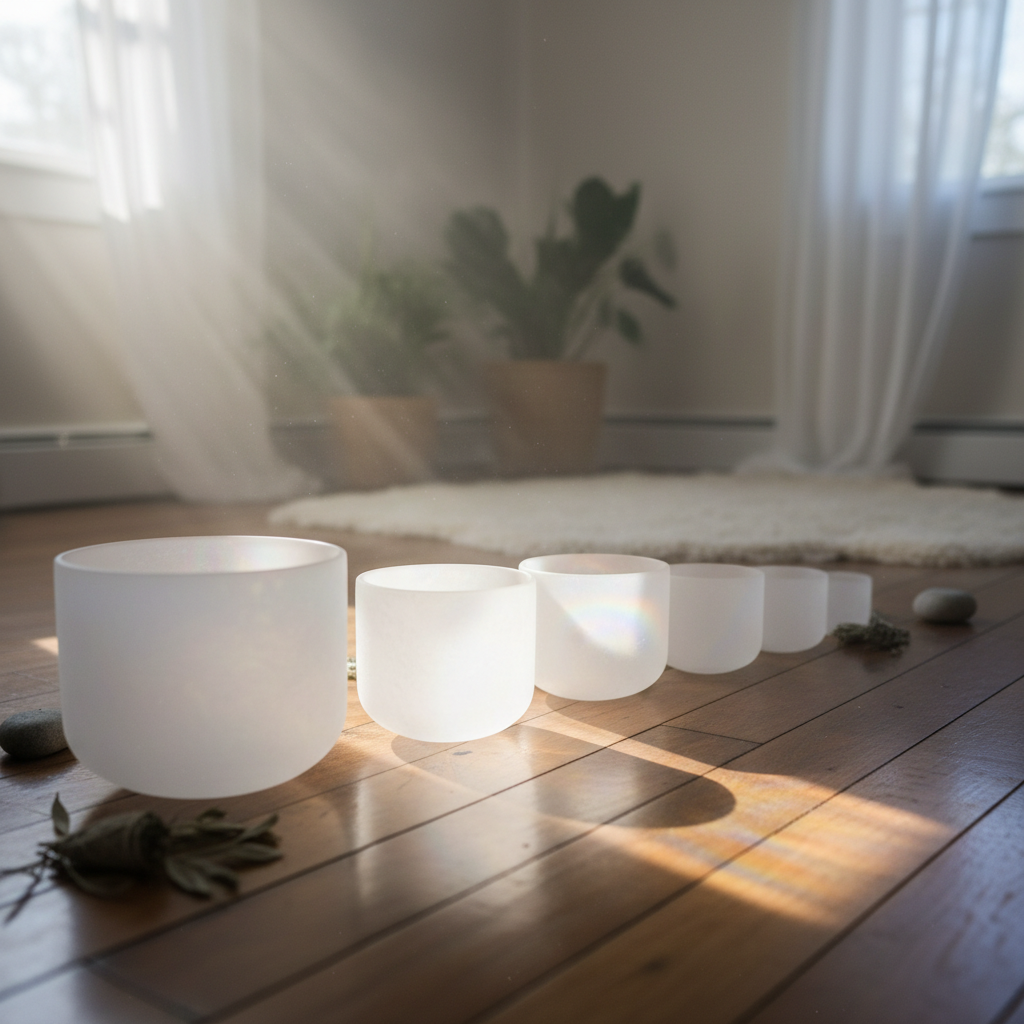
A sound bath is an immersive listening practice, often shaped by instruments such as crystal or Himalayan singing bowls, gongs, chimes, drums or gentle voice. Rather than asking you to concentrate perfectly, it gives the mind something spacious to rest with. The tones may help you notice your breath, release some of the day’s mental momentum, or simply lie still without needing to achieve anything.
For many people, this kind of practice feels especially welcome after prolonged stress, emotional overload or periods of disconnection. Sound can create a sensory container for reflection, rest and inward attention. It is not a replacement for medical or mental health care, and it will not feel soothing every time. A strong tone, a particular memory, or the unfamiliarity of stillness can sometimes bring discomfort to the surface. That is why pacing, choice and psychological grounding matter.
The question is not whether one format has more value. It is how each format supports your sense of safety, presence and continuity.
Live versus recorded sound baths: the real difference
The clearest difference is not simply that one happens in real time. It is the quality of relationship around the sound.
In a live sound bath, you are entering a shared field of attention. The facilitator is responding to the room, even when that response is quiet and intuitive. They may alter the pace, pause longer, soften an instrument or offer a grounding invitation when the energy of the group calls for it. Knowing that another person is holding the structure can be deeply settling, particularly if you are new to sound work or moving through a tender season.
A recorded sound bath offers a different kind of support: agency. You choose the time, the setting, the volume and the length of the practice. You can return to the same recording each week, learning how it meets you differently as your inner landscape changes. There is no pressure to arrive at a certain time, be seen by others, or feel a particular outcome.
Neither experience guarantees depth. A live event can feel distracting if you are tired, overstimulated or not comfortable in a group. A recording can become profoundly ritualistic when you give it your full attention rather than treating it as background noise. The conditions you create around the session often matter as much as the format itself.
The nourishment of a live session
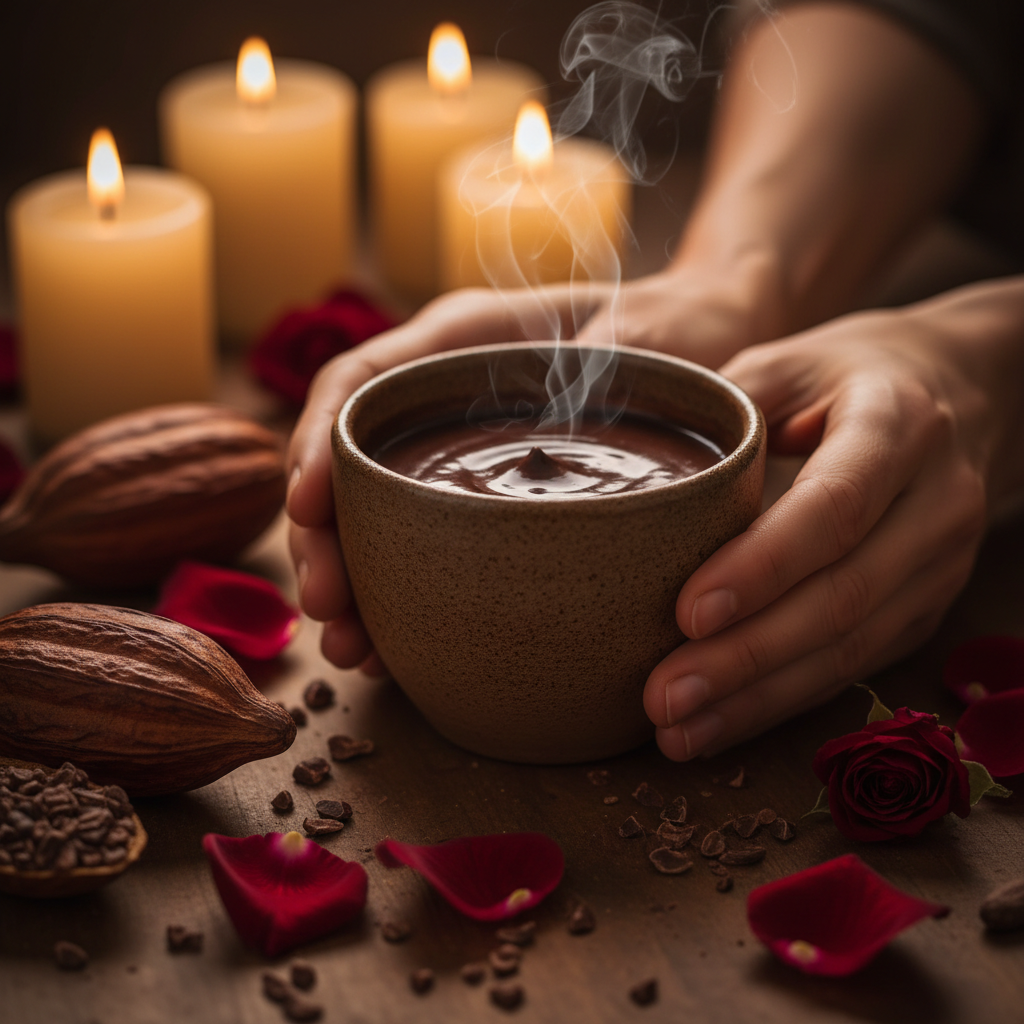
There is a particular potency in gathering, whether in person or online, at a shared time. You have made an agreement with yourself to arrive. You may light a candle, prepare ceremonial cacao, settle beneath a blanket and let the rest of the day wait outside the edges of the practice.
Live facilitation can be valuable because it brings gentle structure. An opening intention, guided breath, periods of silence and a closing reflection can help the nervous system move gradually from activity towards rest. For people who find it difficult to practise alone, this rhythm removes the need to decide what comes next.
The communal dimension may also ease the sense that you are carrying everything privately. You do not need to speak or share your story to feel the quiet reassurance of practising alongside others. For some, this is where spiritual expansion becomes less abstract: a felt recognition of connection, held within clear and respectful boundaries.
Live sessions are often best when you want to mark a transition, process a feeling with support, or renew your commitment to your wellbeing. They can also be a beautiful entry point if sound baths are unfamiliar and you would appreciate guidance on how to settle in.
Still, live does not always mean more accessible. Fixed times, social fatigue, caring responsibilities, cost and the simple effort of getting ready can make attendance feel like another demand. If the idea of joining leaves you tense, a gentler route may serve you better.
The quiet strength of recorded practice
Recorded sound baths are sometimes dismissed as a lesser version of the ‘real’ thing. That overlooks what consistency can do. A recording can meet you in the small, unspectacular spaces where wellbeing is most often built: before sleep, after a difficult meeting, during a slow Sunday morning, or while you are learning to sit with yourself again.
Its greatest gift is flexibility without a loss of intention. You can take ten minutes rather than an hour. You can pause when emotion rises. You can lower the volume, change your position, or stop altogether. These choices are not failures of practice. They are signs that you are listening to your own needs.
Repetition can also create familiarity. Over time, the first notes of a trusted recording may become a cue for your body to unclench and your attention to turn inward. This is not about training yourself to switch off on command. It is about developing a compassionate association with rest.
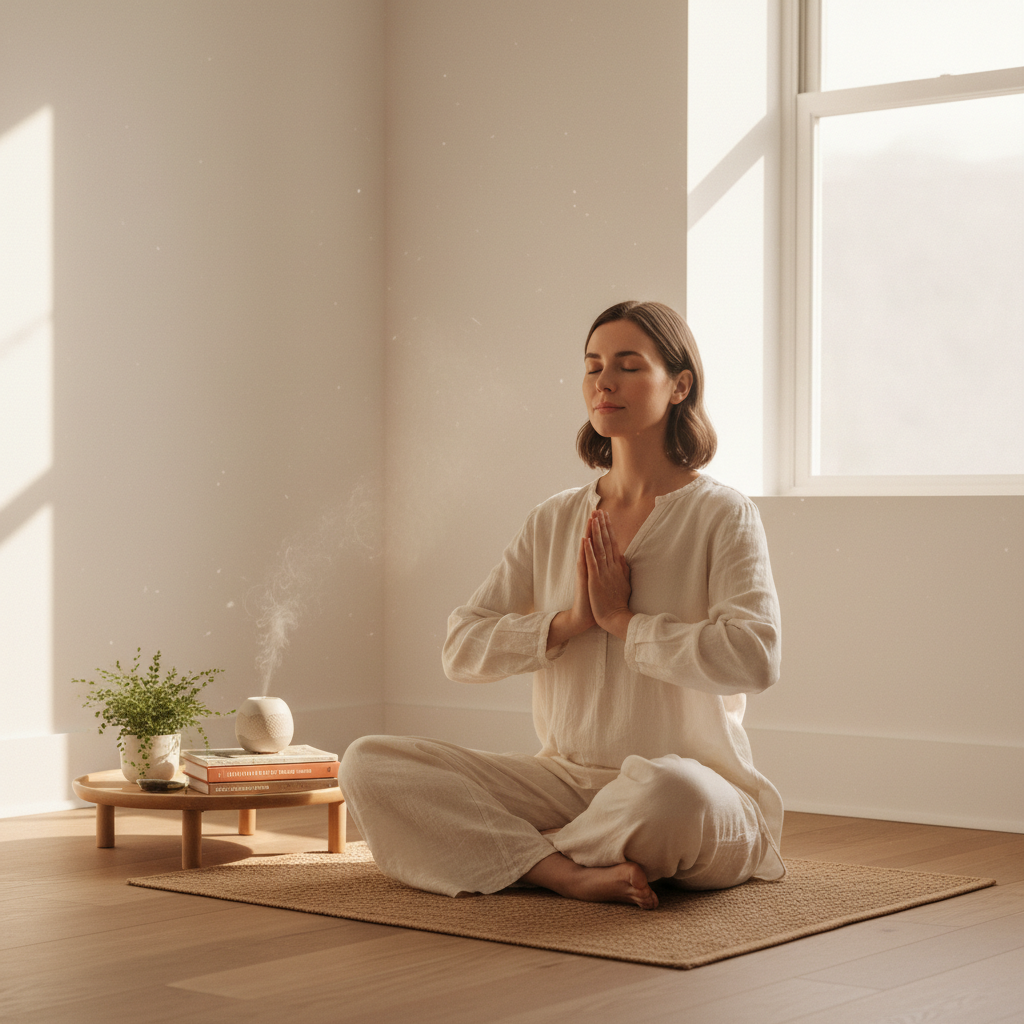
To make a recording feel less passive, give it a beginning and an end. Put your phone on do not disturb, use headphones only if they feel comfortable, and take a few slow breaths before pressing play. Afterwards, resist the rush to fill the space. A sentence in a journal, a glass of water, or a moment looking out of the window can help the experience settle.
Choose according to your capacity, not your ideals
There may be weeks when a live gathering feels like medicine, and others when the most loving choice is a familiar recording in your own bed. Let your current capacity guide you.
If you are craving connection, accountability and a sense of ceremony, live practice may be supportive. If your schedule is full, your energy is low, or you need greater control over the environment, recorded practice may be the wiser choice. Some people find that a blend works best: a live session once or twice a month, with shorter recordings woven into daily life.
Consider your sensory needs as well. If you are sensitive to sound, begin at a low volume and choose a session that invites you to adjust or leave whenever needed. If you have a history of panic, trauma, or intense emotional responses during meditation, keep your eyes open if that helps, orient yourself to the room, and seek appropriate professional support alongside spiritual practice where needed.
Let ritual make the difference
The format matters, but your relationship with the practice matters more. A live event can become another appointment if you arrive rushed and leave immediately. A recording can become sacred if you meet it with attention.
Before either, you might ask one simple question: what would feel kind to receive right now? The answer may be rest. It may be release, reassurance or simply a few minutes without performing wellness. There is no need to force insight from sound.
When the final tone fades, notice what remains. Perhaps it is only a slightly slower breath or a little more space around a thought. Let that be enough. The most sustaining sound practice is the one that helps you return to yourself with greater gentleness, again and again.