A difficult email arrives just as your mind is already racing. Your shoulders lift, your breath shortens, and the rest of the day begins to feel coloured by that single moment. The psychological benefits of grounding are found in the pause that comes next: a way of returning from mental noise to the immediate experience of being here, in your body, now.
Grounding is not about forcing yourself to feel positive or spiritually bypassing what hurts. It is a gentle practice of orienting towards safety, sensation and the present moment when thoughts, emotions or external demands have carried you too far away from yourself. For people who hold a great deal - professionals, carers, creatives and sensitive souls alike - it can become a quiet form of self-support.
What grounding means in emotional wellbeing
In therapeutic and mindfulness settings, grounding usually refers to practices that bring attention to the body and immediate surroundings. You might notice the weight of your feet on the floor, name objects in the room, feel the texture of a blanket, or follow the natural rhythm of your breath.
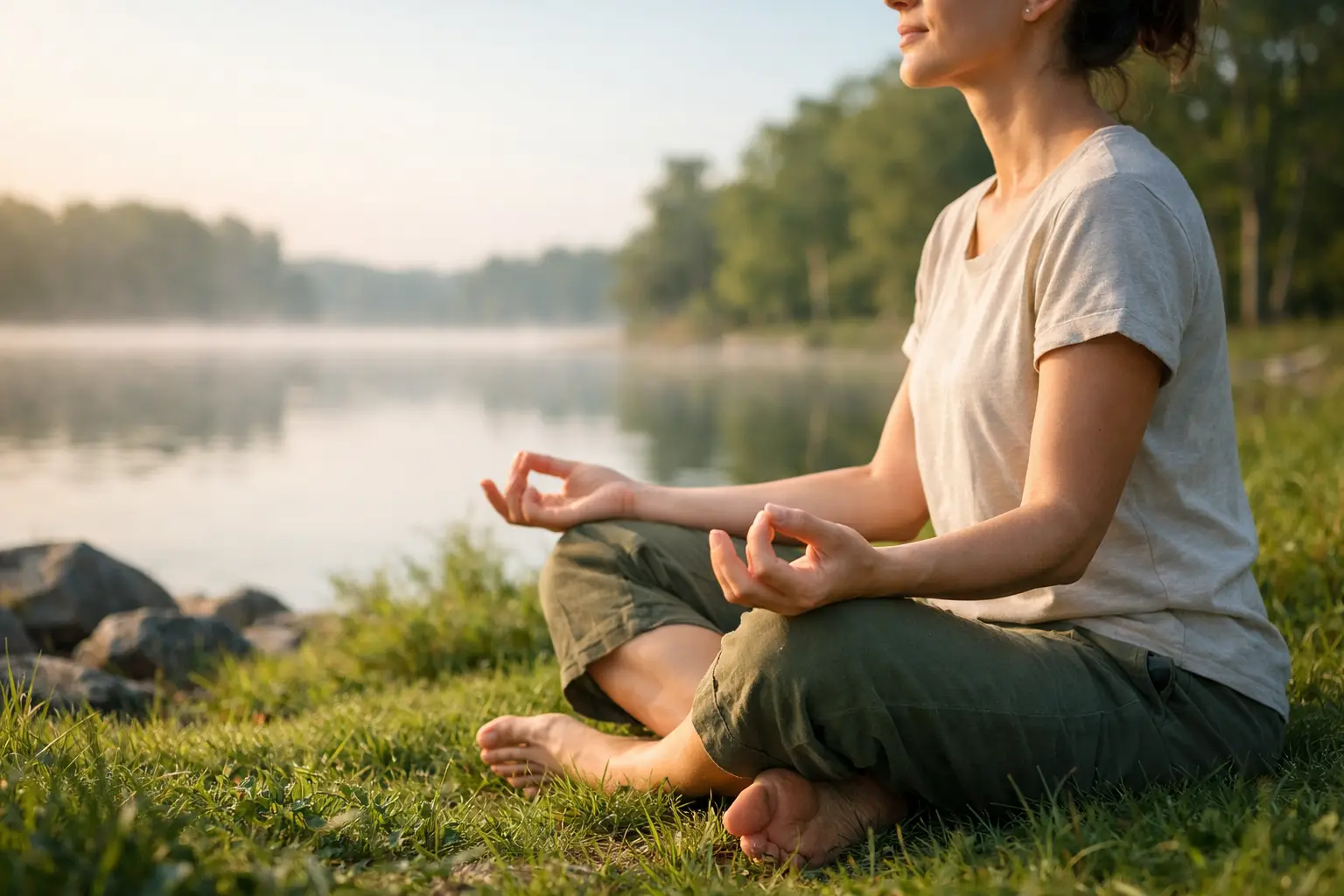
This is different from the idea of physical earthing, such as walking barefoot outdoors. Time in nature can certainly feel restorative, and many people experience it as deeply regulating. Yet the psychological value of grounding does not depend on bare earth or a particular setting. It is the act of returning attention to what is real and available in the present that matters.
When the mind is anticipating, replaying or catastrophising, it can lose contact with the signals that say: I am in this room. I can feel this chair beneath me. I have one next breath to meet. Grounding offers a route back to those signals.
Psychological benefits of grounding in everyday life
Grounding can support the nervous system when it has been asked to do too much for too long. Stress is not only an idea in the mind. It is often felt as a clenched jaw, scattered attention, restless sleep, shallow breathing or a sense of being emotionally far away. Turning towards simple sensory information can interrupt that spiral without demanding that you solve everything at once.
It creates space between feeling and reaction
Strong emotions tend to narrow our field of attention. Anxiety may pull us into future scenarios; anger may demand immediate action; sadness can make the world feel distant and heavy. A grounding practice does not erase these states, nor should it. It can, however, create a little room around them.
In that room, you may be more able to choose a response rather than sending the message, making the decision or having the conversation from a place of overwhelm. This is a modest shift, but it can change the emotional tone of a whole day.
It supports a steadier relationship with the body
Many people move through demanding weeks with limited awareness of their physical needs. They may notice exhaustion only when it becomes depletion, hunger only when it becomes irritability, or tension only when it becomes pain. Grounding invites a more compassionate form of listening.
As you notice your breath, temperature, posture and energy, the body becomes less like a vehicle to push through and more like a source of information. Over time, this can make it easier to recognise your limits and respond to them with care.
It can soften dissociation and mental overload
At times of emotional strain, some people feel unreal, numb, detached or as though they are watching themselves from a distance. Others experience the opposite: too many thoughts, sensations and responsibilities arriving at once. Gentle sensory orientation can be useful at either end of this spectrum because it offers something concrete to meet.
The key word is gentle. If closing your eyes, focusing on the breath or going deeply into body sensations feels unsettling, keep your eyes open and orientate to the room instead. Notice colour, light, sounds and solid objects. Grounding should increase your sense of choice, not make you feel trapped inside an experience.
It makes reflection more honest
Journalling, meditation, cacao ritual and sound can open meaningful inner space. But insight is more supportive when it is held by the body rather than pursued at speed. Grounding before reflection can help you distinguish between a true inner knowing and the urgent voice of fear, self-criticism or exhaustion.
This is where psychological grounding and spiritual expansion can meet with integrity. The aim is not to float above human experience. It is to become present enough to receive it, with tenderness and discernment.
A simple practice for moments that feel too full
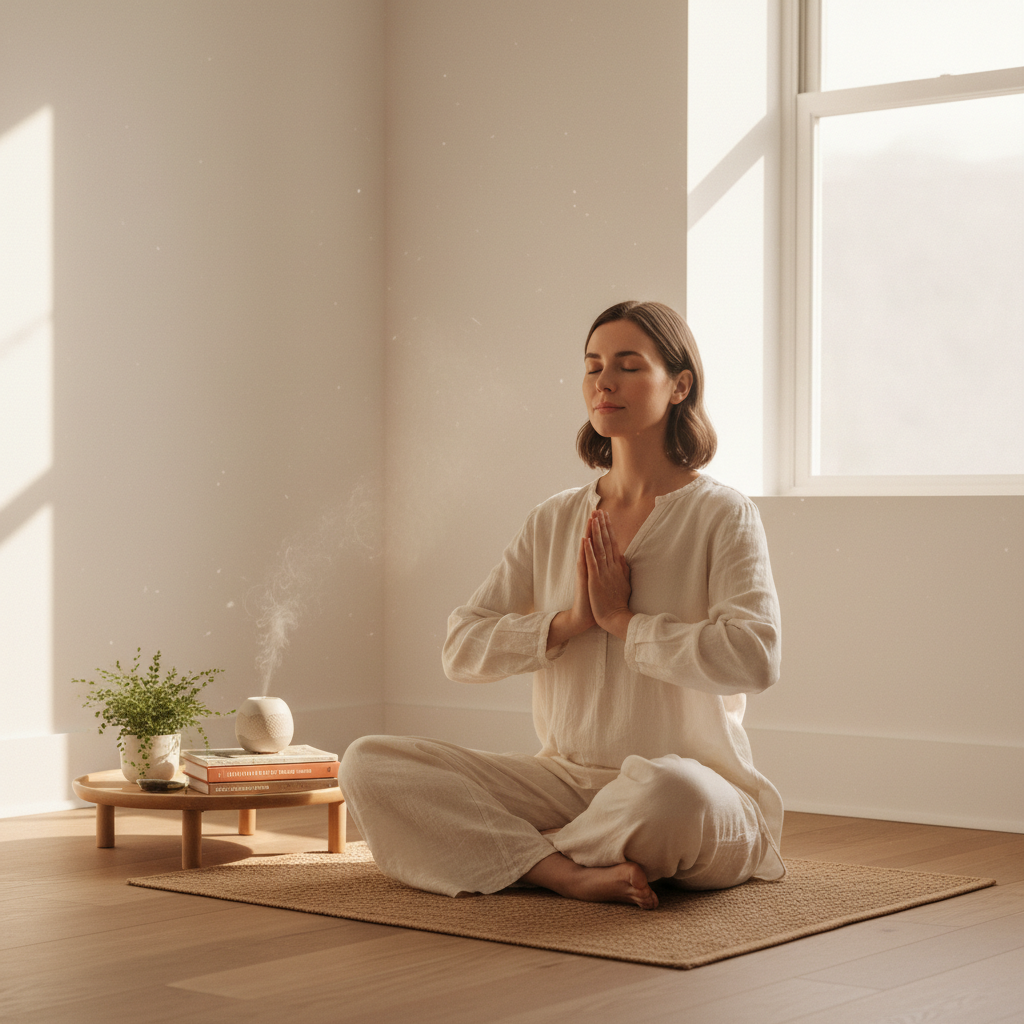
You do not need a perfect room, a long meditation or an uninterrupted hour. A short practice can be woven into the transition between meetings, before sleep, after difficult news or at the beginning of a personal ritual.
First, let your gaze settle on one stable point in the room. Name, silently or aloud, three things you can see. Allow your eyes to move slowly, reminding your system that you are in a specific place at a specific time.
Then feel the contact points beneath you. If you are sitting, notice the chair holding your weight. If you are standing, feel both feet inside your shoes or against the floor. There is no need to manufacture calm. Simply register the support that is already there.
Finally, place one hand over the chest or lower belly if that feels comfortable. Take a natural breath and offer yourself a simple phrase: “I am here.” You might add, “This is difficult, and I can meet one moment at a time.” Stay for three breaths, or longer if it feels nourishing.
The effectiveness of this practice is not measured by whether anxiety disappears. Sometimes you will feel a clear settling. Sometimes the mind will remain busy, but you may still be a little more present with it. Both experiences count.
Grounding within ritual and sound
Ritual can make grounding easier because it gives the mind a clear threshold: this is a moment to arrive. Lighting a candle, preparing cacao with intention, choosing a supportive seat or beginning a sound bath can signal that daily urgency may soften for a while.
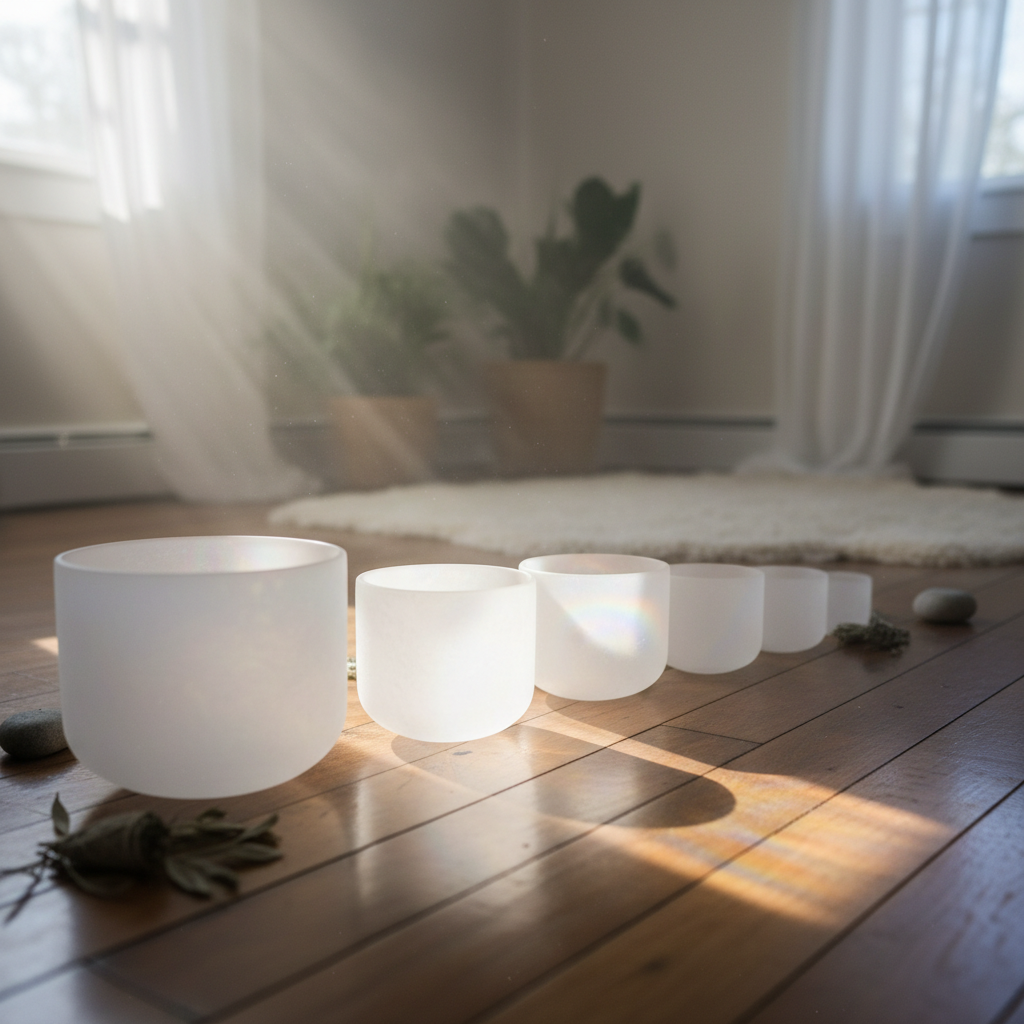
Sound is particularly helpful for people who find silent meditation frustrating. A sustained bowl tone, gentle music or the rhythm of a guided voice can offer the attention somewhere safe to rest. Rather than trying to empty the mind, you can listen for vibration, pauses and the way sound lands in the body.
There is a trade-off here. An immersive practice may bring emotions closer to the surface, particularly when you have been keeping them contained. That can be meaningful, but it is wise to choose the depth of practice that suits your capacity that day. A five-minute sensory check-in may be more supportive than an intense session when you are depleted, unwell or under significant pressure.
Cacao, too, is not a universal fit. Its gentle stimulating qualities can feel heart-opening and centring for some, while others may prefer to reduce the amount or avoid it because of sensitivity to caffeine, pregnancy, certain health conditions or medication. The ritual itself can remain valuable without any pressure to consume a particular ingredient.
When grounding needs more support
Grounding is a supportive wellbeing practice, not a replacement for professional care. If you are living with persistent panic, trauma symptoms, severe low mood, intrusive thoughts, or a sense that you cannot stay safe, reaching out to a qualified mental health professional or urgent support service is an important act of care.
For trauma survivors especially, some body-based practices can feel activating before they feel settling. A trauma-informed therapist can help tailor approaches that respect your history, boundaries and nervous system. You are not failing at grounding if a popular technique does not work for you. Safety is personal.
The most sustaining practices are often the least dramatic: feeling warm water over your hands, stepping outside between tasks, pressing your feet into the floor before a call, or writing three honest lines in a journal. Let grounding be less another item to achieve and more a small, faithful return to yourself. From that place, rest, clarity and spiritual connection have somewhere steady to land.