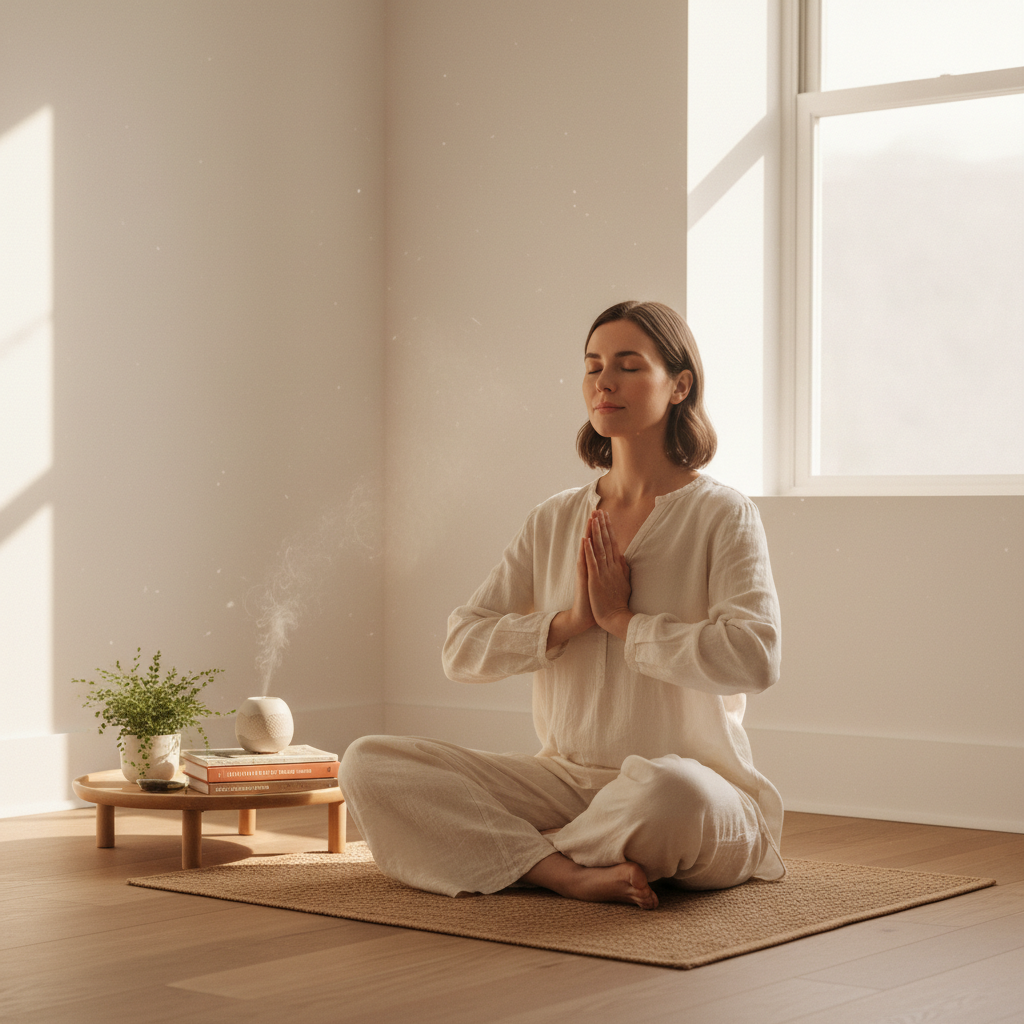
There is a particular kind of overwhelm that does not always look dramatic. It can arrive as a tight chest before a meeting, a drifting mind during a conversation, or the sudden feeling that you have left yourself somewhere behind while carrying on as normal. Psychological grounding techniques are gentle ways of returning to the present when your thoughts, emotions, or body begin to pull you away from it.
For many people, grounding is spoken about as if it were a quick fix. It rarely is. More often, it is a practice of re-entering yourself with care. The aim is not to force calm or silence every feeling. The aim is to create enough steadiness that you can remain here, in this moment, with a little more safety and choice.
What psychological grounding techniques really do
Psychological grounding techniques help interrupt spirals of anxiety, dissociation, panic, racing thoughts, and emotional flooding. Some work through the senses, some through attention, and some through simple mental orientation. What they share is a common purpose - they anchor awareness in what is happening now, rather than what feels threatening, distant, or unmanageable.
That matters because stress can pull us into extremes. The mind leaps ahead, the body braces, memory and imagination blur, and the nervous system begins acting as if danger is already in the room. Grounding invites a different message. It says: notice what is actually here. Notice what is holding you. Notice what is true in this minute, not only what is feared.
This is also where nuance matters. Grounding will not resolve every mental health struggle, and it is not a substitute for therapy, crisis care, or medical support. Some techniques may feel soothing straight away. Others may feel irritating, too simple, or even activating at first. If you have a trauma history, certain body-based practices can feel intense. In those moments, gentler orientation and external focus may be more supportive than being asked to go deeply inward.
1. Orient to the room before you analyse the feeling
When distress rises, many people immediately try to understand it. Sometimes that helps. Sometimes it pulls you further into the mind. A softer first step is orientation.
Look around the room slowly and name a few neutral facts. The window is open. The lamp is on. The mug is warm. The floor is beneath your feet. Let your gaze move without hurry and allow your system to register that you are in a real, physical space.
This can sound almost too modest to matter, yet it is often one of the most effective psychological grounding techniques because it asks so little. You are not trying to transform your state. You are simply letting your awareness settle into visible reality.
2. Use texture to bring yourself back into the body
If your thoughts feel louder than everything else, texture can be a quiet bridge back. Hold a blanket edge, a smooth stone, a ceramic cup, or the sleeve of your jumper. Notice temperature, weight, softness, grain, or pressure.
The point is not to perform mindfulness perfectly. It is to give the mind something immediate and concrete to rest against. For people who feel unmoored or floaty under stress, touch can be especially regulating because it reminds the body that it has boundaries and support.
If direct body awareness feels too exposed, focus on contact points instead. Feel your back against the chair, your feet inside your socks, or your hands resting together. This often feels safer than scanning the whole body.
3. Count with structure when thoughts are racing
A structured mental task can help when emotion is surging too quickly for reflection. Counting backwards from 20, naming five blue objects, or reciting the months of the year in reverse are all forms of cognitive grounding. They ask the thinking mind to do something specific enough to interrupt the loop.
This approach is useful when panic or intrusive thought patterns make open-ended meditation feel impossible. It provides shape. It gives the mind rails to run on until the internal noise lowers a little.
Still, this technique has limits. If you are already exhausted or highly activated, anything that feels like a test can create more strain. In that case, choose something easier, such as naming three things you can see and three sounds you can hear.
4. Breathe in a way that feels kind, not controlled
Breathwork can be deeply supportive, but not every breathing exercise suits every nervous system. For someone already anxious, a forceful pattern may feel overwhelming. Grounding breath is usually gentler.
Try extending the exhale slightly without making it rigid. Inhale for a count of four, exhale for a count of six, and repeat a few times. Or place one hand near your heart and simply notice the breath as it is, letting it lengthen naturally.
The difference is subtle but important. You are not disciplining the body into calm. You are offering it rhythm. If counting makes you tense, abandon the numbers and breathe with the image of softening on the out-breath.
Psychological grounding techniques for emotional overload
Emotional overload often needs more than one method. If you are on the edge of tears, numbness, irritability, or collapse, grounding works best when it is both practical and compassionate. The nervous system responds to repetition, simplicity, and cues of safety.
That might mean dimming harsh light, wrapping yourself in something warm, drinking water slowly, and speaking to yourself in plain, reassuring language. It might mean stepping outside for a minute of air and noticing the temperature on your skin. Grounding is not always one exercise. Sometimes it is the way you create a more supportive moment around yourself.
5. Name what is happening without becoming it
Language can steady experience when used carefully. A simple phrase such as, “I am feeling overwhelmed right now,” or, “This is anxiety, and I am still here,” creates a little breathing space between you and the state itself.
That space matters. It shifts the experience from total identification to observation. You are no longer only inside the wave. Part of you is witnessing it.
Keep the wording plain. Grand affirmations can feel hollow when you are distressed. Honest, grounded sentences are often more regulating than positive ones you do not believe.
6. Return to sound and rhythm
Sound can anchor us in a way words cannot. A repeated tone, soft music, a chime, or even the sound of rain can help attention gather itself. Rhythm gives the system something steady to follow.
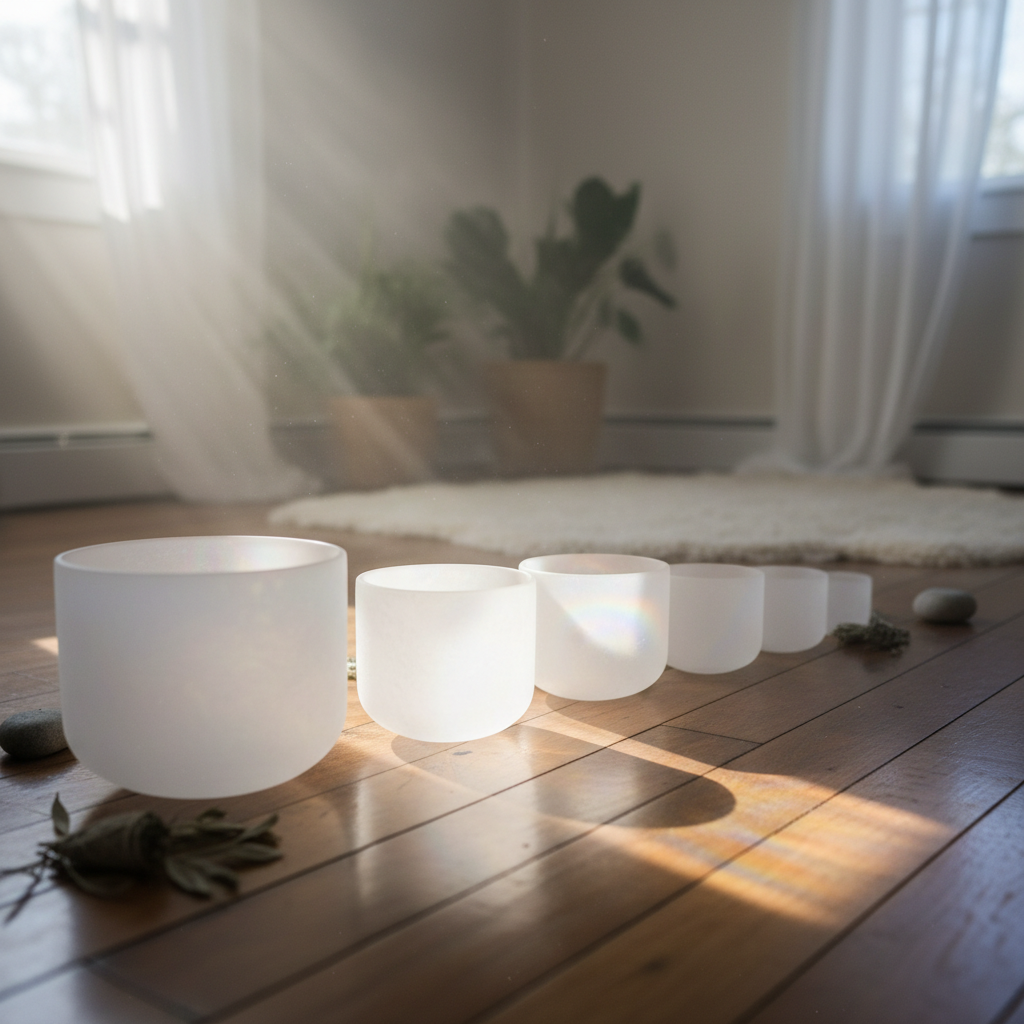
This is one reason practices such as sound baths can feel so restorative for people who struggle to settle through silence alone. Carefully held sound offers a form of guided presence. It creates an auditory container when the inner world feels too diffuse or too loud. For some, this becomes less about relaxation and more about remembering how to inhabit the moment safely.
At Luminous Resonance, that bridge between ritual and regulation is part of the practice itself. The spiritual atmosphere matters, but so does the sense of being gently brought back to yourself.
7. Create a grounding sequence you can repeat
The most effective grounding practice is often the one you remember to use. In a difficult moment, complexity is rarely helpful. A short sequence you know by heart can become a trusted ritual.
For example, you might place both feet on the floor, look around the room, take three slower exhales, hold a warm drink, and name one true thing about the present moment. That takes less than two minutes. Done consistently, it teaches your system a pathway back.
Repetition is not dull here. It is devotional in its own quiet way. Each time you practise, you reinforce familiarity, and familiarity itself can feel safe.
When grounding does not work straight away
If a technique does not help immediately, it does not mean you have failed. It may mean the practice was not suited to that moment, or that your system needs more support than self-guided grounding can offer. On difficult days, the kindest response may be to reduce stimulation, reach out to someone trusted, or seek professional help.
It also helps to choose techniques according to the kind of distress you are feeling. If you feel detached and unreal, sensory contact and orientation may work better than closing your eyes. If you feel agitated and mentally crowded, structured counting or sound may be more accessible than deep reflection. If you feel emotionally raw, warmth, simple language, and slower breath may be enough.
There is wisdom in noticing the difference.
Psychological grounding techniques are not about becoming perfectly calm, spiritually pure, or endlessly resilient. They are about meeting yourself with enough presence that the moment becomes survivable, then steadier, then more spacious. Sometimes that return is almost invisible. A softer jaw. A fuller breath. The feeling of your feet touching the floor again. Start there, and let that be sacred enough for today.