The moment a small request feels impossible, or a kind message makes you want to withdraw, the body may be telling a story the mind has not yet had time to hear. Emotional overload does not always arrive as a dramatic breakdown. More often, it gathers quietly beneath busy days, caring responsibilities, difficult decisions and the pressure to keep going.
Recognising the signs of emotional overload is not about labelling yourself as broken or incapable. It is an act of tenderness. When we notice what is asking for care, we create a little more space between feeling overwhelmed and abandoning ourselves within it.
Signs of emotional overload often arrive quietly
Emotional overload can happen when your inner capacity is stretched beyond what feels manageable. Stressful periods, grief, conflict, change, hormonal shifts, poor sleep and long stretches of giving to others can all contribute. It may affect thoughts, emotions, behaviour and the physical body at once.
The experience is personal. One person may become tearful and need closeness; another may go silent, overwork or feel strangely numb. These signs are invitations to pause and listen, rather than a test you need to pass.
- Your reactions feel bigger than the moment. A delayed reply, an untidy kitchen or a minor change of plan may bring anger, tears or panic that seems disproportionate. The immediate trigger matters, but it may be touching a nervous system already carrying too much.
- You cannot make even simple decisions. Choosing what to eat, replying to a message or deciding where to begin can feel exhausting. This is not necessarily indecision in the usual sense. When emotional resources are depleted, the mind may struggle to sort, prioritise and move forward.
- You are more irritable with people you love. Short answers, impatience and a low tolerance for noise can be signs that your internal reserves are thin. Often, the people closest to us receive the edges we have held in all day elsewhere.
- Rest does not feel restful. You may sit down but remain mentally alert, scroll without taking anything in, or wake after sleep feeling as though you have not truly arrived back in yourself. Rest is more than stopping activity; it also asks the body to feel safe enough to soften.
- You feel emotionally numb or distant. Overload is not always intense feeling. Sometimes it is the absence of accessible feeling: a flatness, disconnection or sense of watching life from a distance. Numbness can be a protective response when experiencing everything at once feels too much.
- Your body is speaking more loudly. Headaches, a tight chest, shallow breathing, jaw tension, digestive discomfort and persistent fatigue can have many causes. Yet they can also accompany prolonged stress and emotional strain. The body often notices the pace before the mind permits itself to slow down.
- You are withdrawing from what usually nourishes you. A favourite walk, a conversation with a trusted friend, movement, creativity or a simple evening ritual may suddenly feel like effort. Withdrawal can be a genuine need for quiet, but prolonged isolation may deepen the sense of being alone with everything.
- You are constantly busy, yet nothing feels complete. Overload can look like relentless doing. You move between tasks, keep adding to your list and feel guilty when still. Beneath the activity may be a wish to outrun a feeling that needs time, gentleness and attention.
- You are forgetting things or losing your train of thought. A crowded mind has less room to hold everyday details. Forgetfulness, difficulty concentrating and rereading the same sentence are common when the nervous system is under sustained pressure.
- You feel unusually sensitive to sound, light or touch. The kettle boiling, a crowded train or someone asking another question can feel almost physically intrusive. Sensory sensitivity may be a sign that there is little remaining capacity to filter the world around you.
- You cannot stop replaying conversations or worrying ahead. The mind may circle what you should have said, what could go wrong or how you will manage the next demand. This repetitive thinking often attempts to create certainty, even though it leaves you more depleted.
- You no longer recognise your own rhythm. Perhaps you do not know whether you need company or solitude, movement or stillness, food or sleep. When we have spent too long responding to external demands, our own signals can become difficult to hear.
Emotional overload is not a personal failing
There can be a quiet shame around overwhelm, particularly for people who are dependable, perceptive or used to caring for others. You may tell yourself that others have more to manage, or that you should be grateful rather than tired. Comparison rarely restores capacity.
Emotional overload is also not a diagnosis. Some of its signs can overlap with anxiety, depression, burnout, trauma responses, hormonal changes or physical health concerns. If these feelings are persistent, worsening or affecting your ability to live as you want to, speaking with a GP or qualified mental health professional can offer valuable support.
How to meet overload with gentleness
The first step is usually smaller than you think. Before trying to solve every source of pressure, name what is present. You might write: “I am carrying more than I can process alone today,” or place a hand on your chest and ask, “What would make the next ten minutes feel less demanding?” Clear language can soften the struggle.
Then reduce stimulation where you can. Put one task aside, step away from notifications, dim the lights or take a few slow breaths with a longer exhale. These are not cures for complex circumstances, but they can signal to the body that it does not have to remain on high alert for every moment.
It also helps to choose one form of support that fits your actual capacity. For some, that is a practical conversation with a partner or colleague. For others, it is an early night, a nourishing meal, a walk without a podcast or permission to cancel a non-essential commitment. The most restorative choice is not always the most impressive one.
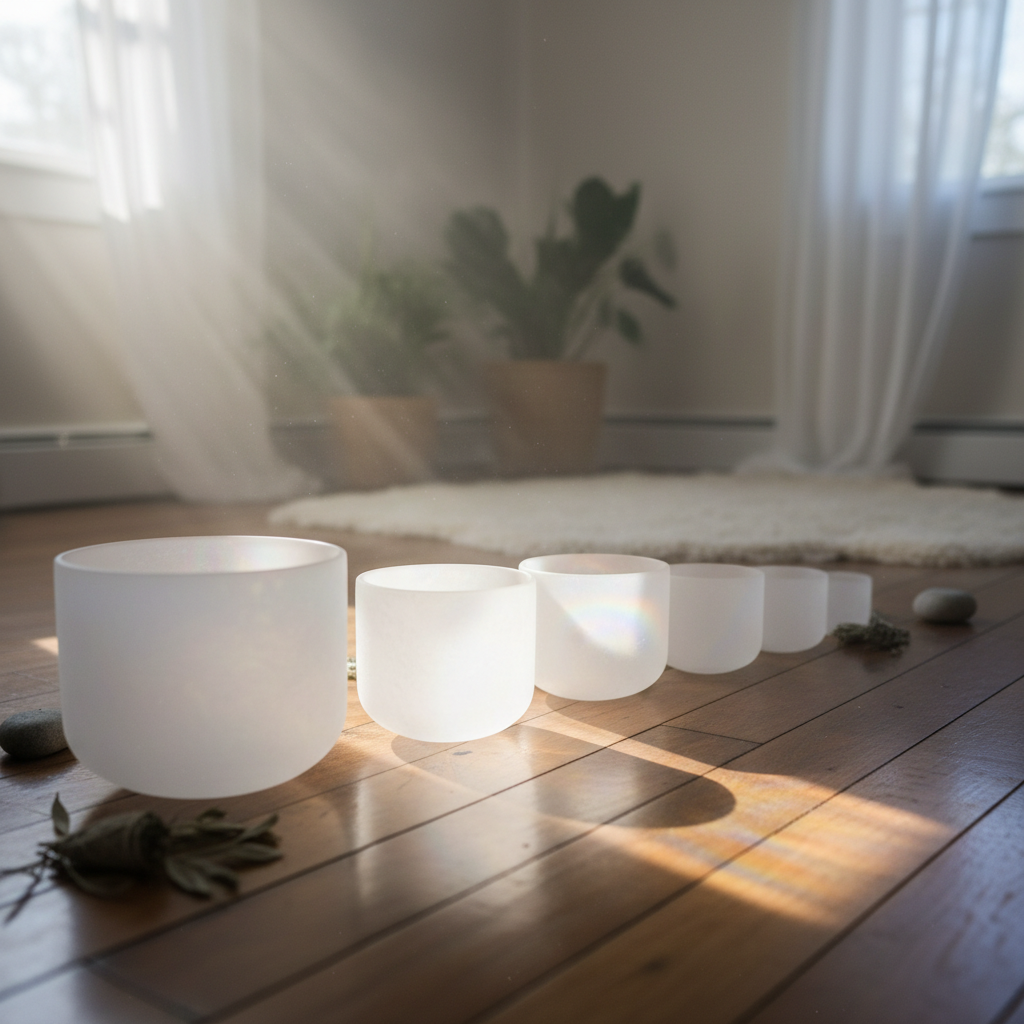
Gentle ritual can offer a container when your thoughts feel scattered. Sitting with a warm cup of ceremonial cacao, listening to resonant sound, journalling after a bath or placing both feet on the floor before sleep can become a steady point of return. At Luminous Resonance, these practices are held not as a demand to feel better quickly, but as a space for psychological grounding and spiritual expansion to coexist.
When more support is needed
Self-care is meaningful, yet it has limits. If overload is accompanied by hopelessness, panic, inability to function, reliance on alcohol or other substances, or thoughts of harming yourself, reach out for immediate professional support. In the UK, call 999 in an emergency, contact NHS 111 for urgent advice, or call Samaritans on 116 123 for a confidential conversation.
You do not need to wait until you are in crisis to be supported. A therapist, GP, trusted person or workplace wellbeing service can help you understand what is beneath the overwhelm and make changes that are sustainable, not merely temporary.
Let your signals be information, not accusation. The part of you asking for quiet, softness or honest support is not getting in the way of your life. It is trying to bring you back into it.