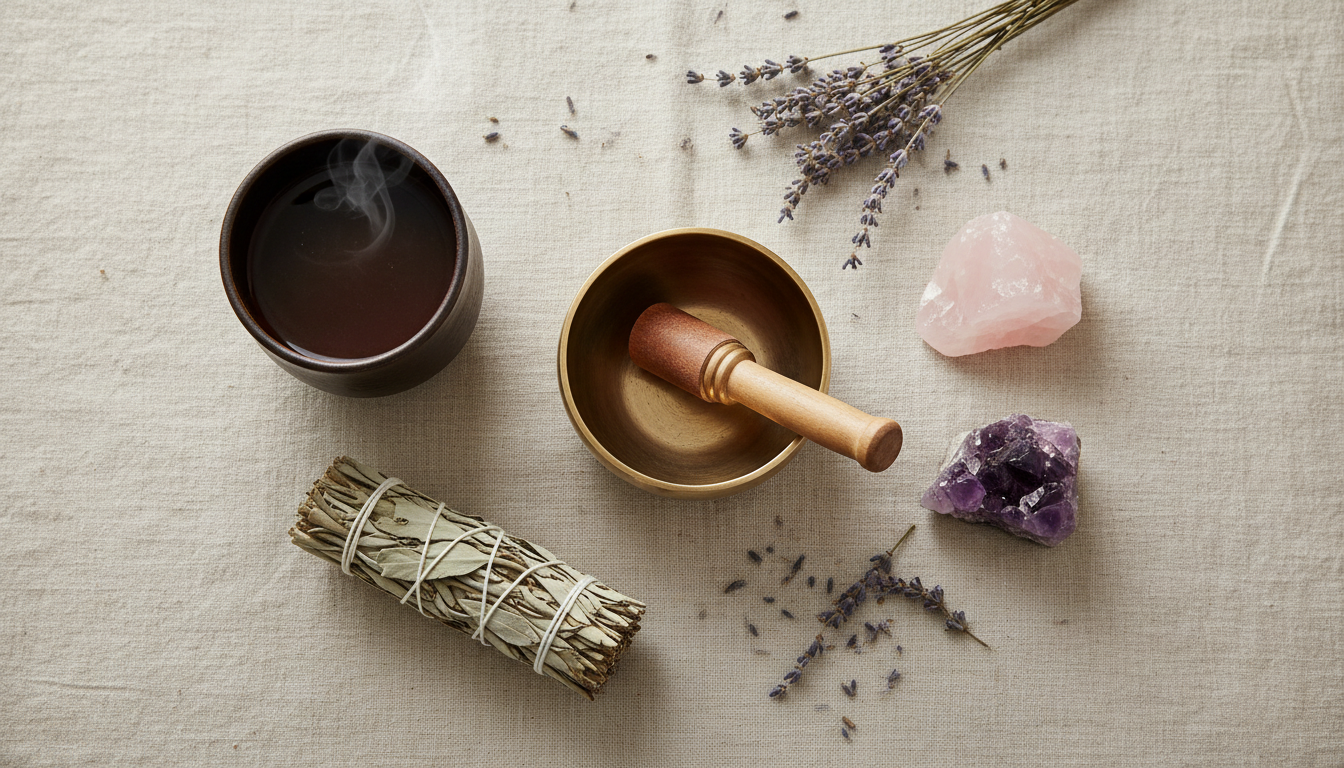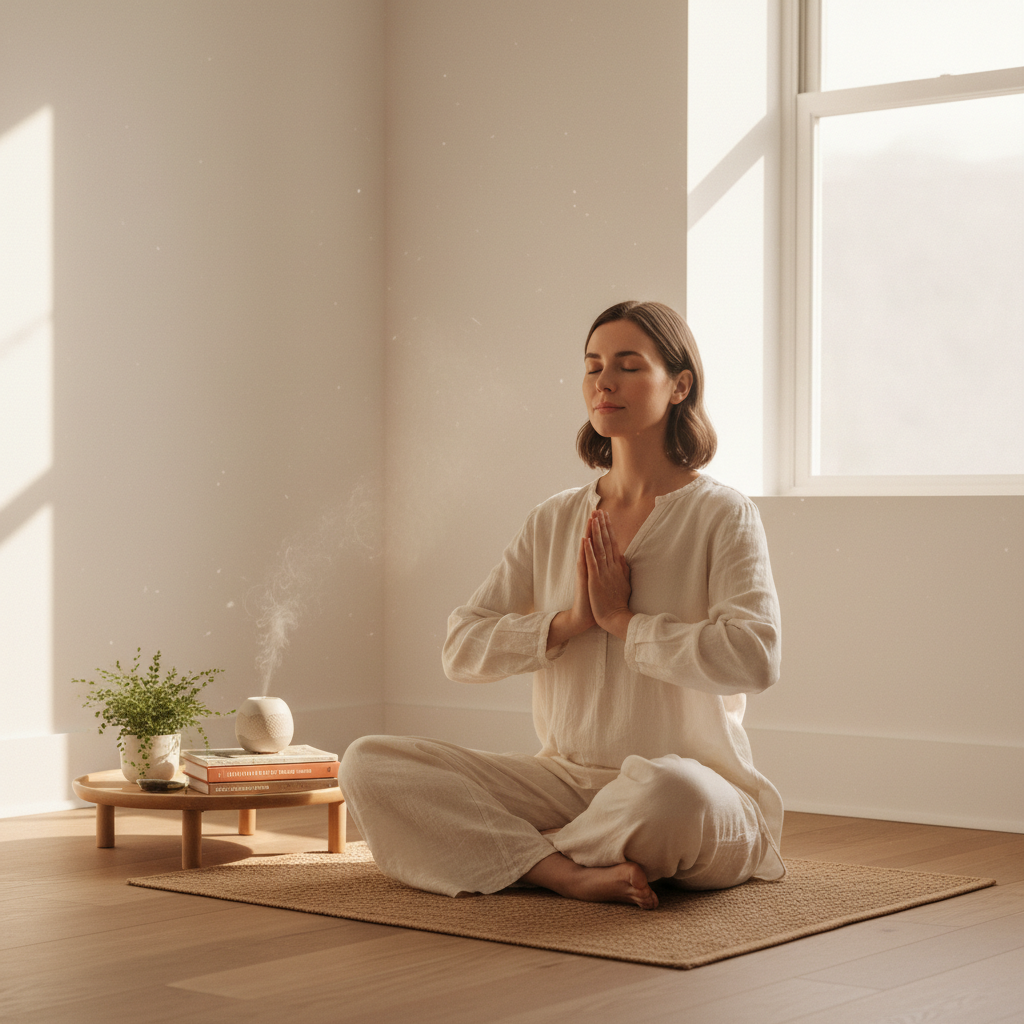
A busy mind is not always asking to be quieter. Sometimes it is asking to be met through the body: in the tightness around the ribs, the clenched jaw, the restless legs, or the sudden heaviness that arrives after a demanding day. The question of somatic practice versus meditation matters because these approaches offer different doors into the same essential work: returning to yourself with care.
Both can create space between you and the momentum of stress. Both can support emotional awareness, inner steadiness and a more intentional relationship with your life. Yet they do not begin in quite the same place. Meditation often starts with attention. Somatic practice starts with sensation.
For many people, especially when life feels full or the nervous system is already carrying too much, that distinction can shape whether a practice feels nourishing, frustrating or genuinely supportive.
What meditation invites
Meditation is a broad family of practices that trains awareness. You might focus on the breath, repeat a phrase, notice thoughts without following them, listen to a guided visualisation, or rest with sound. The point is not usually to empty the mind completely. It is to notice experience with more space, rather than being swept along by every thought, feeling or demand.
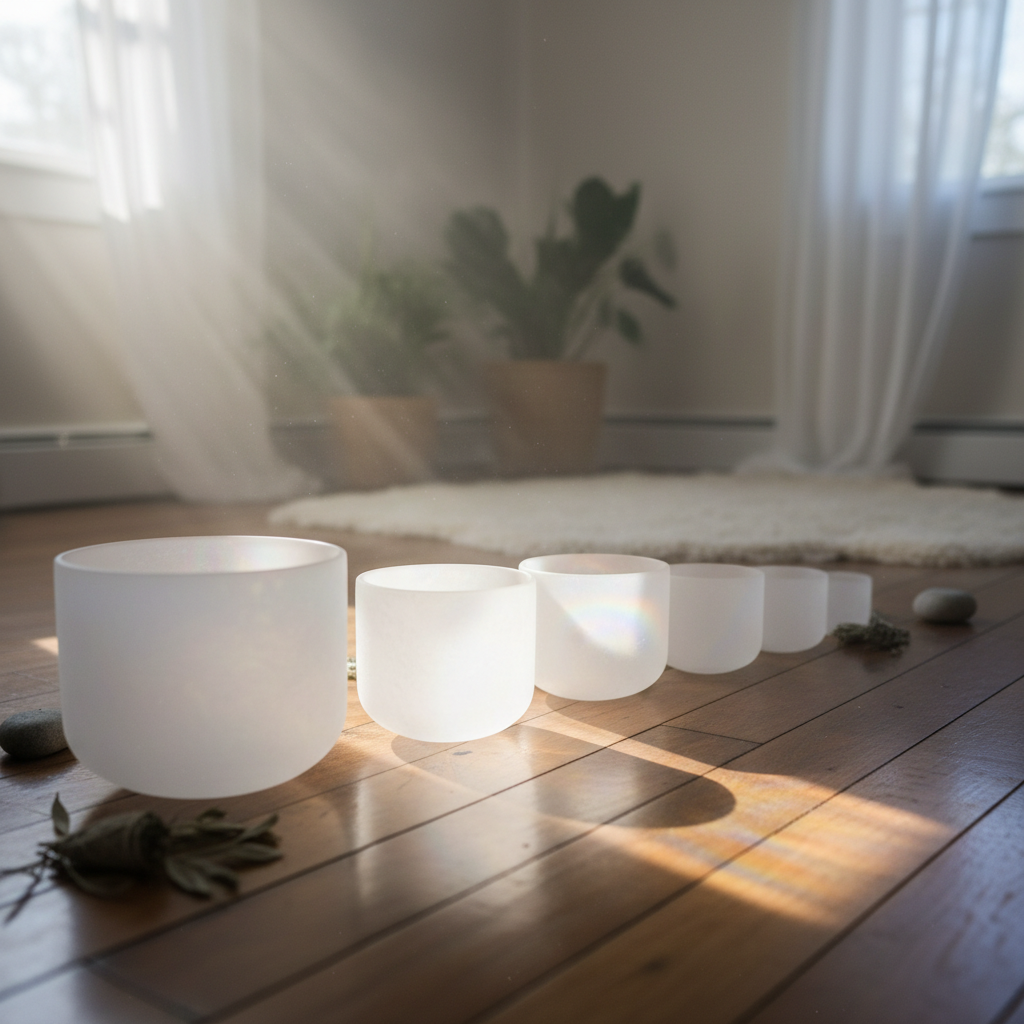
A regular meditation practice can be a gentle anchor for people who feel mentally scattered. It may help you recognise familiar thought patterns, soften the urge to react immediately, and cultivate a quieter inner witness. In a sound bath, sustained tones can offer this same point of focus, giving the mind something simple and spacious to rest with.
Meditation can also hold spiritual depth. Sitting in silence, following the breath or receiving sound may bring a sense of connection that is difficult to name but easy to feel. For some, this is a sacred pause. For others, it is a practical form of psychological grounding. It can be both.
There are, however, moments when being still with the mind does not feel restful. If you are highly activated, exhausted, grieving or disconnected from your body, closing your eyes and observing thoughts can sometimes make the inner noise feel louder. This does not mean you are failing at meditation. It may simply mean your system needs a more embodied entry point first.
What makes a practice somatic?
Somatic practice centres your lived experience in the body. The word somatic comes from the Greek word for body, but this is not about treating the body as a machine to fix. It is about listening to its signals with curiosity, patience and respect.
A practice may be somatic when it invites you to notice warmth, pressure, tingling, breath, posture, movement or the support beneath you. It might involve placing a hand over the heart, slowly turning your head to look around the room, shaking out tension, stretching, walking with awareness, or allowing a natural sigh to move through you.
The aim is not to force a release or produce a dramatic emotional breakthrough. Often, the most meaningful shift is very small: recognising that your shoulders have lifted, feeling your feet against the floor, or noticing that your exhale has lengthened. These moments can signal safety and choice to a system accustomed to bracing.
Somatic work is often described in relation to nervous system regulation. While no practice can remove the realities causing your stress, body-based attention can help you notice your state sooner and respond more kindly. Rather than asking, “Why can’t I calm down?”, the practice becomes, “What is here, and what would feel supportive now?”
Somatic practice versus meditation: the central difference
The clearest difference lies in where you place your attention. In meditation, you may observe the breath, thoughts or a chosen object of focus. In somatic practice, you tend to orient towards bodily sensation and the present environment. Meditation can feel like witnessing what arises. Somatic work can feel like being in conversation with what arises.
Of course, there is overlap. A body scan meditation is deeply somatic. Mindful movement is both meditation and embodiment. A well-held cacao ceremony may invite reflection through the mind, warmth through the senses and connection through ritual all at once. These are not rigid categories, and they do not need to compete.
The more useful question is not which practice is superior. It is what kind of support you need on a particular day.
If your mind is busy but your body feels settled, meditation may offer the clarity you are seeking. If you feel numb, agitated, distant from yourself or unable to concentrate, gentle somatic practice may be more accessible. If you are moving through a tender period, a combination of grounding movement, breath awareness and guided sound can create a kinder path than trying to sit perfectly still.
Choosing the practice that meets you where you are
Before beginning, take a few seconds to ask what is most present. Are you caught in planning and replaying? Do you feel wired, flat, tense or tearful? Are you looking for perspective, comfort, energy, stillness or connection?
Meditation may be especially supportive when you want to develop a steadier relationship with thought. A five- or ten-minute guided practice can create a boundary between work and evening, or help you meet a difficult conversation with a little more spaciousness. If silence feels too stark, choose a gentle voice, simple music or the resonant texture of a sound bath.
Somatic practice may be a better starting place when thought feels impossible to untangle. Instead of analysing what you feel, begin with something concrete. Notice three places where your body is supported. Feel the temperature of your hands around a warm cup. Press your feet into the ground for one slow breath, then release. Let your gaze travel around the room and find a colour that feels calming or familiar.
These are modest actions, but they are not trivial. They bring attention out of an internal spiral and into immediate experience. That shift can make meditation more available afterwards, if you want it.
A gentle way to combine both
You do not need an elaborate routine for the practices to work together. A short embodied arrival before meditation can change the quality of the whole experience.
Begin by sitting or standing in a position that feels supported, rather than overly formal. Notice the contact between your body and the chair or floor. Let your eyes stay open if that feels more settling. Take one unforced breath, then look slowly around your space. This reminds the body that it is here, not inside yesterday’s pressure or tomorrow’s list.
From there, place attention on a physical sensation that is neutral or pleasant: the weight of a blanket, the warmth in your palms, the movement of breath at the nostrils. Stay for a minute or two. Only then move into meditation, perhaps by listening to a guided track, following the breath or resting with sound.
At the end, return to the body before you rush away. Wiggle your fingers, notice your feet and take a moment to name what has shifted, even if the answer is simply, “I feel a little more here.” Reflection does not have to be profound to be true.
When to go slowly
Both meditation and somatic practice can bring you closer to emotion, memory and sensations you have learned to move past quickly. This can be meaningful, but it is wise to work within your capacity. If a practice leaves you feeling overwhelmed, panicked, detached or persistently unsettled, pause and choose something more orienting, such as opening your eyes, drinking water, moving gently or speaking with someone you trust.
For people living with trauma, anxiety or complex mental health experiences, therapeutic support can be a valuable companion to wellbeing practices. A skilled, trauma-informed professional can help you find approaches that feel safe and appropriately paced. Spiritual expansion is most sustaining when it remains connected to care, consent and everyday support.
Luminous Resonance holds this middle ground through ritual-led spaces that honour both inner mystery and emotional grounding. You do not have to perform serenity in order to belong in the practice. You only need to arrive as you are.
Perhaps the most generous ritual is to stop asking your mind to solve what your body has been trying to communicate. Sit when sitting helps. Move when movement helps. Listen for the smallest signal of ease, and let that be enough for today.