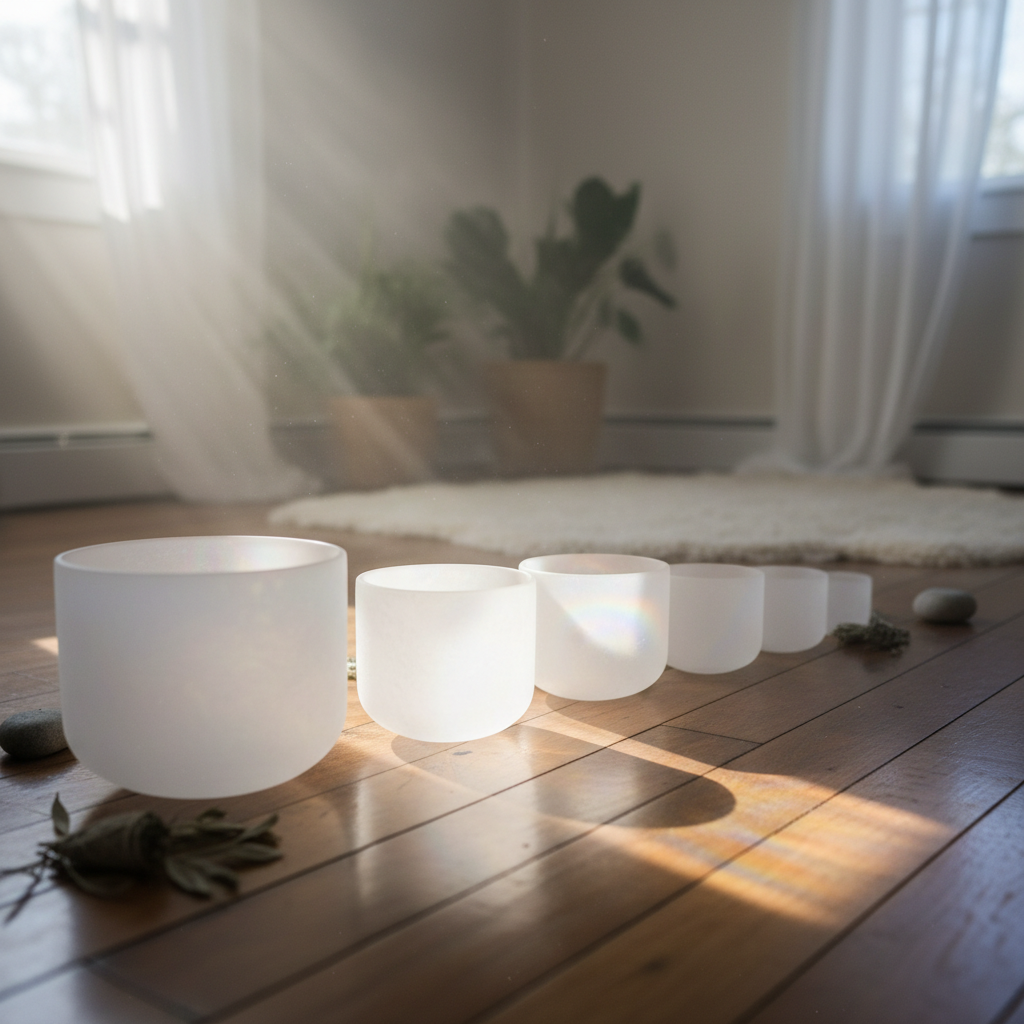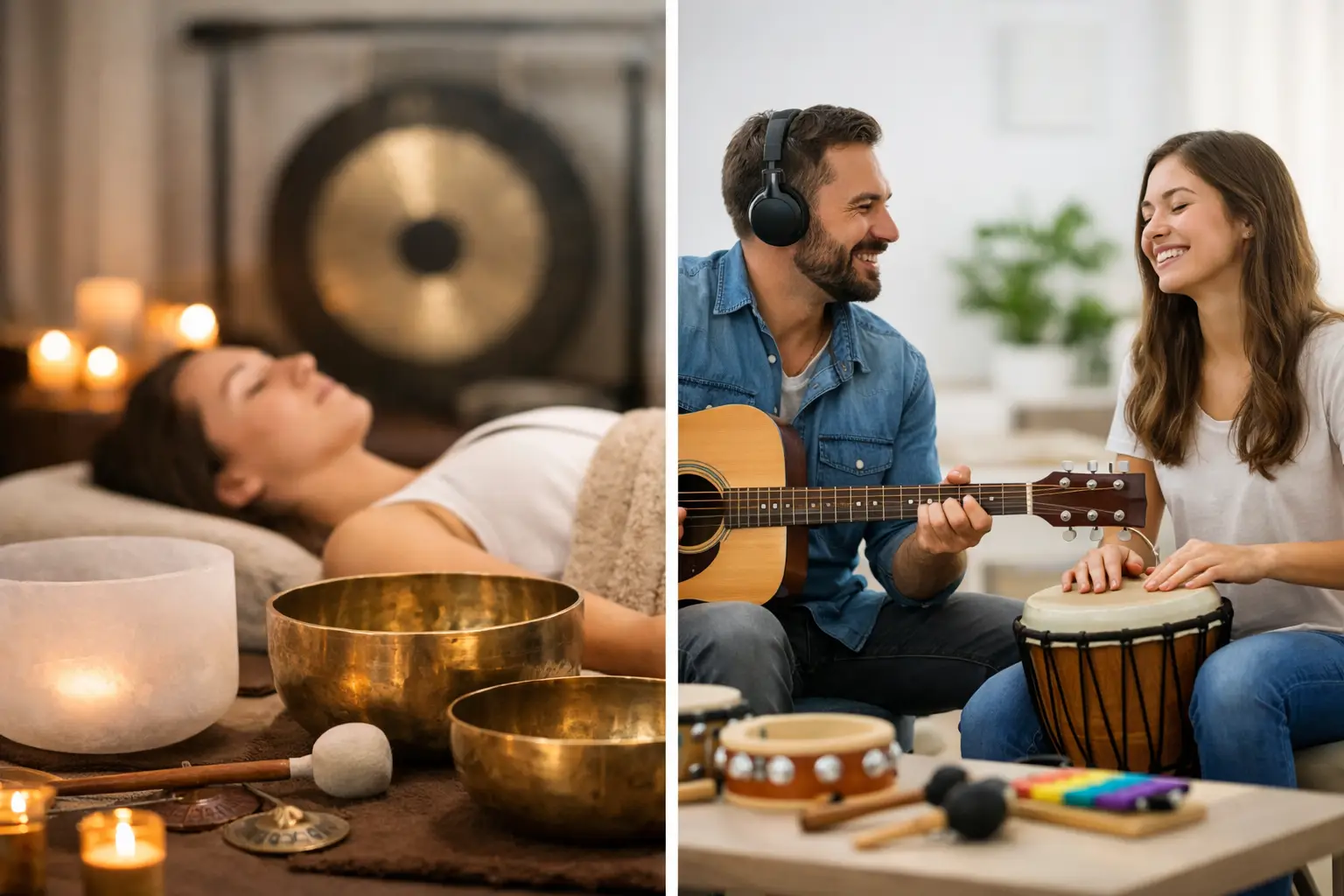
A crystal bowl’s long, shimmering tone can feel like a hand resting gently on an overfull nervous system. A music therapy session may also use sound, silence, rhythm or a familiar song, yet its purpose and structure are quite different. When considering sound baths versus music therapy, the most helpful question is not which practice is better. It is what kind of support you need in this season of your life.
Both can create space for feeling, release and reconnection. Both honour music as more than background noise. But one is usually a guided wellbeing experience rooted in receptive listening, while the other is a regulated therapeutic profession built around an individual clinical relationship.
Sound baths versus music therapy: the essential difference
A sound bath is an immersive listening practice. A facilitator may play crystal or Tibetan bowls, gongs, chimes, drums, voice or other instruments, creating layers of vibration and tone while you rest, sit or lie down. The invitation is often simple: soften your attention, notice sensation, and allow the mind to settle without needing to achieve anything.
The experience can be shared in a group, offered online or held one-to-one. Its rhythm is usually ceremonial or contemplative rather than conversational. At Luminous Resonance, this kind of practice may be held as a gentle ritual - a pause from outward demands and an opening towards inner listening.
Music therapy is a form of psychological and therapeutic support delivered by a qualified music therapist. In the UK, music therapists are regulated by the Health and Care Professions Council. Sessions are shaped around agreed therapeutic needs, which might include communication, emotional expression, grief, mental health support, neurological rehabilitation or connection where words feel difficult.
A client might improvise with instruments, write a song, listen to meaningful music, use their voice, or speak about what emerges. The therapist observes, responds and adapts in an ongoing therapeutic relationship. Music is not simply the atmosphere around the work. It is part of the clinical process.
What a sound bath can offer
For someone carrying the mental residue of meetings, caring responsibilities, screens and constant decision-making, a sound bath can offer a clear threshold into rest. There is often relief in not having to explain yourself. You arrive as you are, receive the sound, and let your experience unfold privately.
Many people notice that sustained tones give the thinking mind something soft to rest against. Attention may move from planning and analysing towards breath, bodily sensation, imagery or emotion. This can support relaxation and a sense of spaciousness, especially when the session is well held and there is time to arrive and return gently afterwards.
The spiritual dimension also matters to many people. A sound bath can become a meaningful ritual of intention, reflection and self-remembrance. Paired with journalling, meditation or ceremonial cacao where appropriate, it may help create a regular practice of tending to your inner world.
That said, the word “bath” can make the experience sound universally soothing. It is not always that simple. Sound can bring up strong feelings, memories or physical discomfort, and different instruments affect people differently. A considerate facilitator will welcome choice: changing position, lowering volume, using earplugs, stepping away or simply listening from a distance.
What music therapy can offer
Music therapy is especially valuable when a person needs a tailored, relational space to work with something complex or persistent. This might be anxiety that is affecting daily life, a loss that feels difficult to speak about, trauma-related responses, changes in identity after illness, or a child’s struggle to communicate feelings.
The therapist does not prescribe a playlist or lead a performance. They use musical interaction alongside therapeutic training to meet the client where they are. Someone who cannot find the words for anger may communicate through a drum. Someone who feels disconnected from joy may rediscover a meaningful song. Someone who speaks easily may use music to reach the feelings beneath a familiar story.
Because the work is individualised, music therapy may involve assessment, goals, boundaries, regular sessions and review over time. It can take place in health, education, community or private settings. This structure is part of its care. It offers continuity and professional containment when emotions need more than a restorative pause.
Music therapy is not reserved only for crisis. It can support self-understanding and emotional expression at many stages of life. Yet it is therapy, not a wellness event, and it is wise to choose a properly qualified, HCPC-registered practitioner if this is the kind of support you are seeking.
The role of participation
One practical distinction is how actively you want to engage. In a sound bath, you are most often a receiver. Your work is to listen, breathe and notice. There may be an intention or a short reflection, but no pressure to share, perform or interpret what arises.
In music therapy, participation is often central, although it does not have to mean playing an instrument confidently. No musical skill is required. The therapist might invite you to make sound, choose music, move with rhythm or talk about a piece that carries personal meaning. Your response helps shape the next moment of the session.
Neither approach is more profound by default. Receptive listening can be deeply nourishing when you are depleted. Active musical expression can be powerful when something inside you needs a safe form and a compassionate witness.
Choosing what you need today
If you are seeking rest, a sensory reset or a sacred container for reflection, a sound bath may be a beautiful place to begin. It can fit well into a wider wellbeing rhythm alongside sleep, nourishing food, movement, meditation and supportive relationships.
If you want help exploring patterns, distress or life experiences with a trained professional over time, music therapy may be the more appropriate choice. It can also sit alongside counselling, psychotherapy or medical care, depending on your circumstances and the guidance of your care team.
There is room for both. You might attend a sound bath when you long to feel held by quiet and vibration, then choose music therapy when you need personal therapeutic attention. Or you may find that one practice speaks to you more strongly than the other. Your capacity, preferences, budget, health needs and desire for group or individual support all belong in the decision.
A note on emotional safety
Before joining any sound-based practice, consider what helps you feel safe. Check whether the facilitator explains the format, volume, instruments and options for participation. If you have tinnitus, sound sensitivity, hearing concerns, epilepsy, a history of trauma, or are currently experiencing significant mental health distress, it is sensible to seek appropriate professional advice and let the facilitator know what support you may need.
A nurturing space does not promise that every feeling will be pleasant. It makes room for your autonomy. You should be able to pause, leave, decline touch, keep your camera off in an online session, or return to simple grounding without being made to feel that you are doing the practice incorrectly.
The right sound practice is not the one that asks you to push through. It is the one that helps you listen more honestly to yourself, with enough gentleness to hear what is there.