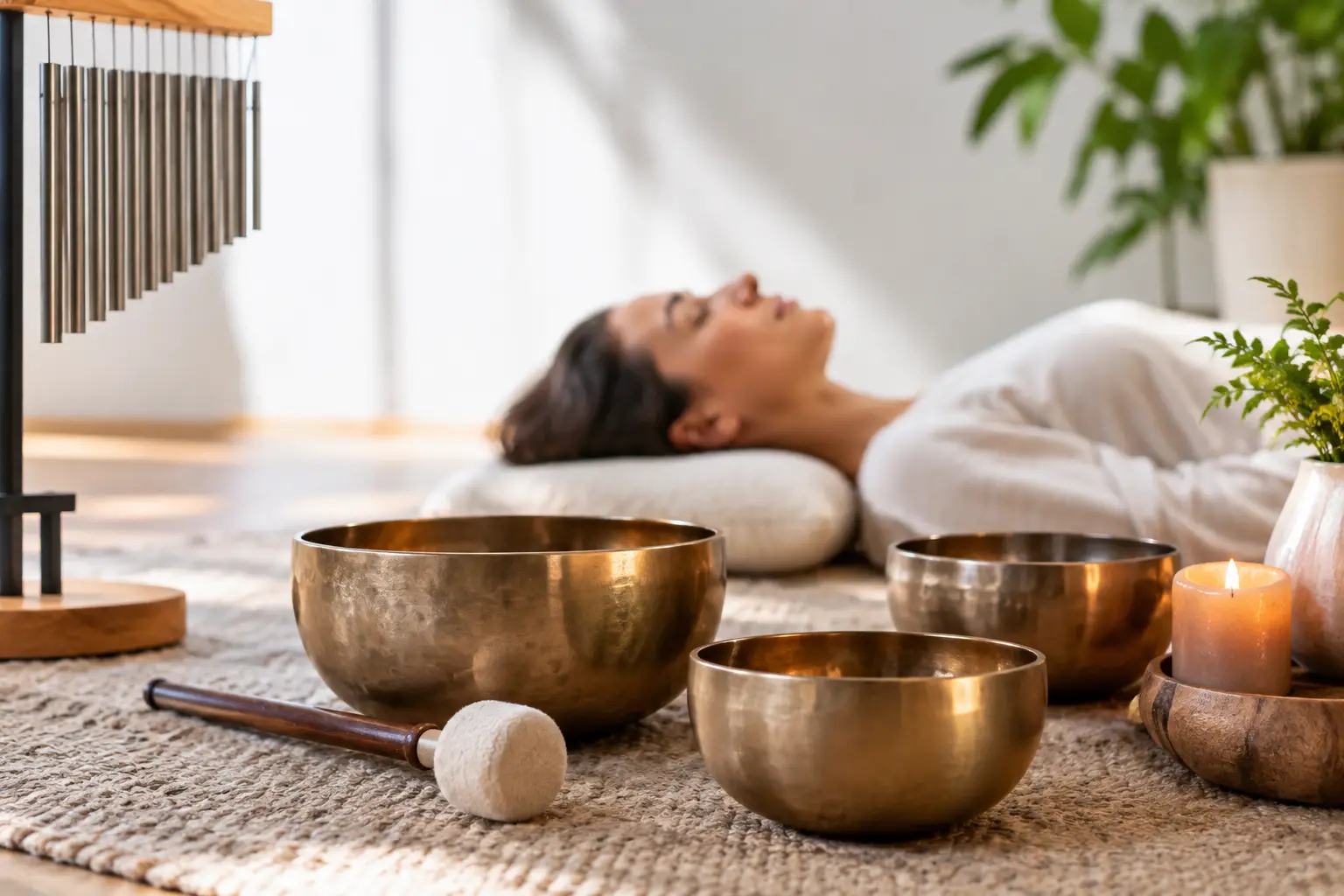
A sound bath can look deceptively simple: a room, a mat, a sequence of resonant tones. Yet the most meaningful sound therapy trends are not about collecting more instruments or chasing a more dramatic experience. They reflect a quieter shift in what people are asking of wellness: somewhere to soften, feel safely accompanied, and return to themselves without having to perform calmness.
For professionals holding too much, creatives feeling scattered, and caregivers whose own needs are often postponed, sound is becoming part of a more intentional rhythm of rest. The emerging preference is for practices that honour both the nervous system and the inner life - grounded enough to feel supportive, spacious enough to feel sacred.
Sound therapy trends are becoming more intentional
The language around sound has matured. A few years ago, wellness spaces often presented sound baths as an instant route to switching off. Relaxation remains valuable, of course, but many people now recognise that rest is not always immediate. When the body has been living with prolonged pressure, stillness can bring up agitation, tiredness, emotion, or a mind that keeps racing.
This has led to a stronger appetite for skilfully held experiences. Rather than promising a particular outcome, thoughtful facilitators create conditions that invite rest: a clear opening, gentle guidance, periods of silence, and a considered return at the end. The sound itself matters, but so does the container around it.
This is an important distinction. Sound can be deeply supportive, yet it is not a substitute for medical, psychiatric, or trauma-specific care. A responsible practice makes room for individual differences, encourages participants to adapt the experience to their needs, and avoids claims that sound alone can cure emotional or physical conditions.
From spectacle to sensory care
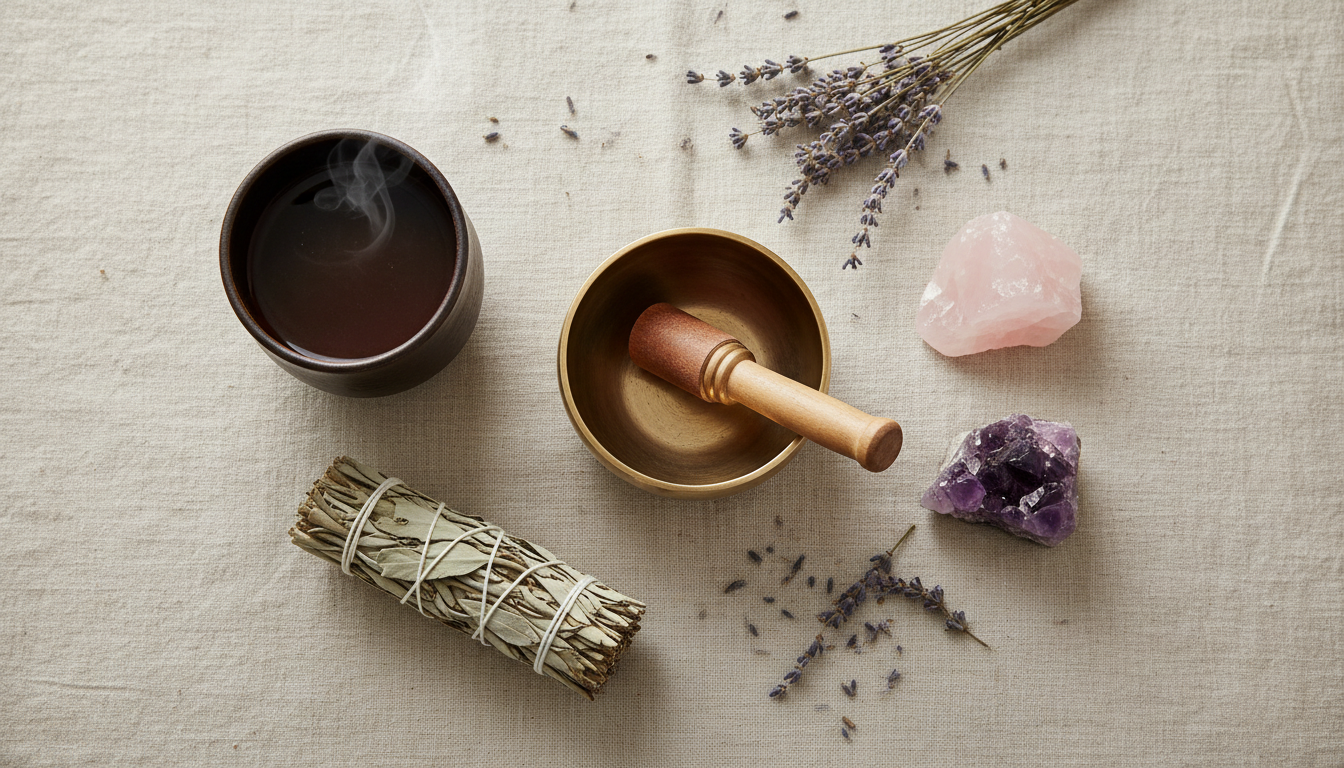
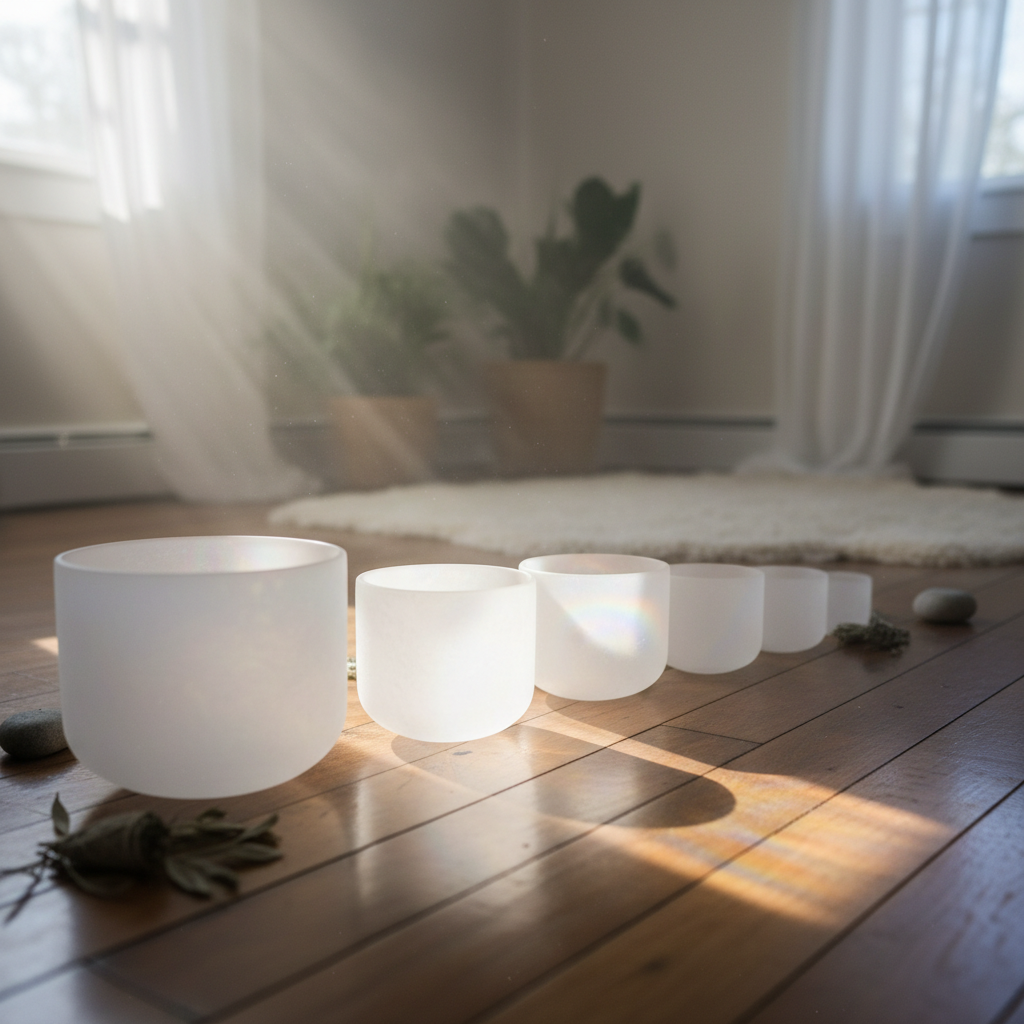
Large gongs and crystal bowls still have their place, especially for those drawn to a fuller, immersive wash of sound. But the direction of travel is away from spectacle for spectacle's sake. Many people are seeking gentler textures: chimes, soft voice, monochord, singing bowls, ambient layers, and carefully placed pauses.
For a sensitive or overstimulated system, louder is not necessarily deeper. A powerful crescendo may feel expansive to one person and overwhelming to another. The most considerate sessions give participants permission to sit up, lower the volume, step away, or simply listen from the edge of the experience. Choice is part of emotional safety.
Trauma-aware facilitation is raising the standard
One of the most valuable developments in sound-led wellbeing is a wider understanding that relaxation is not neutral for everyone. Closing the eyes, lying still, or surrendering to unfamiliar sounds can feel nourishing, but it can also feel vulnerable.
Trauma-aware practice does not mean a facilitator is providing therapy. It means they are attentive to consent, language, pacing, and autonomy. Invitations are offered rather than instructions imposed. Participants are reminded that they can keep their eyes open, shift position, drink water, or leave the room if needed. Grounding is woven in, not added as an afterthought.
This approach benefits everyone. It replaces the pressure to have a transcendent experience with a more compassionate question: what would support me to stay present with myself today? Sometimes that may be profound stillness. Sometimes it may be noticing the floor beneath your feet and taking one unhurried breath.
The return of ritual, with psychological grounding
Another clear trend is the movement towards ritual-led experiences that retain emotional clarity. People are not only looking for background relaxation. They want a threshold between the demands of the day and a more receptive state of being.
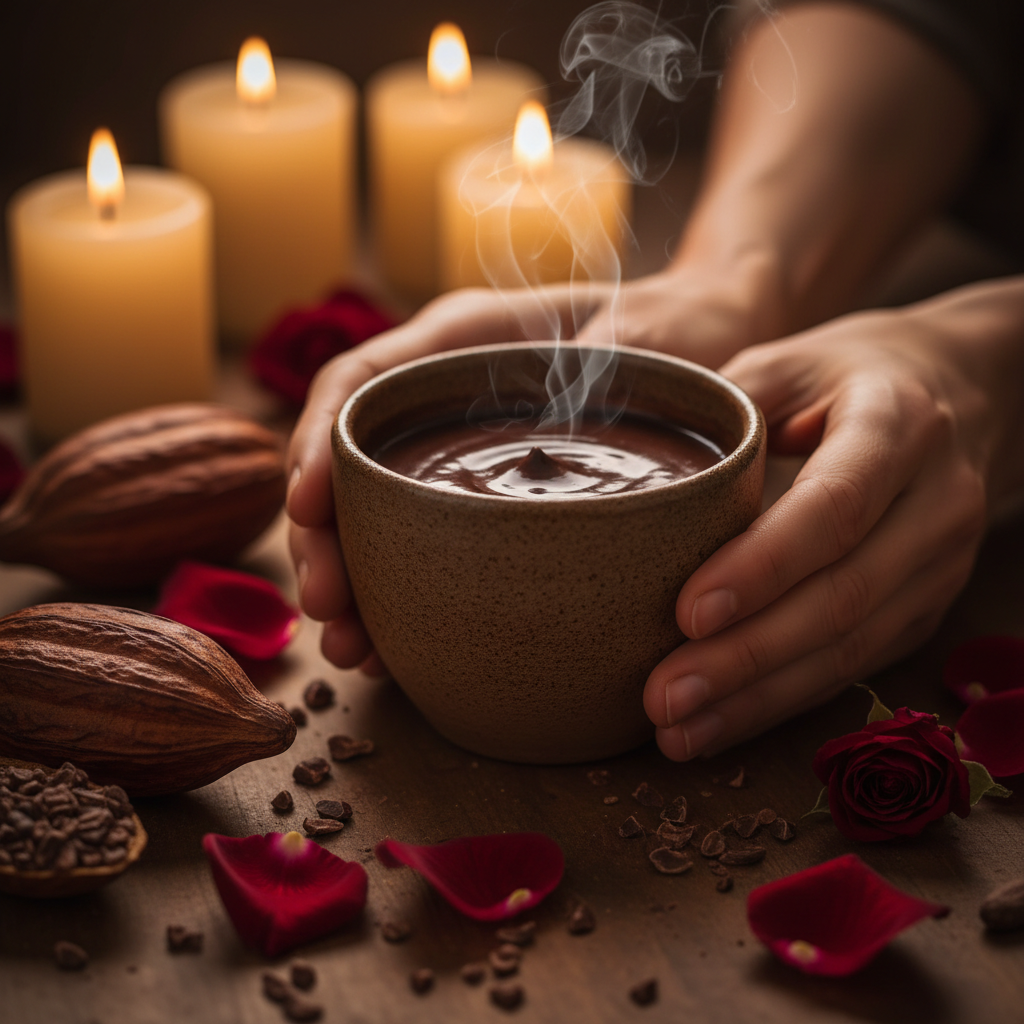
A simple ritual can provide that threshold. Lighting a candle, preparing a cup of ceremonial cacao, naming an intention, or placing a hand over the heart can mark a change in attention. These actions need not be elaborate to be meaningful. Their value lies in repetition and presence.
Cacao and sound are increasingly being brought together because they offer complementary qualities. Cacao can invite warmth, alertness, and a sense of ceremony, while sound creates space for listening beneath habitual thought. Neither needs to force a breakthrough. Held with care, they can support a gentle encounter with what is already present.
The trade-off is worth acknowledging. Ritual can feel deeply nourishing when it is freely chosen and respectfully guided. It can feel alienating when it borrows language or traditions without context, or when participants feel pressured to disclose, believe, or experience something they do not. The most trustworthy spaces leave room for personal meaning.
Digital sound baths are becoming a genuine sanctuary
Online wellbeing is no longer viewed merely as a compromise for people who cannot attend in person. For many, a digital sound bath offers something distinctly valuable: the ability to receive support from the familiarity of home.
There is no journey back in the cold after a late session. There is no need to navigate a room full of strangers while feeling emotionally tender. A participant can create their own nest with blankets, headphones, a journal, and low lighting, then move directly into rest once the practice ends.
This accessibility is especially meaningful for those outside major cities, people with caring responsibilities, those managing energy limitations, or anyone whose working life makes fixed local classes difficult. Digital practice can turn a spare hour in an ordinary week into a protected moment of reconnection.
That said, online sound requires a different kind of care. Audio quality matters, but so does expectation. Headphones may create intimacy for some and discomfort for others. A recording can be a beautiful companion, though it does not offer the responsiveness of a live facilitator. The strongest digital offerings are honest about these differences and help participants prepare their space rather than trying to imitate an in-person room exactly.
At Luminous Resonance, this is the purpose of a digital sanctuary: not to make inner work passive or impersonal, but to make a consistent, intentional practice more possible.
Integration is becoming part of the practice
Perhaps the most sustaining of the current sound therapy trends is the growing emphasis on what happens after the final note. A session may create a sense of openness, but insight can dissipate quickly when we move straight into messages, chores, or another demanding task.
Integration does not have to be complicated. It might mean sitting quietly for five minutes, writing a few unedited lines in a journal, drinking water, taking a slow walk, or choosing one small boundary that honours what you noticed. The aim is not to interpret every feeling. It is to give experience enough space to settle.
This also changes how we measure value. The most beneficial session is not always the one that feels euphoric. It may be the one that helps you sleep a little more peacefully, recognise your own fatigue sooner, or speak to yourself with less harshness the following day. Subtle shifts deserve respect.
Community without comparison
Sound practice is also moving away from the idea that wellbeing must be a solitary project. Shared online ceremonies and live sessions can offer a quiet sense of belonging, even when little is said. Knowing that others are pausing at the same time can soften the isolation that often accompanies stress.
The healthiest forms of community do not demand emotional exposure. They allow people to participate at their own depth, whether that means sharing a reflection, listening silently, or returning regularly without explanation. Connection is not created by asking everyone to reveal more than they wish to give.
Choosing a practice that feels right
When exploring sound-based wellbeing, look beyond the instrument list and the promise of a blissful state. Consider the quality of guidance. Does the facilitator use invitational language? Is there a clear beginning and closing? Are you encouraged to care for your own comfort? Does the atmosphere feel respectful rather than performative?
It is equally useful to notice how your body responds over time. You may prefer a quiet bowl meditation to a layered gong journey, a live online ceremony to a recorded evening practice, or sound paired with cacao rather than sound alone. There is no superior response. Your preferences are information.
If you are new to this work, begin gently. Choose a time when you do not have to rush afterwards. Keep your volume moderate, have water nearby, and let your intention be modest: perhaps simply to arrive where you are. A restorative practice does not need to take you somewhere else. Sometimes its deepest offering is helping you feel safe enough to come home to yourself.