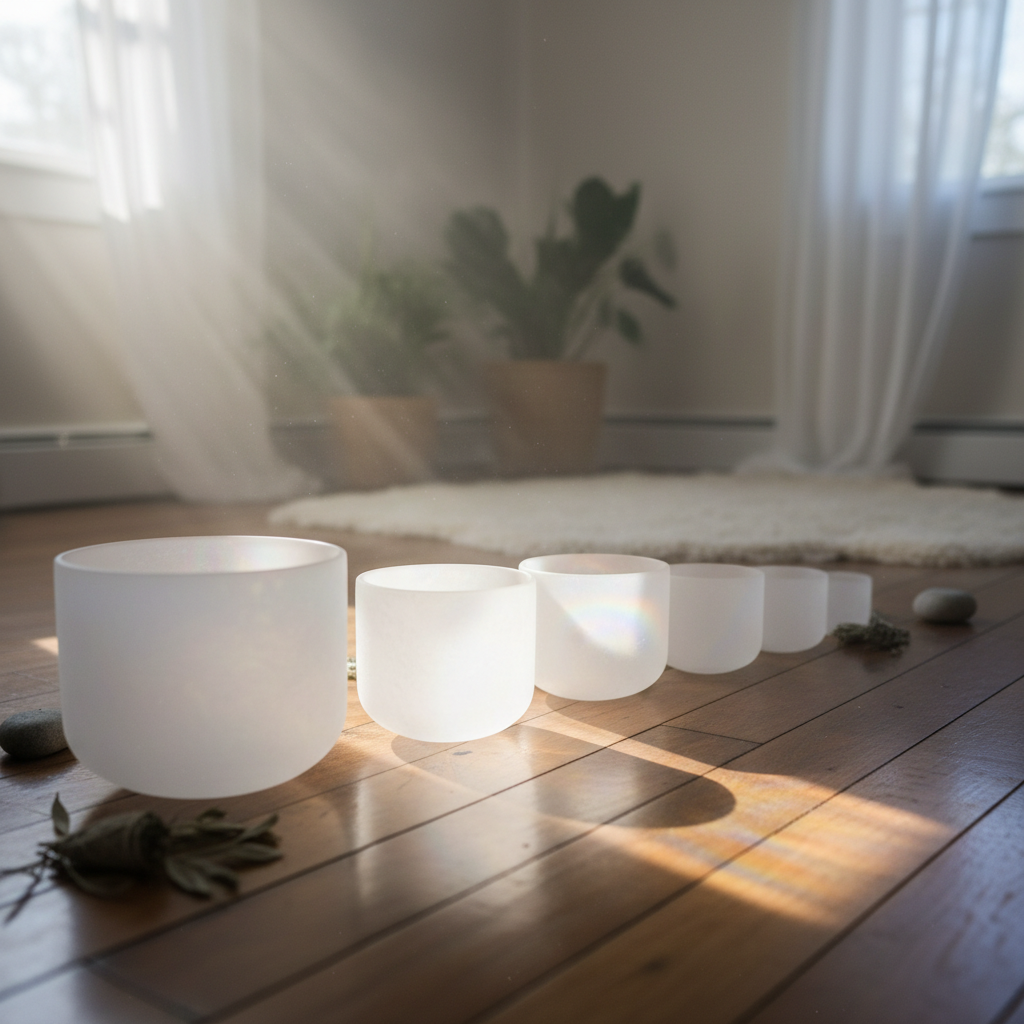
A blank page can feel unexpectedly exposed. You may arrive with a busy mind, a tender feeling you cannot name, or a quiet sense that something within you is asking to be heard. Spiritual journalling for beginners offers a private, unhurried place to meet that inner movement. It is not about producing beautiful pages or finding immediate answers. It is a practice of listening.
Unlike a diary that simply records events, spiritual journalling invites you to notice the meaning beneath your experience. It can bring together emotional honesty, bodily awareness, intuition and the values you want to live by. For some, it becomes a companion to meditation, a cacao ritual or a sound bath. For others, it is the first gentle step towards feeling more present in their own life.
What spiritual journalling is, and what it is not
Spiritual journalling is a reflective practice that helps you create a relationship with your inner world. The spiritual element does not require a particular belief system, religion or certainty about energy. It may mean paying attention to your sense of connection: to yourself, nature, your creativity, a higher power, ancestors, or the simple mystery of being alive.
It is also a grounded practice. A journal cannot replace therapy, medical care or support through acute distress. Yet it can help you notice patterns, make space for emotion and carry insights from therapeutic or ceremonial experiences into ordinary days. Think of it less as a route to constant serenity and more as a place where your full humanity is allowed.
You do not need to write every morning, use perfect language or interpret every symbol that appears. The most useful practice is one that feels safe enough to return to.
Create a small ritual before you write
The nervous system responds to repetition and cues of safety. Before opening your journal, make the transition from doing to noticing. This need not be elaborate. A few minutes of quiet, a warm drink, a candle, gentle music or both feet placed on the floor can be enough.
Choose a notebook that feels inviting, but do not wait for the perfect one. A plain notebook, a favourite pen and a consistent corner of your home will serve you well. If privacy is a concern, keep it somewhere secure or use a password-protected digital journal. Honest reflection needs a sense of permission.
Begin with a simple arrival. Take three slower breaths and notice what is present physically: tightness in the chest, warmth in the hands, a low hum of fatigue, a settled feeling after rest. This is not a test of mindfulness. It is a way of letting the body join the conversation before the mind takes over.
Spiritual journalling for beginners: start with what is true
Many people stop before they start because they believe they need a profound prompt. In reality, the most meaningful entries often begin with one direct question: What feels true for me right now?
Write without editing for five to ten minutes. Let the page hold the practical as well as the sacred. You might write about a difficult meeting, an unexpected moment of beauty on your walk, a recurring thought, or the relief of saying no. Spiritual insight is not always dramatic. It often appears in the clearer recognition of a need, a boundary or a longing.
If you feel stuck, complete a few sentences: “Today, I am carrying...”, “My body is asking for...”, “I feel most connected when...”, or “What I need to offer myself is...”. Read them as invitations, not demands. You are not trying to make yourself feel a certain way. You are practising truthful attention.
Let the body have a voice
Thoughts can be articulate while the body tells a different story. After writing a few lines, pause and ask where the experience lives physically. Perhaps anxiety sits in your throat, grief feels heavy behind the ribs, or hope arrives as a spaciousness in your belly.
Write what you notice without diagnosing it. This small act can support emotional regulation because it gives feeling a shape and location. If the sensation becomes overwhelming, orient yourself to the room. Name a few things you can see, press your feet into the floor, drink some water and step away from the page. Slowness is a valid form of care.
Make room for intuition without forcing certainty
Intuition is often quieter than urgency. It may arrive as a repeated image, a phrase that stays with you, or a calm sense of what needs attention. You can invite it onto the page with questions such as, “What am I not admitting to myself?” or “What would a kinder next step be?”
Treat whatever emerges with curiosity. Not every thought is guidance, and not every dream or coincidence needs a fixed interpretation. A grounded spiritual practice holds both openness and discernment. Let insight unfold over time, especially when it concerns a major decision.
Prompts for reflection after a ritual or sound bath
Journalling can be especially supportive after an experience that softens the usual mental noise. A cacao ceremony, breathwork practice, meditation or sound bath may bring up memories, emotions and images that deserve gentle integration rather than immediate explanation.
After you have rested and had some water, try writing about the atmosphere of the experience. What changed in your breathing, mood or sense of time? What feeling wanted more space? Was there a word, colour, memory or physical sensation that stayed with you?
Then bring the reflection back to daily life. Ask yourself: “What is one compassionate action that honours what I noticed?” It might be an earlier night, a candid conversation, a walk without your phone or choosing not to overcommit this week. Integration is often ordinary. That is what makes it sustainable.
Build consistency without turning it into another task
A daily practice can be nourishing, but it is not the only meaningful rhythm. If your weeks are full with work, caring responsibilities or fluctuating energy, two reflective sessions a week may be more realistic. The intention is to build trust with yourself, not another standard to fall short of.
Try attaching journalling to a moment that already exists: after making tea, before switching on your laptop, or following an evening shower. Keep the commitment modest. Three honest lines count. Over time, you may notice recurring themes: where you abandon your own needs, what restores you, which relationships leave you expanded or depleted.
It can help to revisit older entries once a month rather than constantly rereading them. Use a compassionate eye. Notice growth, but also notice what remains tender. Repetition does not mean failure. Sometimes a pattern returns because it is asking for a deeper level of support.
When the page feels too intense
Journalling is not always soothing. Writing can bring you closer to grief, anger, trauma or uncertainty that you have been managing by staying busy. If you begin to feel flooded, dissociated or unsafe, stop. Choose grounding over completion.
You might close the notebook, look around the room, contact someone you trust or do something sensory and simple, such as washing your hands in warm water. If difficult feelings are persistent or connected to past trauma, working with a qualified mental health professional can offer the containment a journal alone cannot provide. There is strength in recognising the support you need.
Your journal is not a witness that asks you to perform healing. It is a quiet space to return to, with honesty and care. On some days, the most spiritual sentence you can write may be: “I do not know yet, but I am willing to stay with myself.”