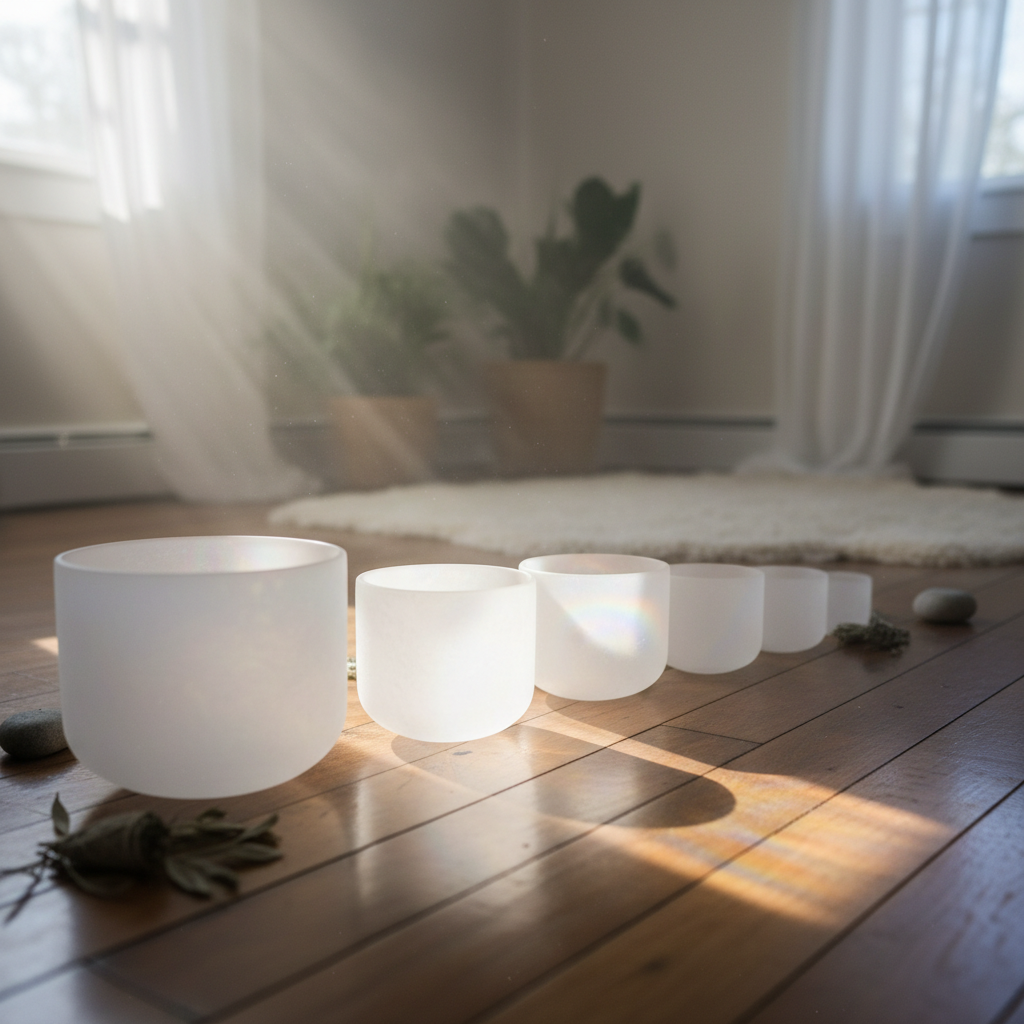
A therapeutic sound bath guide should begin somewhere quieter than the promise of instant calm. Most of us arrive carrying the residue of the day: an unanswered message, a tight jaw, a mind still rehearsing tomorrow. A sound bath offers a held interval in which you do not need to solve any of it. You are simply invited to listen, feel and soften into the present moment.
At Luminous Resonance, we hold sound as both a ritual practice and a form of psychological grounding. The experience can feel spacious, moving or unexpectedly still. Yet it is not a performance of healing, nor a test of whether you can relax correctly. It is a gentle meeting place between attention, vibration, breath and the inner world.
What is a therapeutic sound bath?
A therapeutic sound bath is a guided period of rest in which sustained tones and layered sounds create an immersive listening environment. Crystal or Himalayan bowls, gongs, chimes, drums, voice and other instruments may be used, often alongside breath awareness, meditation or an intentional opening and closing.
The word “bath” describes the feeling of being surrounded by sound rather than merely hearing it. There is nothing to achieve. You may lie down with your eyes closed, sit supported by cushions, or adjust your position whenever your body asks for comfort.
The therapeutic element is best understood with care. Sound baths can support relaxation, emotional reflection and a sense of connection to the body, particularly when they are facilitated with clear boundaries and an unhurried pace. They are not a substitute for medical care, psychotherapy or crisis support. For some people, especially during periods of grief, trauma or heightened anxiety, spaciousness may bring emotions closer to the surface. This is not wrong, but it does mean gentleness and choice matter.
Why sound can feel so settling
Much of daily life asks the nervous system to stay alert. Screens, deadlines, caregiving, travel and constant decision-making can leave little room to notice what has been held beneath the surface. Repetitive, resonant sound gives the mind a different object of attention. Rather than following every thought, you may begin to follow the fading ring of a bowl, the low pulse of a drum or the silence that follows a chime.
This shift does not happen in the same way for everyone. Some people feel deeply rested. Others notice imagery, memories or emotion. Some remain aware of thoughts throughout and still leave feeling more settled. A meaningful session is not measured by whether you fall asleep, see colours or experience a dramatic release. Often, the quieter changes are the most supportive: a fuller breath, looser shoulders, a little more room around a difficult feeling.
Sound can also give ritual a shape. When a session begins with a clear invitation and ends with time to return, it becomes more than background relaxation. It can be a practice of remembering that rest is not something to earn.
Preparing for a therapeutic sound bath
The quality of your preparation can shape the experience as much as the instruments themselves. Create a small, protected pocket of time around your session, particularly if you are joining online. If possible, avoid moving straight from a demanding call or household task into stillness. Even five minutes of transition can help your body register that it is safe to slow down.
Choose a place where you can be warm and undisturbed. A yoga mat, blanket, duvet or sofa can all work well. Support beneath the knees may ease the lower back, while a folded blanket behind the head can prevent strain. If lying down makes you feel too sleepy or exposed, sit upright with your back supported. Your comfort is not a minor detail. It is part of the practice.
Headphones can create a more enveloping experience for an online sound bath, though a speaker is often preferable if headphones feel intense or restrictive. Keep the volume at a comfortable level. Sound does not need to be loud to be affecting, and louder is not deeper. Begin lower than you think you need, especially with gongs or low-frequency tones, then adjust if necessary.
Before the first sound, set a simple intention. Avoid placing pressure on yourself to transform a particular emotion. Try something quieter: “I am willing to be with myself,” “I give myself permission to rest,” or “I will listen with kindness.” An intention is a direction for your attention, not a demand for an outcome.
During the session: let listening be enough
As the sound begins, notice the points where your body meets the floor, chair or cushions. Feel the weight of your heels, the back of your ribs, the palms of your hands. This offers an anchor if your attention drifts or if the experience becomes more emotionally charged than expected.
You may notice that the mind tries to assess the sound bath: Is this working? Am I relaxed yet? These thoughts are natural. Rather than pushing them away, acknowledge them and return to one audible detail. Listen for the beginning of a tone, its shimmer, its fading edge. Let the sound arrive without needing to interpret it.
Breathing can remain completely natural. If it feels supportive, lengthen the exhale slightly, but do not force a rhythm. The body often knows how to settle when it is not being instructed too tightly. A hand placed over the heart or lower abdomen can offer an additional sense of contact and reassurance.
If you feel restless, numb or overwhelmed, change your position, open your eyes or step away for a moment. You can lower the volume, place both feet on the floor, have a drink of water or simply listen from another room. A well-held practice includes the freedom to pause. Spiritual expansion without emotional safety is not depth; it is pressure.
When sound baths may need extra care
A therapeutic sound bath is generally approached as a gentle wellbeing practice, but it is not identical to clinical treatment. Speak with an appropriate healthcare professional before attending if you have a medical condition affected by sound or vibration, such as certain hearing conditions, severe tinnitus or sound sensitivity. If you live with epilepsy, particularly sound-triggered epilepsy, seek individual medical advice first.
It is also wise to choose a facilitator who makes space for personal agency if you are navigating trauma, panic, dissociation or acute mental health distress. You do not need to disclose your whole story to participate, but you deserve a setting that does not glorify emotional intensity or treat discomfort as proof of progress.
Pregnancy, fatigue and hormonal changes can alter how rest feels in the body too. There is no universal rule beyond listening carefully and choosing what feels supportive. If you are unsure, attend from a seated position, keep your volume low and allow yourself an easy exit from the practice.
Integration is where the practice continues
The final moments of a sound bath deserve as much care as the opening. Resist the urge to immediately check your phone, rush into conversation or make sense of every sensation. Let the quiet after the last tone be part of the experience.
Sit up gradually. Notice the temperature of the room and the quality of your breath. A glass of water, a warm shower or a few minutes outdoors can help you return to ordinary time. If you have attended in the evening, keep the rest of the night simple where possible.
Journalling can offer a gentle bridge between inner experience and daily life. You might write about what felt present before the session, what changed during it and what you need now. There is no need to produce a revelation. A single honest sentence can be enough: “I did not realise how tired I was.”
In the days that follow, notice whether the session has changed your relationship with pace, rest or attention. Perhaps you respond to a difficult moment with one slower breath. Perhaps you recognise that you need more quiet than you have been allowing yourself. Integration is often less about holding on to a special state and more about carrying one small act of tenderness into the life waiting beyond the mat.
Return to sound when it feels like a supportive ritual, not another obligation. Let each session be an opportunity to come home to your own listening.