Your body may notice anxiety before your thoughts can name it: a tight chest during a busy train journey, a rushing mind before a meeting, or a sudden sense that the room is too much. The top grounding exercises for anxiety do not ask you to solve everything at once. They offer a gentle way to return to the present, one sensation, breath or small movement at a time.
Grounding is not about forcing yourself to feel calm or dismissing what is difficult. It is a practice of reminding the nervous system that, in this moment, there is something steady to meet. For many people, that steadiness begins with the body rather than the mind.
What grounding can offer in an anxious moment
Anxiety often pulls attention into the future: what might happen, what could go wrong, what you should have done differently. Grounding brings attention back to what is actually here. The texture beneath your hands. The temperature of the air. The reliable weight of your feet against the floor.
This shift can create a little more space around intense thoughts and sensations. It may not make anxiety disappear, and it is not a replacement for professional mental health support when that is needed. But it can help you move from overwhelm towards enough steadiness to choose your next kind, practical step.
There is no single exercise that works for every nervous system. Some people find counting soothing; others experience it as another demand. Some feel supported by breathwork, while a focus on breathing can feel uncomfortable during panic. Treat these practices as invitations rather than rules. Keep what feels settling, and leave what does not.
Top grounding exercises for anxiety to try gently
Feel the support beneath you
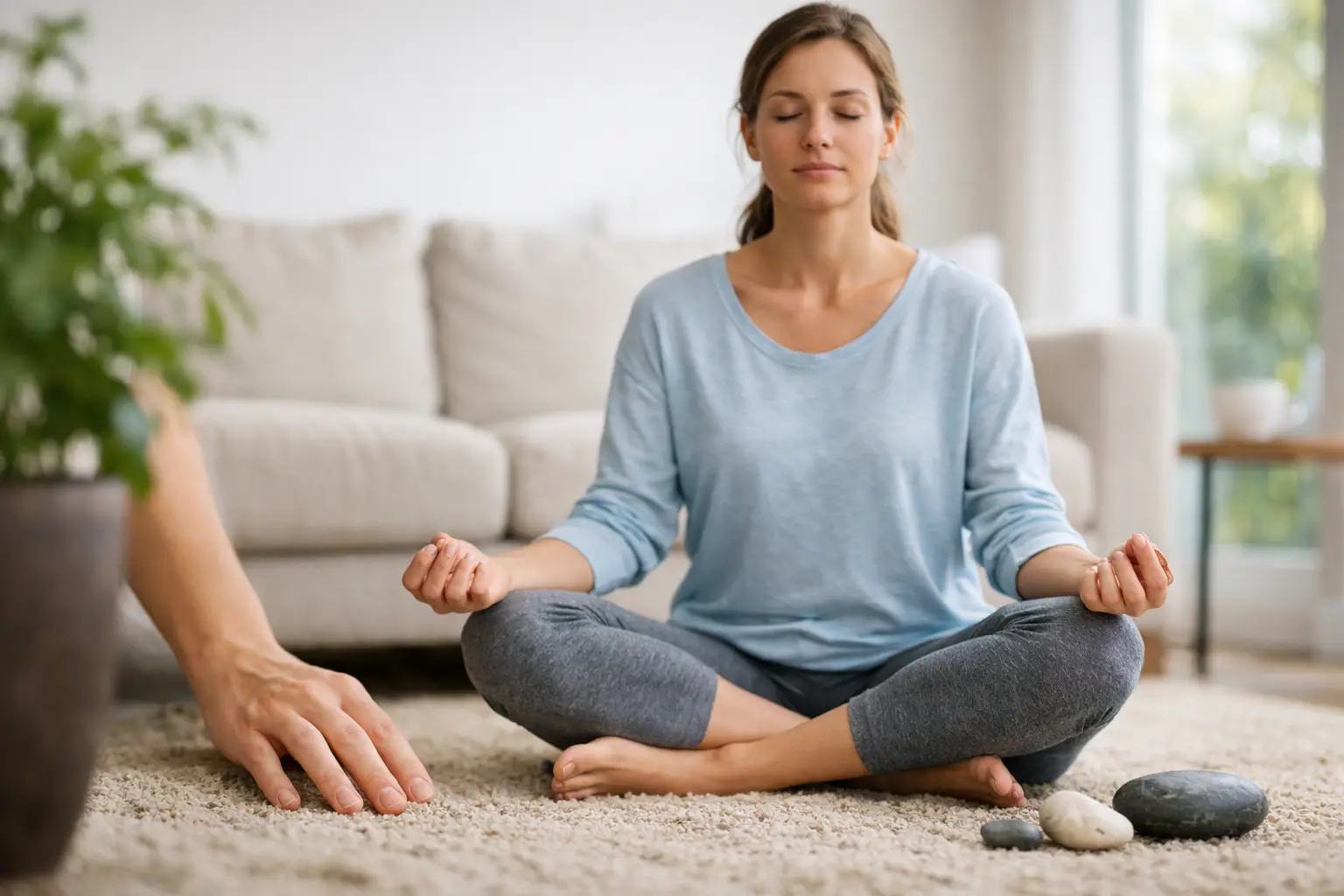
Sit or stand in a way that feels stable. If you are seated, let both feet meet the floor and notice the contact points: heels, soles, toes. If you are standing, soften your knees and sense the surface holding your weight.
You do not need to imagine roots or create a particular feeling. Simply place a little attention on the fact that you are supported. You might quietly say: “The floor is here. I am here.” Stay for three natural breaths, or longer if it feels useful.
This is especially helpful when you are in a public place or need something subtle before a call, appointment or difficult conversation.
Use the 5-4-3-2-1 sensory practice
When thoughts are looping, orienting to your surroundings can bring you back into the room. Slowly name five things you can see, four things you can feel, three things you can hear, two things you can smell and one thing you can taste.
There is no need to race through it. Notice small, ordinary details: the seam of a cushion, the sound of rain at the window, the clean scent on your sleeve. If all five senses are not available or feel overwhelming, adapt the practice. You might only name three colours in the room and two sounds in the distance.
The point is not completing a checklist perfectly. It is giving your attention somewhere concrete and immediate to rest.
Hold something cool or textured
A cool glass of water, a smooth stone, a mug of warm tea or a folded blanket can become a simple anchor. Hold the object and observe its temperature, weight, edges and texture. Let your curiosity be more important than finding the right words.
Temperature can be particularly clarifying when anxiety feels fizzy or unreal. Sip cool water slowly, press a cool cloth to your cheeks, or run your wrists under a gentle stream. Choose a sensation that is noticeable but not harsh. The aim is comfort and orientation, not shock.
Lengthen the exhale, without forcing it
Rather than taking an exaggerated deep breath, begin by noticing your natural breathing. Then allow the out-breath to be a little longer than the in-breath. You might breathe in softly for a count of three and out for a count of four or five.
Keep your jaw and shoulders as easy as possible. If counting makes you tense, try a quiet sigh on the exhale or imagine releasing steam from a kettle. After a few rounds, return to normal breathing.
If breath focus increases dizziness, panic or discomfort, stop and choose an external practice such as looking around the room. Grounding should feel like support, not a test of endurance.
Name what is true right now
An anxious mind can speak in sweeping predictions. A grounding statement returns you to the smaller truth of the present. Try: “I am having an anxious moment, and I am safe enough to take one breath.” Or: “This feeling is intense, but it will change.”
Use words that feel believable. Telling yourself that everything is fine when it plainly does not feel fine can create resistance. More useful phrases are compassionate and specific: “I do not need to decide everything tonight.” “I can drink some water and sit down.” “I can ask for support.”
Walk with deliberate attention
A brief walk can help anxiety move through the body, particularly after hours at a desk or an emotionally demanding day. There is no need to turn it into a power walk. Let your pace be unhurried and bring attention to the rhythm of stepping, lifting, placing and shifting weight.
If you are outside, notice the sky, the shapes of nearby buildings or the movement of leaves. If you are indoors, walk slowly from one room to another and feel the transition. This is not about escaping your experience. It is about giving the body a clear, manageable rhythm.
Add gentle pressure and self-contact
Place one hand over your heart and another on your abdomen, or wrap your arms around your upper body in a loose self-hug. Notice the warmth and pressure of your own hands. You can also press your palms together for a few seconds, then release.
For some, this kind of contact creates a sense of containment. For others, it may feel too intimate or activating. If that is true for you, place your hands on a table, hold a cushion, or lean your back against a wall instead. Your boundaries matter within the practice.
Hum, tone or listen for one sound
A low hum can create a soft vibration through the chest and throat, offering the nervous system something physical to follow. Try humming one comfortable note on a long exhale, then pause and notice the quiet afterwards. There is no need for a beautiful sound.
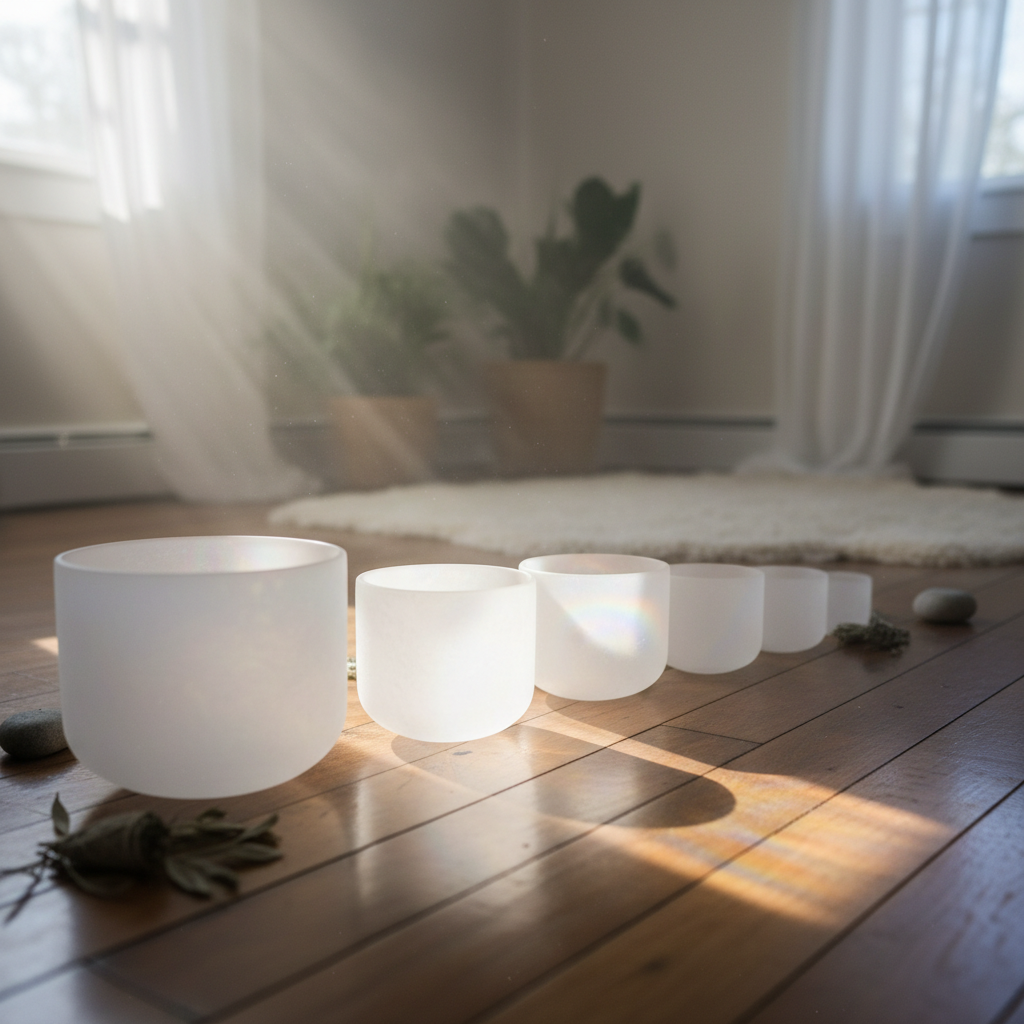
You might also listen closely for one sound already present: a kettle, birdsong, traffic beyond the window, or the gentle resonance of a singing bowl. Sound can be a particularly supportive companion when verbal reassurance feels out of reach.
Building a grounding ritual that you will actually use
The most effective practice is often the one you can remember when life feels full. Choose two exercises that suit your daily rhythm: perhaps feet on the floor before opening your laptop, and a sensory reset after work. Repeating them in calmer moments helps them become familiar before anxiety rises.
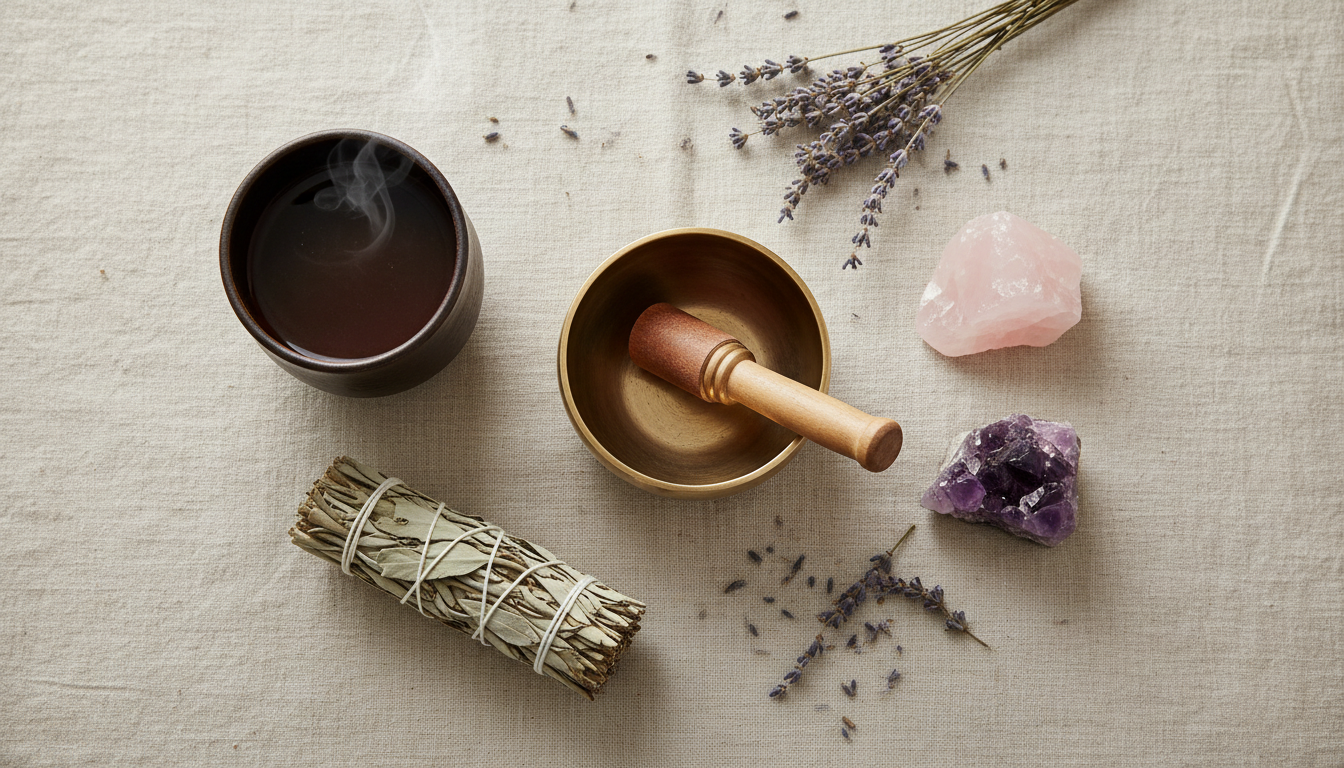
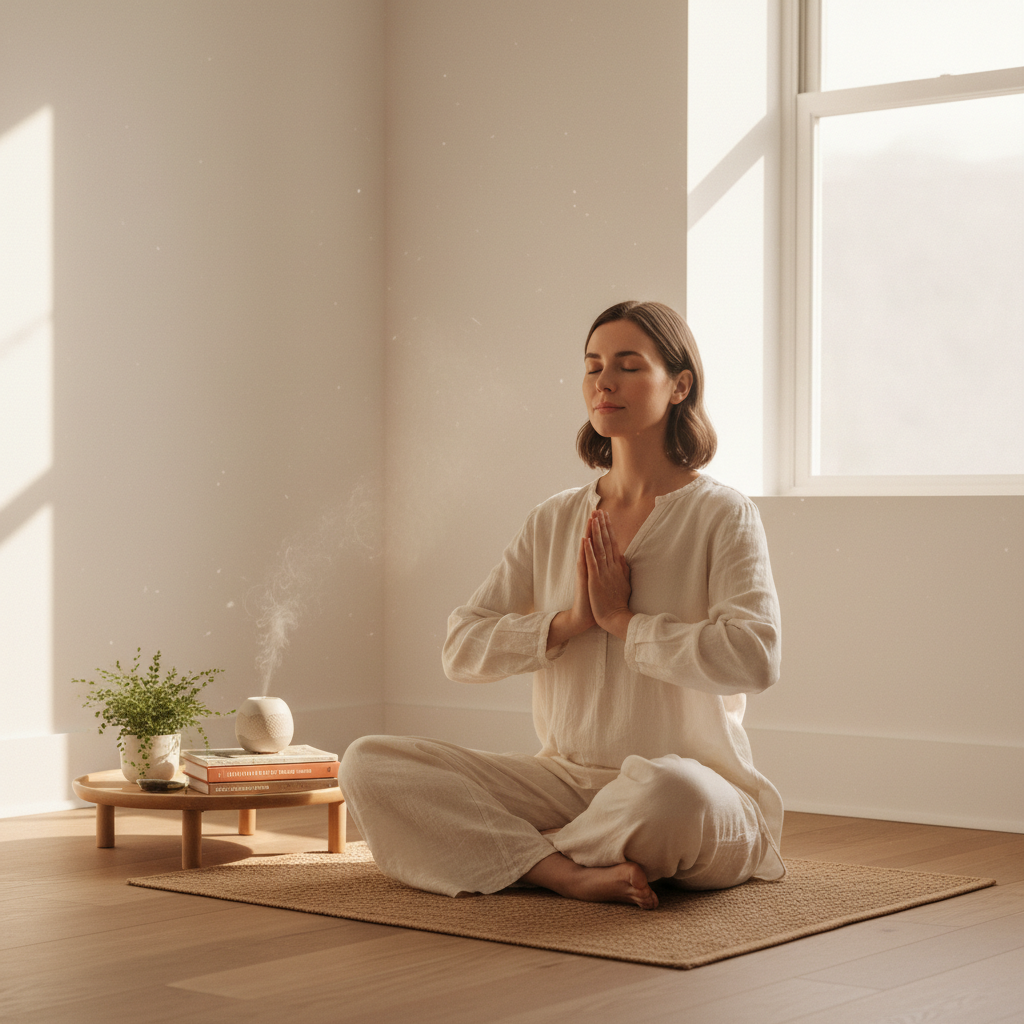
You may also create a small grounding space at home. Keep it simple: a blanket, a favourite cup, a journal, a scent that feels comforting, or a playlist of spacious, gentle sound. The objects themselves are not magic. Their value lies in the repeated message they offer: this is a place where I pause and return to myself.
At Luminous Resonance, ritual is held as a bridge between psychological grounding and spiritual expansion. A cacao ceremony or therapeutic sound bath can be a meaningful container for reflection, but it is the ordinary, compassionate moments between ceremonies that often deepen the practice. The hand on the heart. The feet on the floor. The choice to meet yourself without judgement.
When anxiety needs more support
Grounding can be helpful for everyday stress, emotional overload and moments of disconnection. Yet persistent anxiety, panic attacks, trauma responses or thoughts of harming yourself deserve care beyond self-guided practices. Speaking with a GP, therapist or qualified mental health professional can provide appropriate support. If you are in immediate danger or feel unable to keep yourself safe, contact emergency services or a crisis service straight away.
Let grounding be modest and faithful. You do not need a perfectly quiet mind to begin. You only need one small point of contact with the present, and the willingness to return to it again.