You arrive carrying more than your diary can hold. A tight chest after a long week, a mind that will not soften, a quiet sense that something inside you needs tending. When people ask what is sound bath healing, they are often asking something deeper: how can I come back to myself without forcing it?
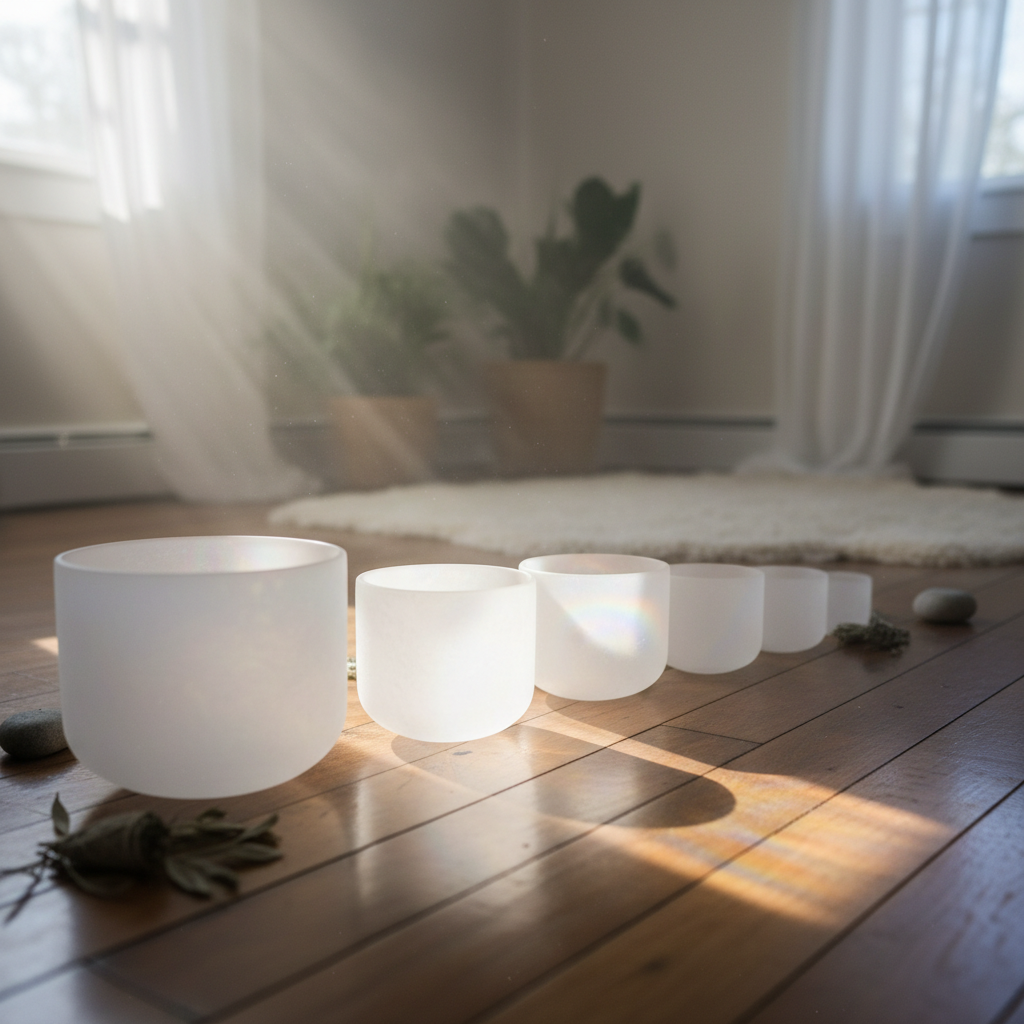
Sound bath healing is a restorative practice in which you are immersed in carefully held sound frequencies, tones, and vibrations created by instruments such as crystal singing bowls, gongs, chimes, drums, or the voice. Despite the name, there is no water involved. The “bath” describes the feeling of being surrounded by sound, allowing the body and mind to settle into a different rhythm. For many people, it feels less like listening to music and more like being met by an atmosphere.
At its heart, this practice sits at the meeting point of nervous system support and spiritual reflection. It can be deeply calming, sometimes emotional, and occasionally surprising. A sound bath does not ask you to perform, achieve, or explain. It invites you to receive.
What is sound bath healing doing in the body?
The most grounded answer is this: sound bath healing can help shift your state.
Many of us move through the day in a low hum of activation. Even when life appears manageable on the surface, the body may still be carrying stress signals - shallow breathing, muscular tension, mental looping, emotional fatigue. In a well-held sound bath, the layered tones create a sensory environment that may encourage the body to soften out of that heightened state.
This is part of why people often speak about nervous system regulation after a session. The sounds themselves are not a magic cure, and they do not replace clinical care. But they can create conditions in which rest feels more accessible. Breathing may deepen. Thoughts may loosen. The body may begin to feel safe enough to release what it has been holding.
There is also a vibrational element that many people notice physically. Depending on the instrument and the setting, sound can be felt as much as heard. Some tones seem to move through the chest or belly, while others create a sense of spaciousness around the head and heart. The experience is subtle for some and powerful for others. It depends on your sensitivity, your current state, and the way the session is guided.
Why sound can feel emotionally significant
A sound bath is not only about relaxation. At times, it can open an inner space that ordinary thinking keeps tightly managed.
Because the mind is given less to grasp onto, feelings that have been sitting beneath the surface may gently rise. That can look like tears, relief, warmth, memories, stillness, or simply a feeling of finally exhaling. None of this is unusual. When the body is no longer bracing in the same way, emotion often has more room to move.
This is where sound bath healing becomes meaningful for people who want more than a wellness trend. The practice can support emotional processing, not by asking you to analyse yourself in the moment, but by giving your inner world a safer space to be witnessed. In therapeutic language, we might say it helps reduce overstimulation and supports regulation. In spiritual language, we might say it brings you back into alignment. For many, both are true.
What happens in a typical session?
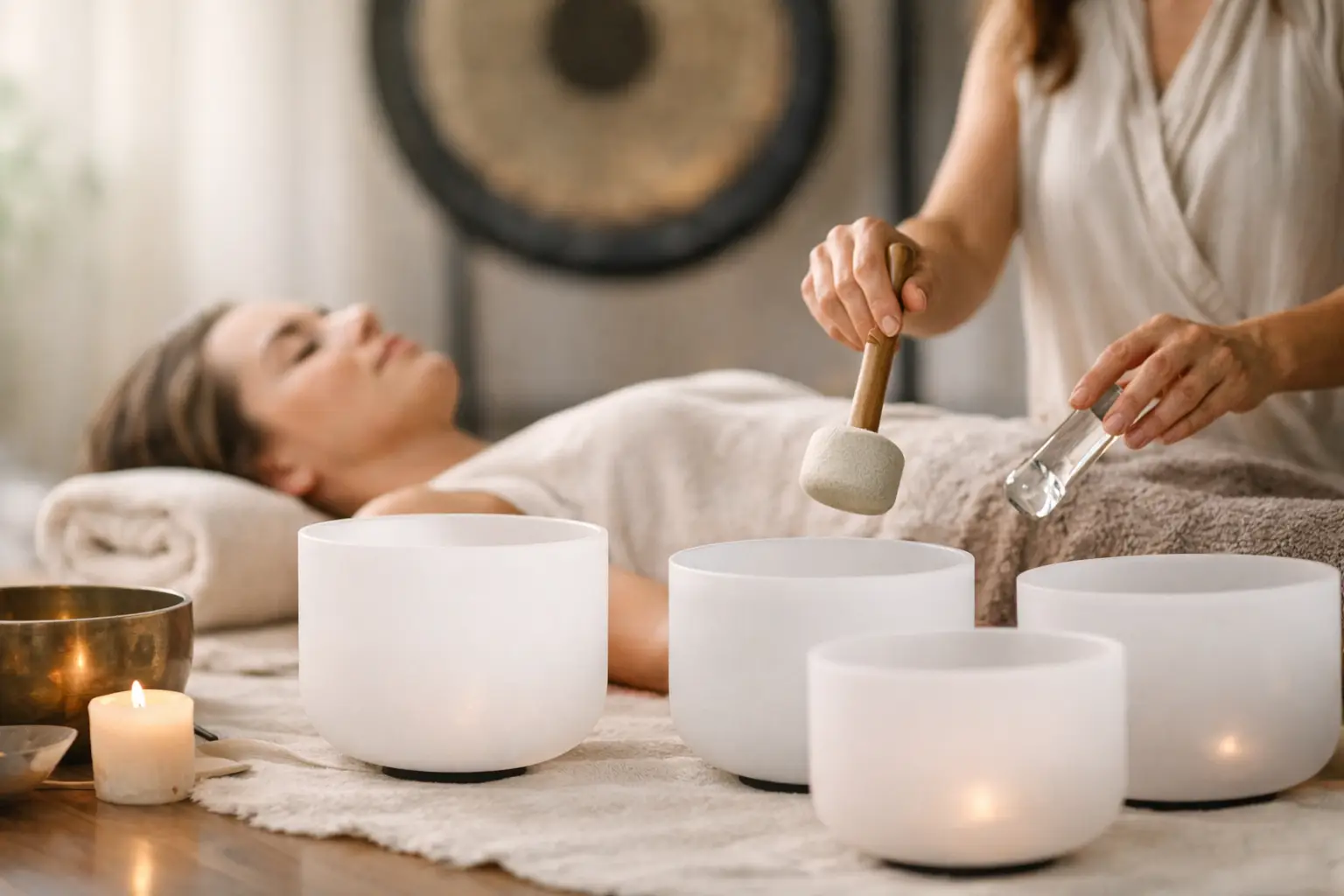
Most sound baths begin in stillness. You are usually invited to lie down or sit comfortably, often with blankets, cushions, or an eye mask if you wish. The facilitator may begin with a short meditation, breath awareness, or an intention-setting practice to help you arrive.
From there, the instruments are played in a slow, spacious sequence. Some sounds are bright and clear. Others are deep, resonant, and almost tidal. There may be moments of intensity, followed by long periods of softness. A well-guided session is not about performance. It is about pacing, attunement, and creating emotional safety through sound.
In online spaces, this can still be surprisingly effective. While in-person vibration has a distinct physical quality, digital sessions offer a different kind of accessibility and intimacy. You can receive the practice from your own home, wrapped in familiar comfort, without needing to travel while already depleted. For many people, that makes regular practice more realistic and more sustainable.
What is sound bath healing from a spiritual perspective?
For those drawn to ritual and inner work, sound bath healing can feel like a threshold practice. The sounds help quiet the habitual mind and create a gentler route into meditation, prayer, contemplation, or energetic awareness.
Some people experience this as expanded consciousness. Others describe it more simply as feeling connected again - to the body, to intuition, to grief, to gratitude, or to something larger than the immediate demands of daily life. The language matters less than the felt sense. What changes is often your relationship to yourself.
This spiritual dimension does not have to be dramatic to be real. Sometimes it arrives as a small but unmistakable shift: more compassion towards yourself, more honesty about what hurts, more clarity about what needs to change. Sacred experiences are not always loud. Often, they are quiet enough to be trusted.
Who is sound bath healing for?
This practice tends to resonate with people who are tired of pushing through. Professionals carrying chronic stress, creatives moving through blocks, caregivers with little space to decompress, and spiritually curious people seeking a more embodied form of reflection often find sound baths supportive.
It can be especially nourishing if you already know that stillness helps you, but traditional meditation feels difficult. For some, silence can feel confronting. Sound offers a bridge. It gives the mind something soft to rest against.
That said, it is not one-size-fits-all. If you are highly sound-sensitive, certain instruments may feel too intense. If you are in acute distress or working with trauma, the quality of facilitation matters greatly. A trauma-aware, grounded guide will make room for choice, pacing, and your own agency within the experience. Healing practices should feel invitational, not overwhelming.
What sound bath healing is not
It helps to clear away a few misconceptions.
A sound bath is not simply background music for relaxation, though relaxation may happen. It is not about being passive in a disconnected way, nor is it a replacement for therapy, medical treatment, or practical support. It is also not guaranteed to feel blissful every time.
Some sessions feel peaceful. Some feel emotionally active. Some feel almost neutral in the moment, with the shift arriving later in sleep, mood, or reflection. A subtle session is not a failed one. Often, the body is doing exactly what it needs to do.
This is one reason ritual context matters. When sound is offered with intention, care, and integration, it becomes more than a soothing hour. It becomes a space where rest, feeling, and meaning can coexist.
How to approach your first session
If you are curious, begin gently. Wear comfortable clothing, give yourself enough time before and after, and let go of the idea that you need to have a certain kind of experience. You do not need to meditate perfectly. You do not need to understand every sensation. Simply arrive as you are.
It can help to think of your first session as a conversation with your nervous system rather than a performance of spirituality. Notice what feels supportive. Notice which sounds you respond to. Notice whether you feel more grounded, more open, or simply more aware of what needs care.
If the practice speaks to you, consistency often reveals more than a single experience. Over time, sound baths can become part of a wider rhythm of self-support - alongside journalling, breathwork, rest, therapy, or ceremonial practices such as cacao. In spaces like Luminous Resonance, that wider rhythm is often the point: not escape, but a return to inner relationship.
What is sound bath healing, then? It is a practice of being gently met through sound until the body remembers how to soften, the heart has room to speak, and stillness no longer feels so far away.