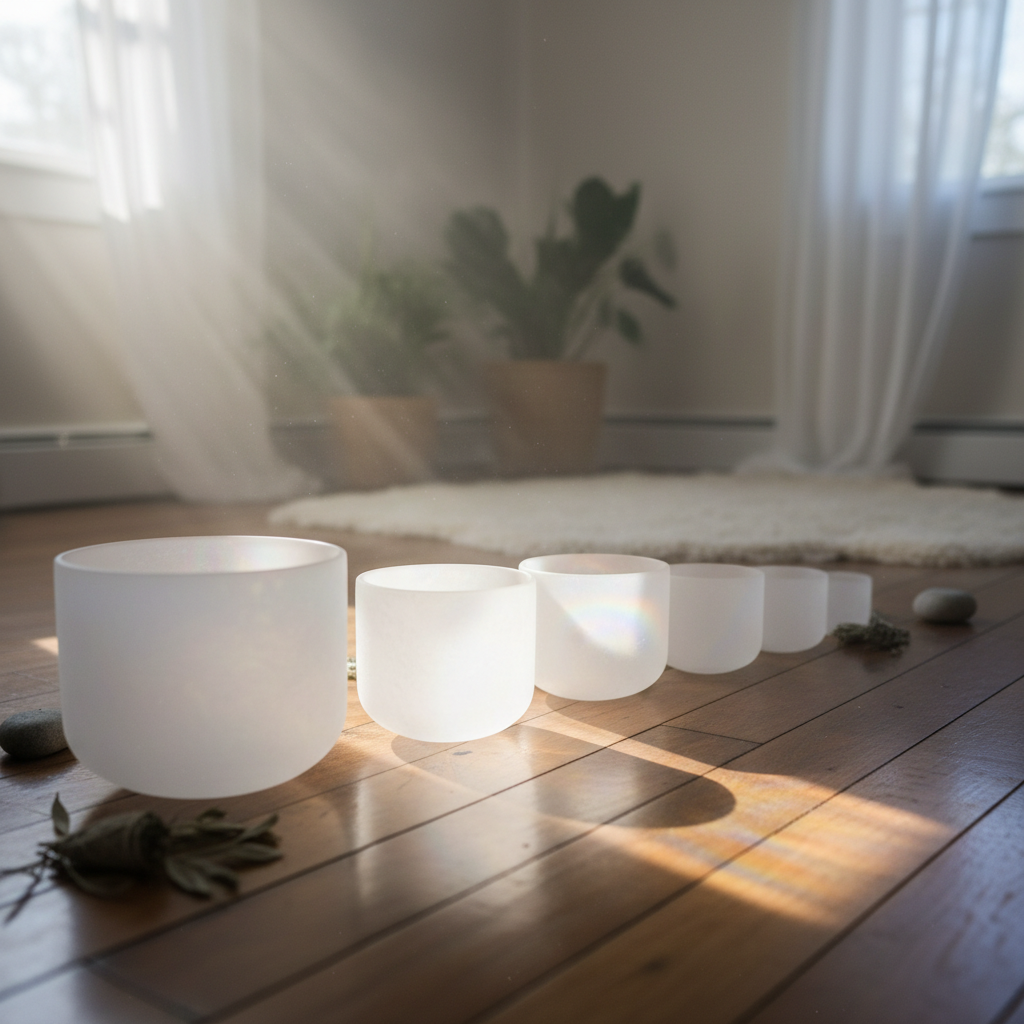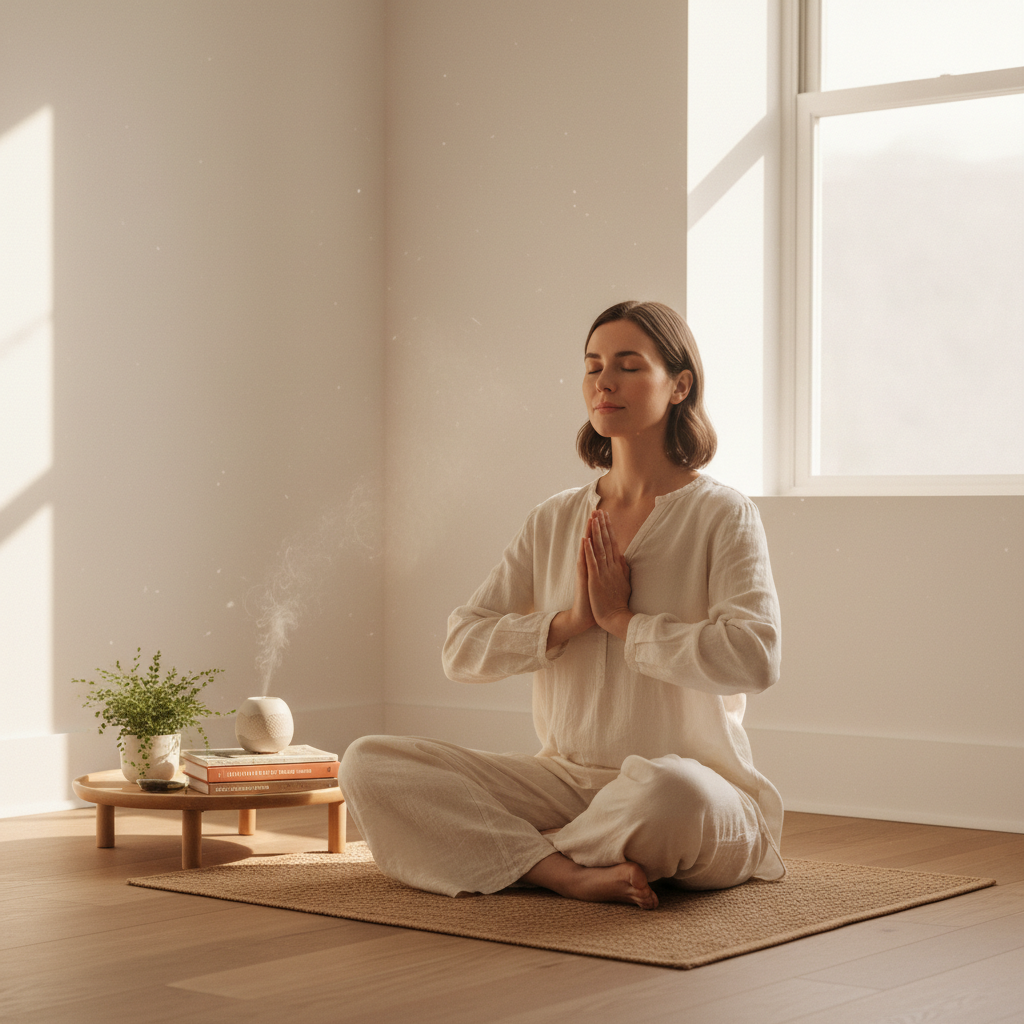
There is a distinct moment, often a few minutes into a session, when the mind stops trying to keep pace. The body softens first. The breath follows. In therapeutic sound baths, that shift can feel surprisingly immediate - not because anything is being forced, but because sound gives the nervous system something simple and steady to meet.
For many people, that is the real appeal. Not performance. Not perfection. Just a held space in which rest, feeling, and inner listening become possible again. A sound bath can be deeply calming, but its value often reaches further than relaxation alone. When guided with care, it can support emotional processing, psychological grounding, and a quieter form of spiritual expansion.
What therapeutic sound baths are
A therapeutic sound bath is an immersive listening practice in which resonant instruments such as crystal bowls, chimes, gongs, tuning forks, or gentle percussion are used to create a layered sound field. You are not asked to do very much. Most people lie down or sit comfortably, close their eyes, and receive the experience.
The word bath is helpful because it suggests total atmosphere rather than a single melody or performance. You are surrounded by tone, vibration, silence, and rhythm. The experience is less about analysing what you hear and more about noticing what changes within you as you listen.
The therapeutic aspect matters too. It points to intention. In a well-held session, sound is not used as background ambience alone. It is offered as part of a supportive process that may help settle overstimulation, bring awareness back into the body, and create space for reflection. This does not make a sound bath a replacement for clinical care. It means the practice can sit meaningfully alongside other forms of wellbeing support.
Why sound can feel so regulating
Modern life asks a great deal of the nervous system. Many people spend their days switching between screens, responsibilities, decisions, and emotional demands without much time to integrate any of it. By the evening, the body may be tired while the mind is still racing. That mismatch is common.
Therapeutic sound baths can help because they interrupt the usual pattern of effort. You do not need to produce insight on command or hold a meditation technique together. Instead, you are invited into receptive attention. Repeating tones and spacious intervals can encourage the body to shift out of constant alertness and into a state that feels safer, slower, and more coherent.
This is one reason people often describe a session as deeply restorative. It is not only that the sounds are beautiful. It is that the environment communicates steadiness. For someone who feels emotionally overloaded or mentally scattered, that steadiness can be profoundly relieving.
At the same time, responses vary. One person may drift into near-sleep. Another may feel emotion rising to the surface. Someone else may notice irritation before ease arrives. None of these experiences is necessarily wrong. Sound tends to reveal what is already present, and that means the session meets each person differently.
The inner experience of a sound bath
Some practices ask you to direct the mind. A sound bath often asks you to listen from beneath it. As the usual stream of thought softens, subtler material can become more noticeable. You may become aware of tension you had not realised you were carrying. You may remember something unresolved. You may simply feel relief.
This is where the practice becomes more than passive relaxation. In a grounded setting, sound can support emotional contact without demanding immediate explanation. It gives shape to stillness, which can make it easier to stay present with what arises. For people who find traditional meditation difficult because silence feels too exposing or unstructured, sound can offer a gentler entry point.
There is also a spiritual dimension for many participants. Resonant sound has long been used in ritual and contemplative traditions because it can alter the quality of attention. It may create a sense of spaciousness, connection, or reverence that is difficult to reach through busy mental effort alone. For some, this feels sacred. For others, it simply feels honest and deeply human.
Therapeutic sound baths and emotional safety
Not every calm-looking wellbeing practice is automatically therapeutic. Emotional safety depends on how the space is facilitated, not just on the instruments involved. A thoughtful practitioner understands pacing, grounding, and the importance of clear invitation rather than pressure.
This matters because rest can bring vulnerability with it. When the usual noise drops away, unmet feelings sometimes become more audible. A therapeutic approach does not pathologise that response, and it does not romanticise it either. It simply recognises that healing spaces need containment.
In online settings, this is especially important. A digital sanctuary can be remarkably effective when the guidance is clear and the structure is intentional. Simple prompts around preparing your space, choosing a comfortable posture, staying hydrated, and returning gently afterwards can make the experience feel much more supportive. Accessibility is one of the quiet strengths of digital practice. It allows people to receive sound work from home, in familiar surroundings, without the strain of travel or social overstimulation.
What therapeutic sound baths can support
The benefits are often subtle at first, then cumulative. Many people seek out sound baths when stress has become chronic and ordinary rest no longer feels sufficient. In that context, the practice may help soften mental overactivity and create a more spacious relationship with the body.
Some people notice improved sleep after evening sessions. Others feel more emotionally clear, less contracted, or better able to meet the week ahead without that constant sense of inner bracing. For creatives and caregivers, the practice can restore a quality of inwardness that daily output tends to erode.
It is worth being honest about the limits as well. A sound bath is not a cure-all, and the language around healing should stay grounded. If someone is moving through significant trauma, acute distress, or complex mental health challenges, the practice may be supportive but should not be treated as sufficient on its own. It works best as part of a broader ecology of care.
How to approach your first session
If you are new to therapeutic sound baths, simplicity is best. Wear comfortable clothing, reduce interruptions, and let the session be enough on its own rather than one more thing to achieve. You do not need a perfectly still mind. You do not need prior spiritual experience. You only need a willingness to listen.
It can help to set a gentle intention, though not a demanding one. Rather than asking for a breakthrough, you might arrive with a quieter question: what in me needs softening, witnessing, or rest today? That kind of intention leaves room for the experience to unfold naturally.
Afterwards, give yourself a little space before returning to messages or chores. Even ten minutes of quiet integration can make a difference. A few notes in a journal, a cup of tea, or simply sitting by a window can help the effects settle into something more lasting.
For those who are drawn to ritual, combining sound with reflective practices can deepen the experience. This is part of why platforms such as Luminous Resonance pair immersive sessions with continued journalling and guided inner work. The session itself opens the door, but reflection often helps you understand what you met there.
Why the practice continues to matter
There is a reason people return to sound work, not only in difficult seasons but also when life appears outwardly fine. Beneath competence and routine, many adults are carrying a quiet level of depletion. They are functioning, but not fully resourced. Therapeutic sound baths offer a different rhythm - one that honours restoration as essential rather than indulgent.
They also remind us that healing does not always begin with analysis. Sometimes it begins with resonance. With lying down. With letting the body register that, for a little while, nothing is being asked of it except presence.
That may sound simple. Often, it is. But simple does not mean slight. In a culture that rewards speed, a practice that helps you return to steadiness, feeling, and inner depth has real value. If you are seeking a form of support that is both soothing and quietly transformative, sound may meet you more deeply than words can.
A helpful place to begin is to listen without expectation and let the experience reveal its own pace.