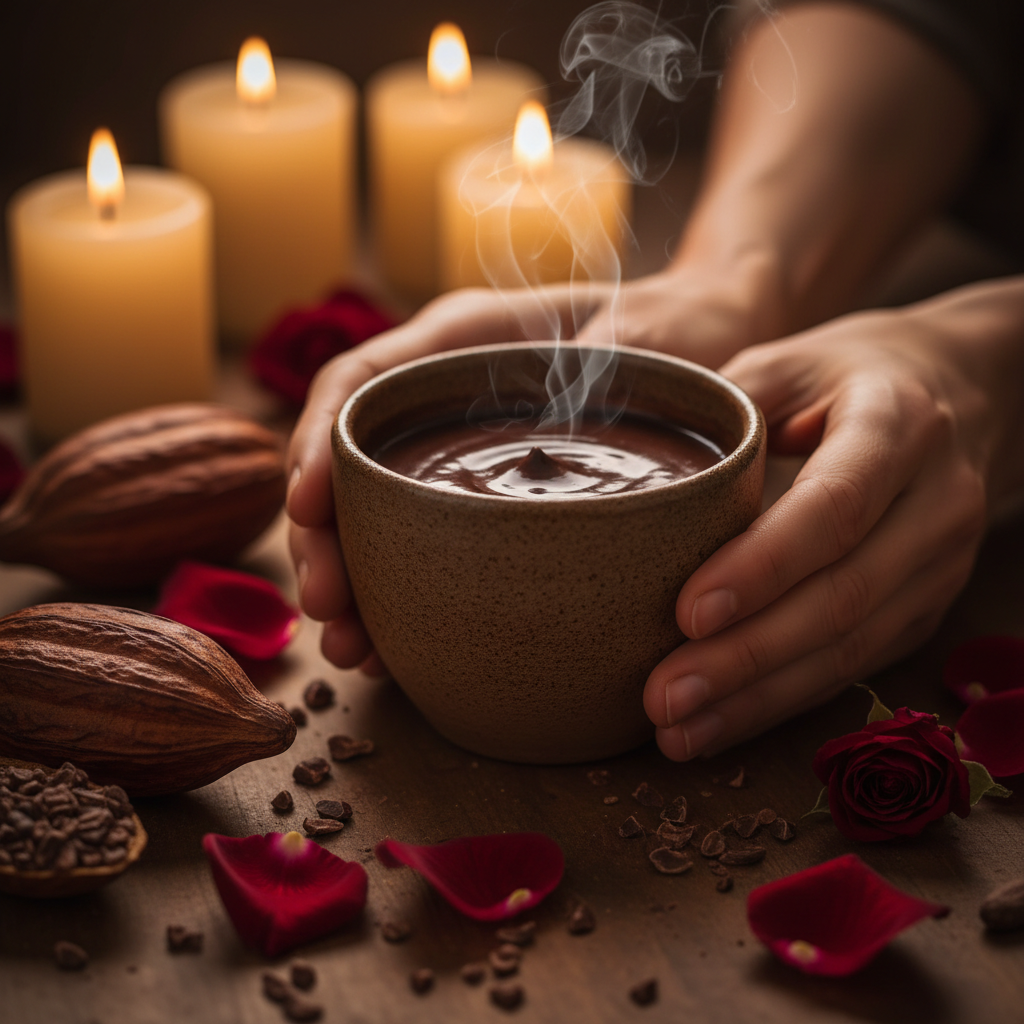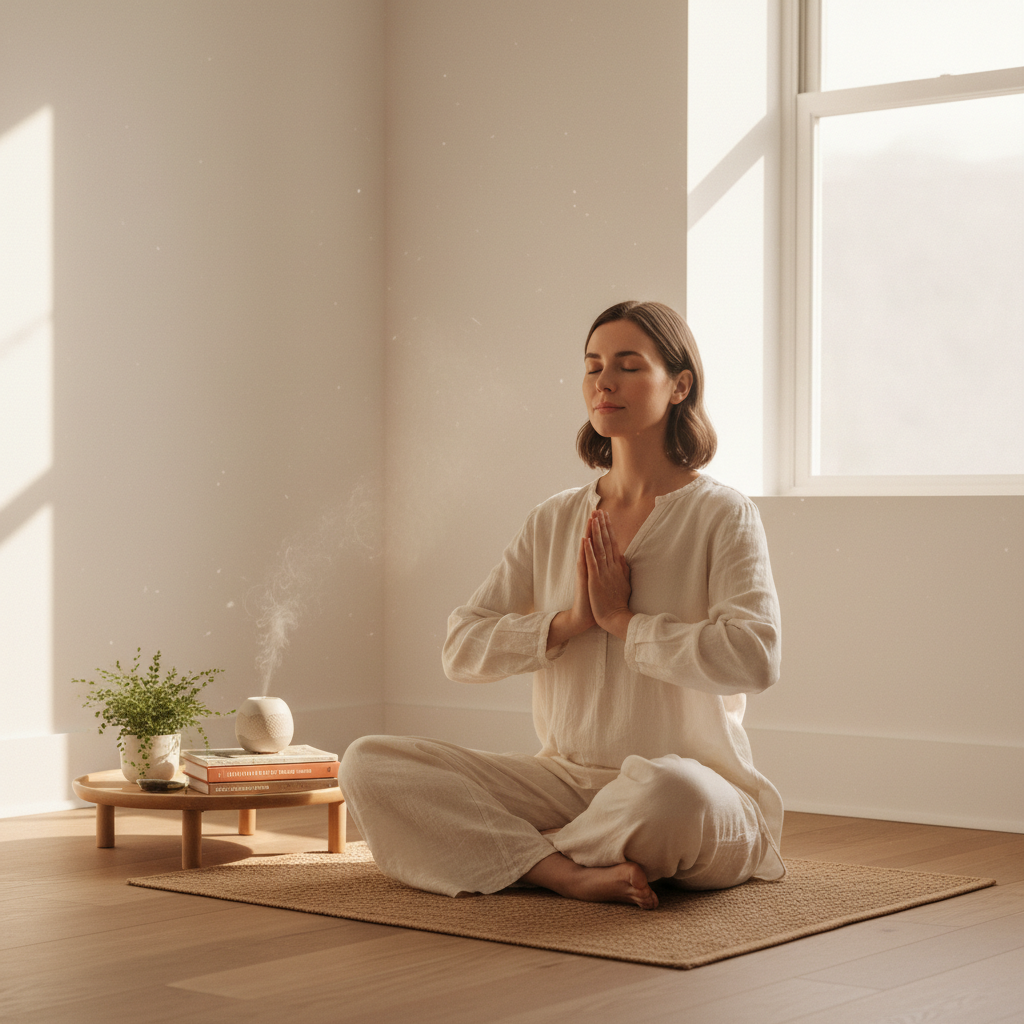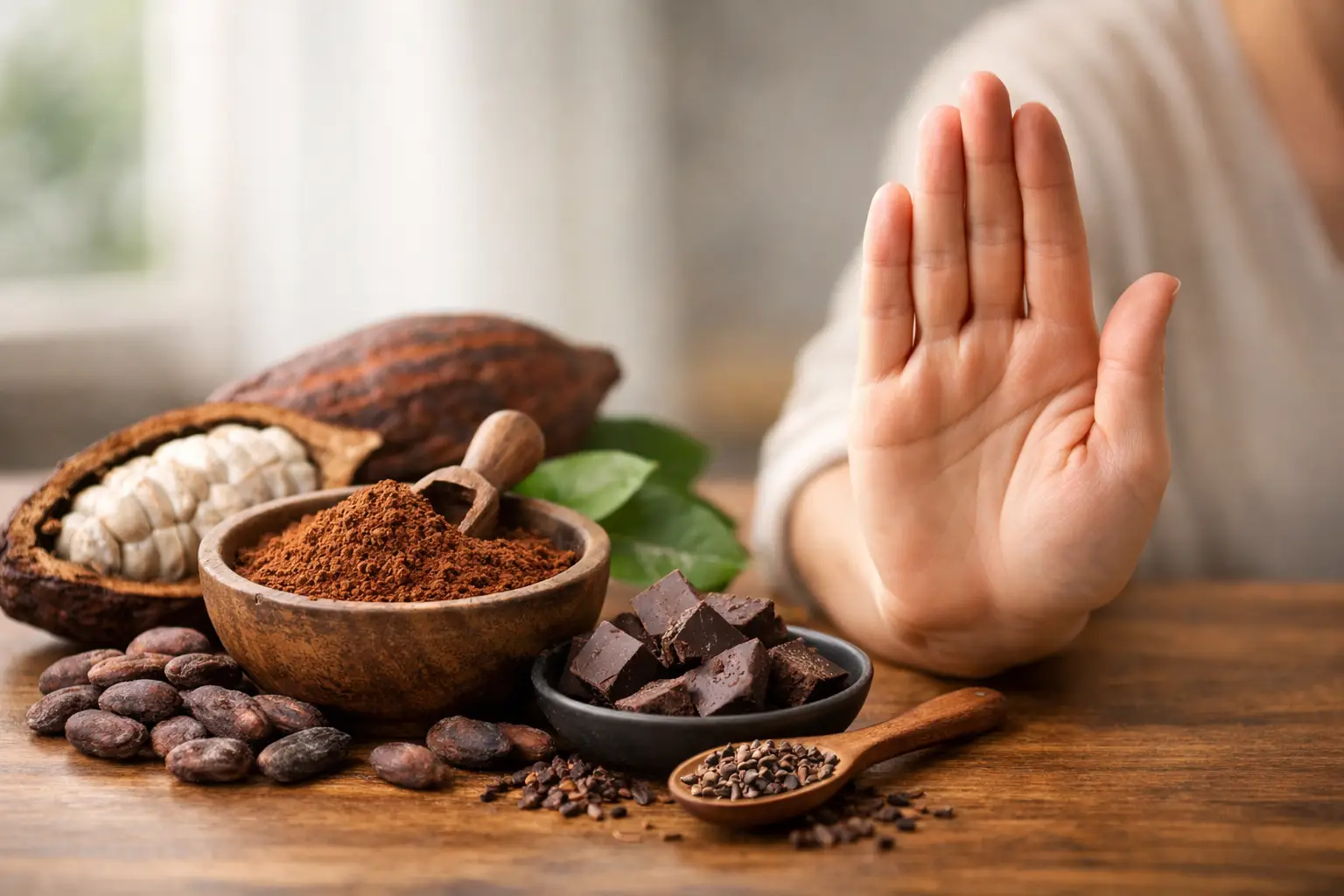
A cacao ceremony can be a nourishing threshold: warm hands around a cup, a softened room, a moment to listen beneath the pace of daily life. Yet ceremony is not about pushing through the body’s signals. If you are asking, when should I avoid cacao, the most aligned answer is this: whenever it may compromise your physical safety, emotional steadiness or the care plan you already have in place.
Ceremonial cacao is food, but it is also active. It naturally contains theobromine and some caffeine, alongside compounds that can feel gently enlivening, heart-opening or emotionally amplifying. The amount matters. A ceremonial serving is often far more concentrated than a square of chocolate, and each person’s sensitivity, health history and medication profile is different.
This is not a reason to fear cacao. It is an invitation to meet it with discernment, reverence and good support.
When should I avoid cacao completely?
There are circumstances where it is wisest not to take ceremonial cacao unless a qualified clinician who understands your health history has specifically advised you otherwise.
If you have a cacao or chocolate allergy
A known allergy to cocoa is a clear reason to avoid it. Symptoms can include hives, swelling, wheezing, vomiting or a sudden feeling of being unwell. Sometimes a reaction associated with chocolate comes from another ingredient, such as milk, nuts or additives, rather than cacao itself. Either way, do not test this during a ceremony. Seek medical advice before reintroducing any product that has caused a reaction.
If you are taking an MAOI medication
People taking monoamine oxidase inhibitors, known as MAOIs, should speak to their prescriber or pharmacist before consuming cacao. Cacao can contain tyramine and other stimulating compounds, and MAOIs have significant food and medicine interaction considerations. This is not an area for guesswork, online reassurance or reducing a dose on your own.
If your clinician has advised against stimulants
Theobromine is not caffeine, but it is still a stimulant. It can raise alertness and may affect heart rate, blood pressure, sleep and the nervous system. If you have been told to avoid stimulants because of a heart condition, poorly controlled blood pressure, a rhythm disturbance or another medical concern, pause before including cacao in your practice. Ask the clinician overseeing your care about your particular situation.
Cacao, medication and health conditions: where care matters
Many people can enjoy cacao in modest amounts, but a ceremonial dose deserves more consideration than everyday dietary chocolate. A pharmacist is often an excellent first point of contact for checking possible interactions, especially if you take more than one medicine.
Antidepressants and mental health medication
Cacao is sometimes described as mood-lifting, which can make it appealing during a tender season. But mood support is not the same as medical treatment. If you take antidepressants, medication for bipolar disorder, antipsychotics, ADHD medication or medicines for anxiety, check with your prescriber or pharmacist before joining a cacao ceremony.
This is especially relevant if you have a history of mania, hypomania, panic or severe anxiety. The stimulating quality of cacao, combined with music, breath, reflection and an emotionally open setting, may feel too activating for some nervous systems. That does not mean spiritual practice is unavailable to you. It may simply mean that a non-cacao sound bath, quiet meditation or a smaller, earlier ritual is the kinder choice for now.
Blood thinners and prescribed heart medication
If you take anticoagulants, antiplatelet medicines, medication for blood pressure or treatment for a heart condition, seek individual advice before drinking ceremonial cacao. Food compounds can interact with medicines in ways that depend on the dose, the specific prescription and your wider health picture. A clinician can help you make a decision that does not disturb an established treatment plan.
Migraines, reflux and digestive sensitivity
For some people, cacao is a pleasure. For others, it can be a migraine trigger. If chocolate, caffeine or rich foods have previously brought on headaches, begin with caution or choose a cacao-free practice. A small amount on a calm day, rather than a full ceremonial serving before an important commitment, gives you clearer information about your own response.
Cacao may also aggravate reflux, indigestion or nausea, particularly on an empty stomach. Ceremonial traditions may encourage an uncluttered belly, but fasting is not a requirement for meaningful inner work. A light, nourishing meal beforehand can be more supportive if your digestion is sensitive.
Pregnancy, breastfeeding and cacao
Pregnancy is a time to be particularly thoughtful with stimulants, herbs and concentrated wellness products. Cacao contains caffeine and theobromine, and a ceremonial dose may exceed what feels comfortable or appropriate for you. If you are pregnant, trying to conceive or breastfeeding, discuss cacao with your midwife, GP, obstetric team or pharmacist before taking part.
The question is not simply whether cacao is “allowed”. It is about total caffeine intake from tea, coffee, cola, energy drinks and chocolate; your blood pressure; nausea or reflux; sleep; and any pregnancy-specific guidance you have received. If you are offered cacao in a group setting, it is entirely acceptable to receive the ritual in another form: herbal tea, warm water, a grounding scent or simply your presence.
When should I avoid cacao for emotional reasons?
Avoiding cacao does not have to mean something is wrong. Sometimes it is a precise act of self-trust.
If you are depleted, highly anxious, under-slept or moving through a period of acute grief, cacao’s energising effect may make it harder to settle. The same can be true if you are already feeling emotionally raw after therapy, a difficult conversation or a major life event. Cacao does not create feelings from nowhere, but it can make what is present feel closer to the surface.
Choose a gentler practice if you sense that activation would not feel safe or resourced. Restorative sound, a slow body scan, journalling with both feet on the floor, or a quiet walk can offer depth without asking your system to open further. Spiritual expansion is most sustainable when it remains rooted in psychological grounding.
It is also wise to postpone cacao if you are currently experiencing a mental health crisis, intrusive thoughts, psychosis, mania or a significant change in mood. Contact appropriate professional or urgent support instead of relying on a ceremony to hold what needs clinical care. Ritual can sit beautifully alongside therapy and medical support, but it should not replace them.
Signs that your dose may be too much
You may not need to avoid cacao permanently. You may simply need less, a different time of day or a more spacious relationship with it. Consider reducing or pausing if you notice palpitations, jitters, shakiness, nausea, headache, loose stools, reflux, restlessness or difficulty sleeping after drinking it.
Emotional signs count too. Feeling unusually irritable, overwhelmed, disconnected from your body or unable to settle after a ceremony is useful information. Do not interpret discomfort as proof that you need to “break through”. A supportive ritual respects consent at every level, including the body’s no.
For those who are generally well and have no relevant contraindications, a lower serving can be a thoughtful way to begin. Take cacao earlier in the day, avoid combining it with coffee, energy drinks or alcohol, and leave room for hydration and a gentle landing afterwards. If symptoms are intense, persistent or include chest pain, breathing difficulty, fainting or swelling, seek urgent medical care.
Choosing a safer ceremonial path
Before a session, take a quiet moment to ask: Have I eaten enough? Am I rested? What medication or treatment am I currently receiving? Do I feel steady enough for an activating practice today? These are not barriers to ritual. They are part of the ritual: an honest meeting with your needs.
At Luminous Resonance, we hold cacao as an invitation rather than an expectation. You can receive the intention, music and reflection without drinking it. You can choose a smaller cup. You can step back, lie down or simply listen. There is no spiritual prize for overriding your own boundaries.
Let the safest choice be the sacred one. When your body asks for pause, listen closely: that listening is already a form of ceremony.