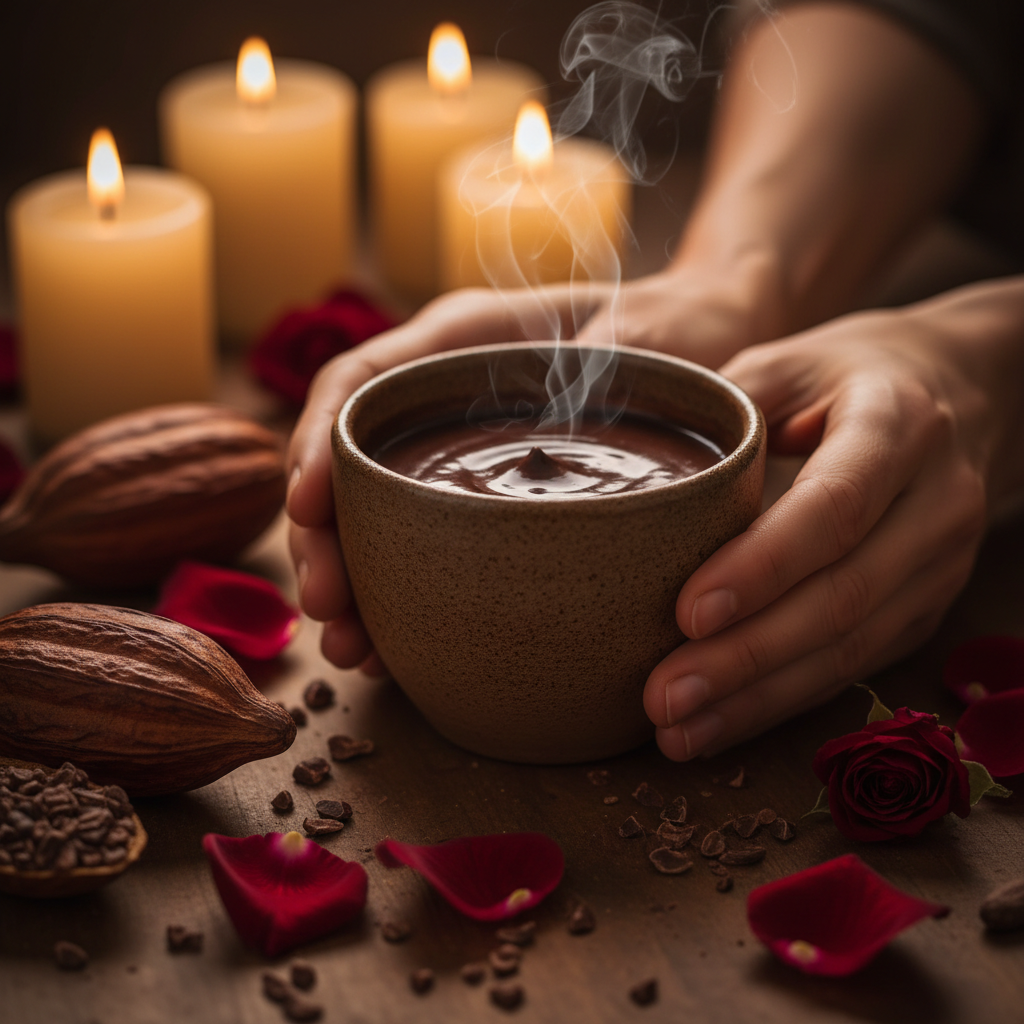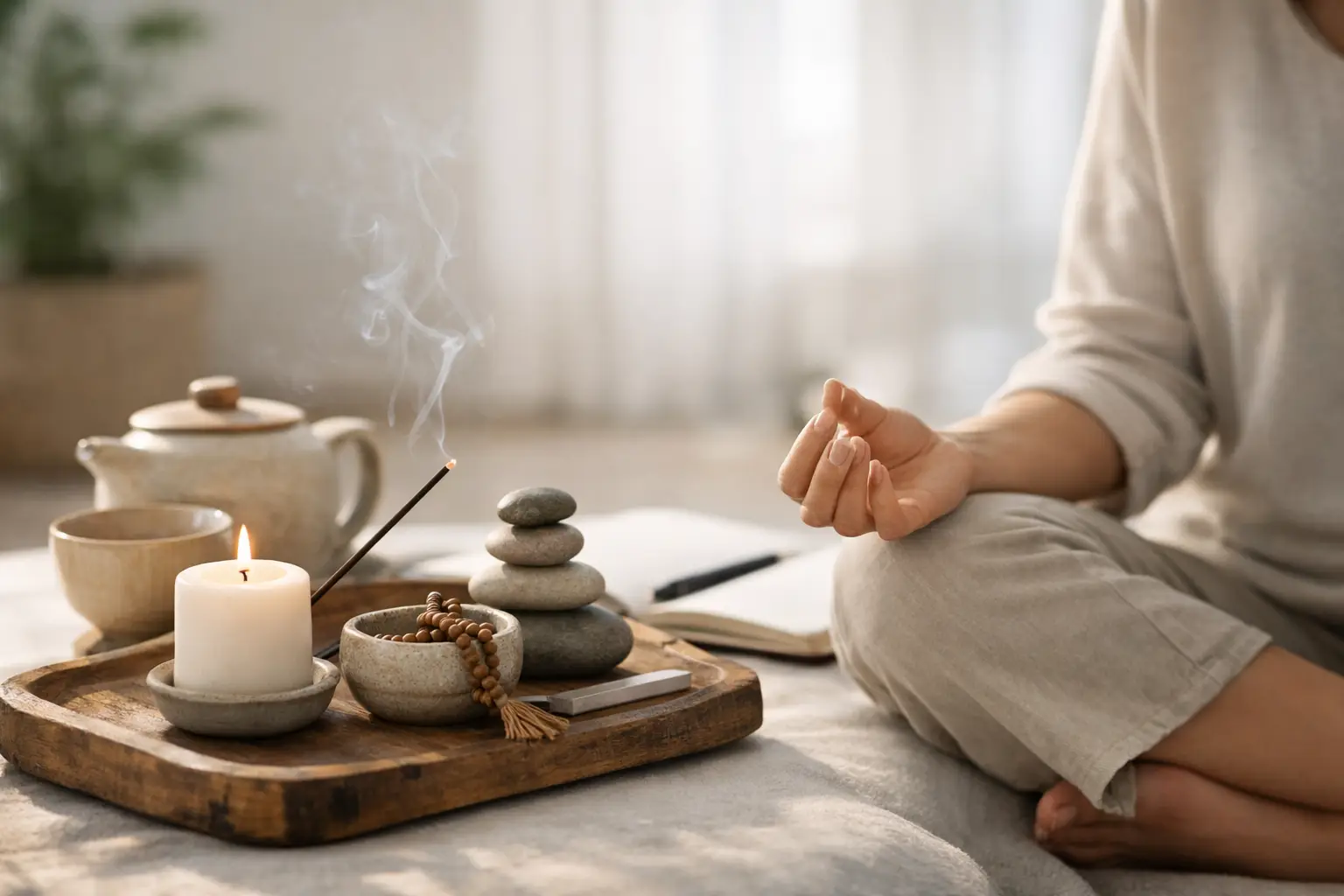
There is a meaningful difference between drinking a warm cup of cacao while checking messages and preparing it with care, sitting down, and allowing the first sip to mark a return to yourself. This is part of why rituals work. They ask the mind and body to pause together, creating a gentle threshold between the pace of daily life and a more present inner space.
For many of us, the day arrives in fragments: notifications, responsibilities, other people’s needs and the pressure to keep moving. A ritual does not remove those realities. It offers a reliable place from which to meet them, with greater steadiness and self-connection.
Why rituals work in the body and mind
A ritual is an action performed with attention and intention. It may be simple: lighting a candle before journalling, placing a hand over the heart before a difficult conversation, or listening to the same grounding sounds at the end of the working day. What matters is not how elaborate it looks, but the quality of presence it invites.
Our nervous systems learn through repetition. When a particular sequence becomes associated with rest, reflection or emotional release, the body can begin to recognise the signals before we have consciously reasoned our way into calm. The dimming of lights, the warmth of a cup, a familiar scent, a slow breath or the first tone of a sound bath can each become a cue: you are safe enough, for this moment, to soften.
This does not mean a ritual can make anxiety disappear or resolve every source of distress. If someone is living with trauma, grief, depression or persistent anxiety, ritual can sit alongside appropriate therapeutic and medical support, rather than replacing it. Its value is often quieter. It gives regulation a shape that can be returned to, especially when life feels uncertain.
Rituals also reduce the burden of constant decision-making. When you have a small practice that belongs to the beginning or end of your day, you do not have to negotiate from scratch whether you deserve a pause. The practice is already waiting for you.
A container for feelings that have nowhere to go
Emotions do not always ask for solutions. Sometimes they need acknowledgement, movement and time. Yet many people have learned to override this need, particularly those who are used to caring for others, performing well or remaining composed under pressure.
A ritual creates a container. Within it, a feeling can be named without becoming the whole story. You might arrive at a sound practice carrying irritation, sadness or a sense of numbness. Rather than demanding that you feel peaceful, the ritual can offer a held space in which the truth of the moment is allowed.
The structure matters here. A beginning tells the mind that something intentional is taking place. A middle offers time to stay with the experience. An ending helps you re-enter ordinary life without feeling abruptly cut loose. This rhythm is psychologically grounding because it gives inner work boundaries.
In ceremonial practices, this may include setting an intention before drinking cacao, sitting with the sensations that arise, and taking a few moments afterwards to write or rest. The intention is not a target to force. It is a quiet direction of attention: perhaps clarity, compassion, courage or simply the willingness to be present.
Meaning changes the quality of repetition
Not all repeated actions become rituals. Brushing your teeth can be automatic; pausing at the mirror to offer yourself one kind sentence gives the same moment a different quality. Meaning is what transforms repetition into relationship.
This is particularly valuable when life feels flat or overly functional. Ritual reminds us that ordinary moments can carry significance. A morning cup of tea can become an act of arrival. Closing a laptop can become a clear boundary between work and home. A weekly bath can become a promise that your body will not only be used, but listened to.
There is no need to borrow symbols or practices that do not feel authentic to you. Some people are nourished by candles, music and sacred language. Others feel more at home with a quiet walk, a notebook and ten minutes of breathing. The most supportive ritual is one that feels sincere, culturally respectful and possible to maintain.
The role of the senses in spiritual and emotional grounding
The mind can be persuaded by an idea, but the body often responds more directly to sensation. This is one reason sensory ritual can feel so restorative. Sound, warmth, texture, aroma and taste invite attention out of abstract thought and into lived experience.
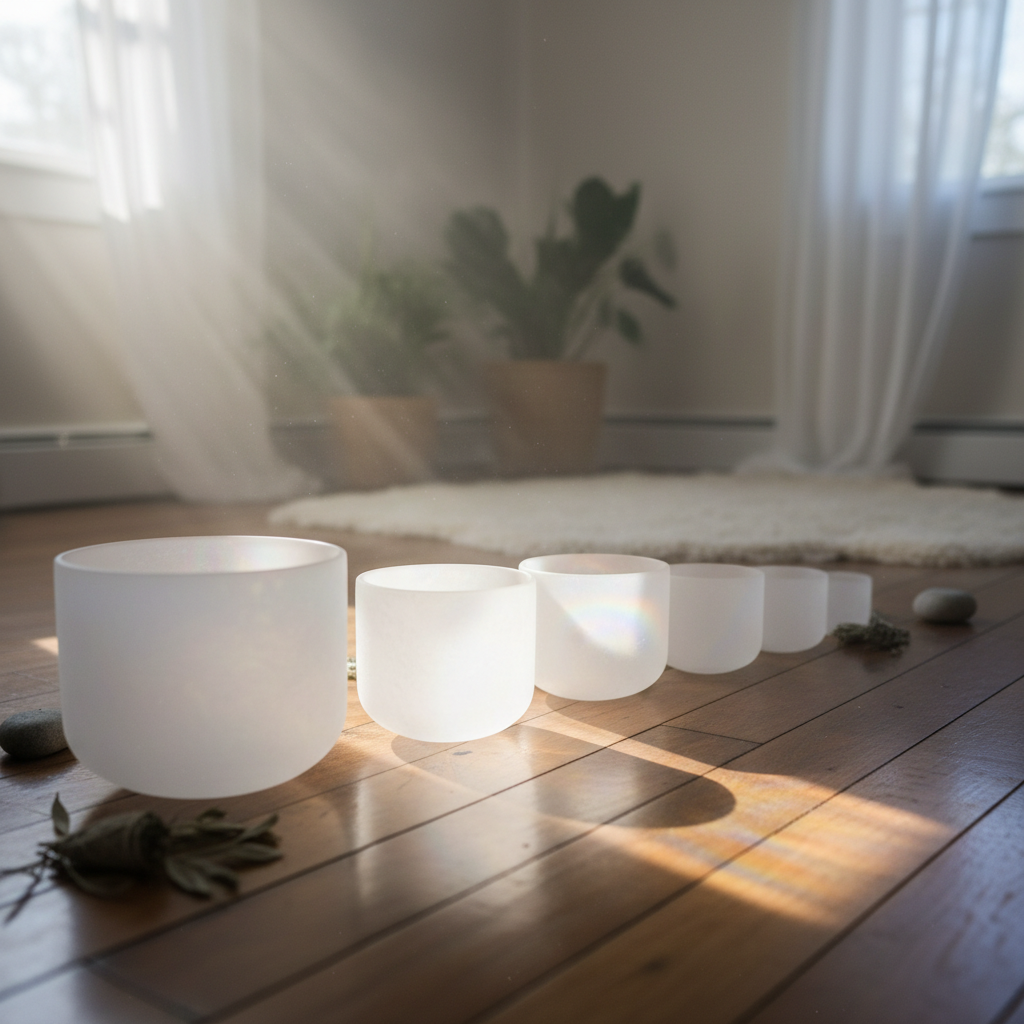
A carefully held cacao ceremony may use warmth and flavour to encourage a slower pace. A sound bath can offer vibrations, resonance and spaciousness that make it easier to notice the breath, the body and the emotional landscape beneath the mental noise. Neither experience needs to produce a dramatic breakthrough to be worthwhile. Rest itself can be profound when it has been scarce.
Sound is especially helpful for people who find silent meditation frustrating or inaccessible. Instead of trying to empty the mind, you have something gentle to receive. Thoughts may still arise, but they need not be fought. They can move through a wider field of listening.
The trade-off is that sensory richness can become distracting if there is too much of it. More incense, more music or more elaborate preparation does not necessarily create greater depth. A ritual should support your attention, not compete for it. Often, one or two intentional elements are enough.
Consistency matters more than intensity
When people begin a wellbeing practice, it is tempting to make it ambitious. An hour of meditation every morning, a perfectly prepared altar, a lengthy journal entry each evening. These can be beautiful commitments, but they may also become another standard to fail.
A small ritual practised regularly tends to create more trust than an intense practice attempted only when there is extra time or emotional energy. Five unhurried minutes before bed may be more regulating than a grand plan that quickly becomes another item on the list.
Consider what your real life can hold. If mornings are busy, your ritual might be three breaths before leaving the house. If evenings are full of caregiving, perhaps it happens after everyone else is asleep, with a cup of herbal tea and a simple question in your journal: What am I carrying today? If you work from home, a short sound practice between meetings may create a needed transition.
Consistency is not about rigid compliance. There will be weeks when the ritual changes, shortens or falls away. The invitation is to return without judgement. Ritual becomes supportive when it is a place of belonging, not another measure of self-discipline.
Bringing ritual into a digital life
A digital sanctuary can still hold real intention. Attending an online ceremony from your own home removes travel and allows you to shape your environment in ways that feel safe: a blanket nearby, a familiar room, time afterwards to rest. For people with demanding schedules, this accessibility can make regular practice genuinely possible.
The challenge is that the same device used for a nourishing session also carries work, news and distraction. Before joining an online practice, give yourself a small arrival ritual. Silence notifications, prepare water, close unnecessary tabs and let those around you know that you need this time undisturbed. Afterwards, resist the urge to immediately scroll. Even two quiet minutes can help the experience settle.
At Luminous Resonance, guided cacao ceremonies and therapeutic sound baths are designed to offer this kind of intentional pause: spiritually spacious, emotionally held and rooted in practices you can take back into everyday life.
Let the ritual meet the day you have
There is no perfect way to practise. Some days your ritual may feel luminous and deeply connected. On others, it may simply be the moment you notice your shoulders and let them drop. Both count.
Choose one small act you can repeat this week, not to become a different person, but to stay in relationship with the person you already are. Light the candle. Hold the cup. Listen to one note until it fades. Let that be enough to remind your system that there is still a place within you that knows how to come home.